Congress demands Dharmendra Pradhan resignation over NEET Cancellation, calls for JPC probe
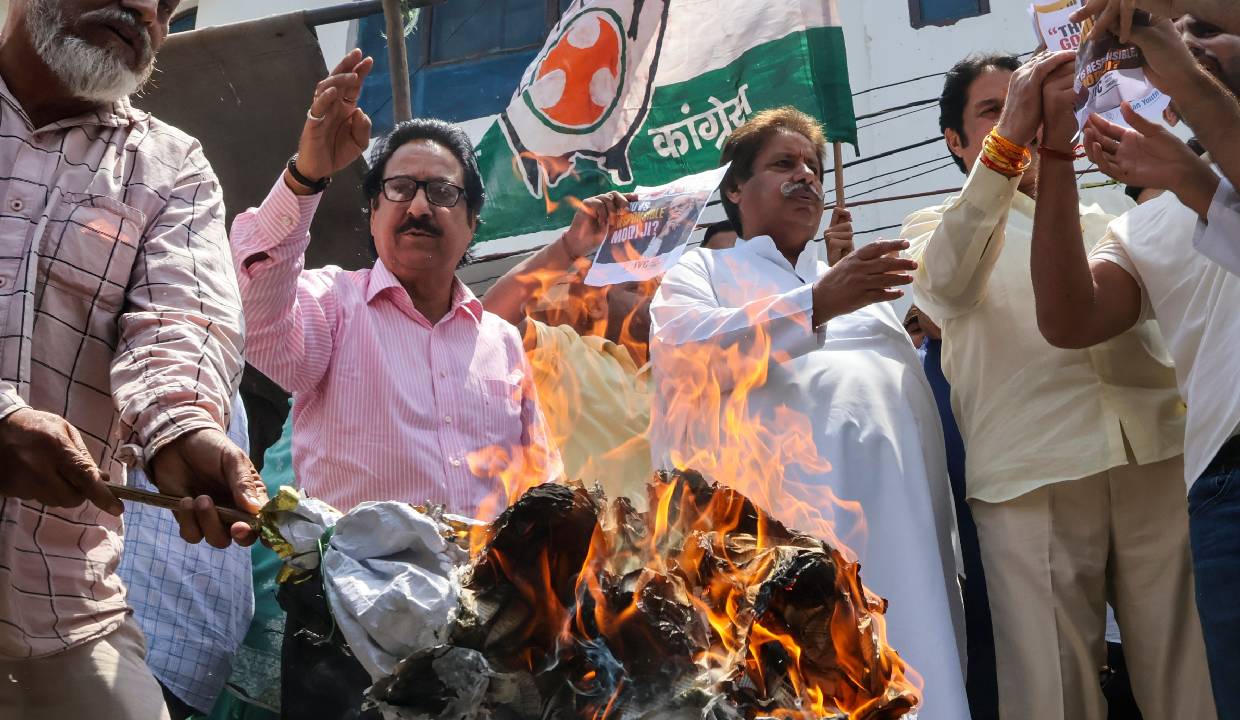
The Congress party demanded the resignation of Education Minister Dharmendra Pradhan following the cancellation of NEET-UG 2026 and called for a Joint Parliamentary Committee (JPC) investigation into the alleged paper leak scandal.
Addressing a press conference, Congress Youth Wing president Uday Bhanu Chib and NSUI president Vinod Jakhar alleged that repeated paper leak incidents reflect a systemic failure in the examination process and demanded accountability from the government.
Chib claimed that over the past decade, multiple examination papers have been leaked and several re-examinations have been conducted, raising serious concerns over the credibility of the testing system. He said students across the country were deeply affected by the cancellation of the NEET examination.
The Congress leaders alleged that the ruling BJP government had failed to prevent recurring leaks and questioned the functioning and auditing mechanisms of the National Testing Agency (NTA). They also raised concerns over the role of private vendors in conducting examinations.
The party demanded three key actions: resignation of the Education Minister, compensation for affected students, and the formation of a JPC to investigate the NEET paper leak case.
NSUI president Vinod Jakhar alleged that Rajasthan was a major centre of the leak network and claimed political protection for those involved. He said repeated irregularities in national examinations had eroded trust among students.
The NEET-UG 2026 examination, conducted on May 3 across 551 cities in India and 14 cities abroad, was cancelled following allegations of irregularities. The National Testing Agency (NTA) has ordered a fresh examination, expected to be held within the next 7 to 10 days.
The government has also directed the Central Bureau of Investigation (CBI) to conduct a comprehensive inquiry into the matter.
Officials said the decision to cancel the exam was taken to ensure transparency and maintain public confidence in the national examination system.