China greets Nepal’s new PM Balen, signals policy reset
China welcomed Nepal’s new Prime Minister Balendra Shah ‘Balen’ as it seeks to recast two decades of Nepal policy anchored in Communist Leaders KP Sharma Oli and Pushpa Kamal Dahal Prachanda, who sought to move Kathmandu closer to Beijing, weakening its traditional ties with India.
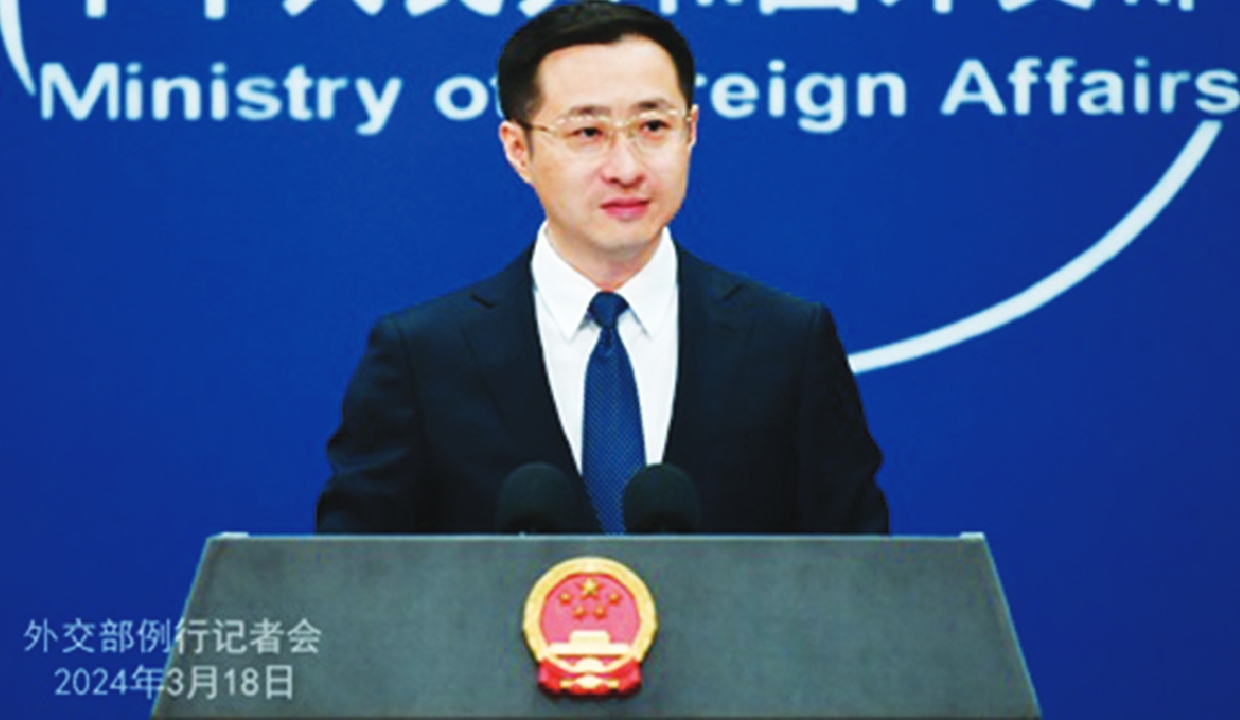
Congratulating Shah, who was sworn in on Friday as Prime Minister, Chinese Foreign Ministry spokesperson Lin Jian told media here on Friday that China always supports Nepal in safeguarding independence, sovereignty and territorial integrity and in realising solidarity, stability, development and prosperity.
China stands ready to work with the new Nepalese government to carry forward the traditional friendship, deepen practical cooperation, and advance the strategic partnership of cooperation featuring ever-lasting friendship for development and prosperity.
The massive victory of the four-year-old Rastriya Swatantra Party (RSP) riding high on last year’s Gen-Z protests, which led to the resignation of the Oli Government, marks a new normal in Nepal’s recent history, marking an end to the dominance of communist parties, which gained political prominence after the abolition of the monarchy in the Himalayan nation in 2008.
China stepped up engagement with communist parties, especially the CPN-UML headed by Oli and the CPN (Maoist Centre) led by Prachanda, who advocated for closer political and economic ties with China.
Both Prachanda and Oli, who became Prime Ministers three times each since 2008, played important roles in helping China to advance its influence in Nepal with initiatives like the Belt and Road Initiative (BRI).
But importantly, they signed up to the One China policy under which Nepal effectively closed the Tibet border, which halted hundreds of Tibetans from crossing over India to meet the Dalai Lama in Dharamsala.
Observers say the sudden decline of the two leaders marks a titanic shift in Nepal’s politics, and China will try to engage with the Balen Shah government to retain the border controls in Tibet and halt Tibetans from crossing over.
Critics say BRI projects failed to make headway due to political bickering between Oli and Prachanda.
Though Nepal signed up to the initiative in 2017, none of the 10 projects has moved beyond planning, the Hong Kong-based South China Morning Post reported.