China charts China+1 plan
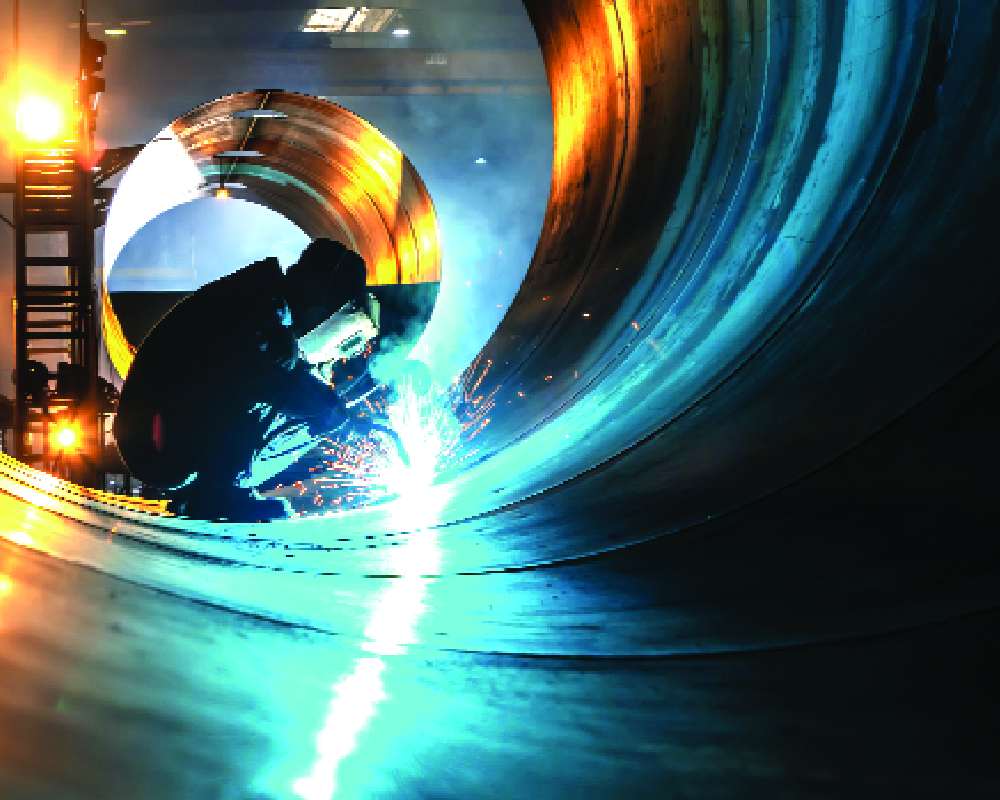
For nearly three decades, the world’s manufacturing heart throbbed in China. The Pearl River Delta became the planet’s assembly line, and Shenzhen the workshop. They, along with other sites in China, shaped everything from phones to toys. It could not go on forever. History tells us that global supply chains are products of geopolitical moments, which shift like sand, maybe over decades or centuries. Post-Covid, across boardrooms and nations, a new phrase took shape: China + 1. It describes a strategy to develop alternative supply chains to mitigate risks, diversify production, and protect growth.
Firms across sectors chased new geographies to replicate China-like operations. Over the past few years, there has been a slow but decisive redrawing of the global industrial map. India, Vietnam, Thailand, Indonesia, Mexico, and parts of Eastern Europe emerged as the preferred destinations to compete with China. However, the shift does not imply the rejection of China but a recalibration. What many forget is that China has done the same. It too has pursued a China + 1 strategy, albeit with Chinese characteristics.
Look at BYD, China’s largest electric vehicle maker. It ventured out to set up manufacturing bases overseas to cater to the western China + 1 vision. It began production at a plant in Rayong, Thailand, in 2024. This was its first full-scale passenger vehicle factory outside China. Later that year, BYD exported Thai-made models like the Dolphin to Europe. It aims to double overseas sales to 8,00,000 vehicles. For a firm that once relied almost entirely on Chinese clusters, overseas expansion has become a necessity.
The Chinese battery giant, CATL, invested euro 7.3 billion in Hungary. The facility will be one of Europe’s largest battery plants. The company’s overseas revenue share has risen steadily. In January 2025, it crossed 30 per cent. CATL serves European automakers from non-China plants. The strategic logic is clear. Building battery plants outside China allows the company to access markets where Chinese-origin supply chains face intense economic, business, and political scrutiny. As the world pursues China + 1 strategy, the Chinese offer viable options through their non-China-located factories.
This shift is being felt with the smartphone makers such as Xiaomi, OPPO, and Vivo. For nearly a decade, Xiaomi relied on large-scale hubs in Guangdong and Jiangsu. But by 2020, it shifted a part of its production of smartphones, smart TVs, and IoT devices to India, Vietnam, and Indonesia. In India, Xiaomi works through partners like Dixon Technologies and Bharat FIH. Counterpoint Research notes that Xiaomi produces more than 95 per cent of its India-sold smartphones within India, a shift accelerated after New Delhi’s 2020 rules and disruptions during the pandemic.
In Vietnam, Xiaomi set up a new assembly plant; local regulatory filings confirmed an investment of $80 million. Indonesia is another beneficiary. The company restarted local manufacturing in 2021 after a brief pause, and uses the region to supply select Android models for the domestic and ASEAN markets. The overseas moves do not reduce Xiaomi’s reliance on Chinese R&D. Rather, they create a distributed manufacturing system, a reverse China + 1, which protects it from geopolitical risks, tariff exposures, and supply bottlenecks.
OPPO and Vivo, both owned by BBK Electronics, diversified their footprints before others realised the same. In India, OPPO invested $280 million into its Greater Noida facility. In 2023, it chalked out expansion plans to take the capacity to 100 million units a year. Vivo announced a $1 billion India-specific investment plan over several phases starting 2020. Both firms follow a similar path in Indonesia. Vietnam has emerged as a regional hub. While BBK has not disclosed the exact numbers, Vietnamese import data shows steady inbound component flows for OPPO, and Vivo-branded devices, supporting partial assembly for ASEAN distribution.
Lenovo, which is headquartered in Beijing, is another example, as it has an operational presence in the US, and Europe. It is one of the most agile Chinese tech firms. Its PC and server footprint spans Mexico, Brazil, Hungary, India, and Japan, a network that allows it to move workloads flexibly depending on market conditions. For instance, the facility in Mexico supports North America. The Hungary plant is one of the largest server centres in Europe. It assembles hardware close to the European clients, who prefer local supply chains following the war in Ukraine and energy disruptions.
In India, Lenovo manufactures laptops, desktops, and tablets through partnerships with Wingtech and Dixon. IDC noted in 2023 that Lenovo’s India-made PC shipments grew significantly after India tightened import restrictions on finished devices. The firm’s diversified production bases serve different regulatory zones without excessive dependence on Chinese export corridors. It positions the firm favourably in state-driven procurement markets in India, Europe, and the US, where Chinese-made devices face scrutiny.
Combined with the West-induced China + 1, and China-driven China + 1, the world is moving toward a triangular supply chain. China continues to dominate materials, components, and scale-driven manufacturing. India, and others are emerging as the assembly, testing, and export hubs. The US and parts of Europe remain the centres for design, R&D, intellectual property, and high-end production such as advanced semiconductors. A triangle gives firms flexibility. Labour-intensive processes may shift to India or Vietnam. Material processing may remain in China. High-value silicon or precision engineering may move towards the West.
This structure spreads risk geographically. It reshapes trade flows. The Asia-to-US export corridor may no longer be dominated by China but by multi-country supply chains that begin in China, pass through India and Vietnam, and end in the western markets. Companies will build supply chains that allow them to operate regardless of geopolitics shifts. It is a strategy reminiscent of non-alignment where nations refuse to choose sides. It is not driven by ideology but by corporate survival. Firms design production networks that remain functional, and profitable across multiple political outcomes.
The implications for India are extensive. In a 2023 study, Morgan Stanley noted that India’s manufacturing share of GDP may rise to 20 per cent by 2030 if China + 1 shift accelerates. India’s strategic relevance grows when global firms embed critical parts of supply chains in the country. It strengthens India’s bargaining power in geopolitical negotiations. It makes India a focal point for global debates on environment, energy, and sustainability due to a plethora of data centres, EV plants, and battery factories. The era of single country dominance in manufacturing is over. The new reality is a more distributed, resilient, and politically aware global system.