CCTV footage shows CJP protesters reached 100 metres of Parliament
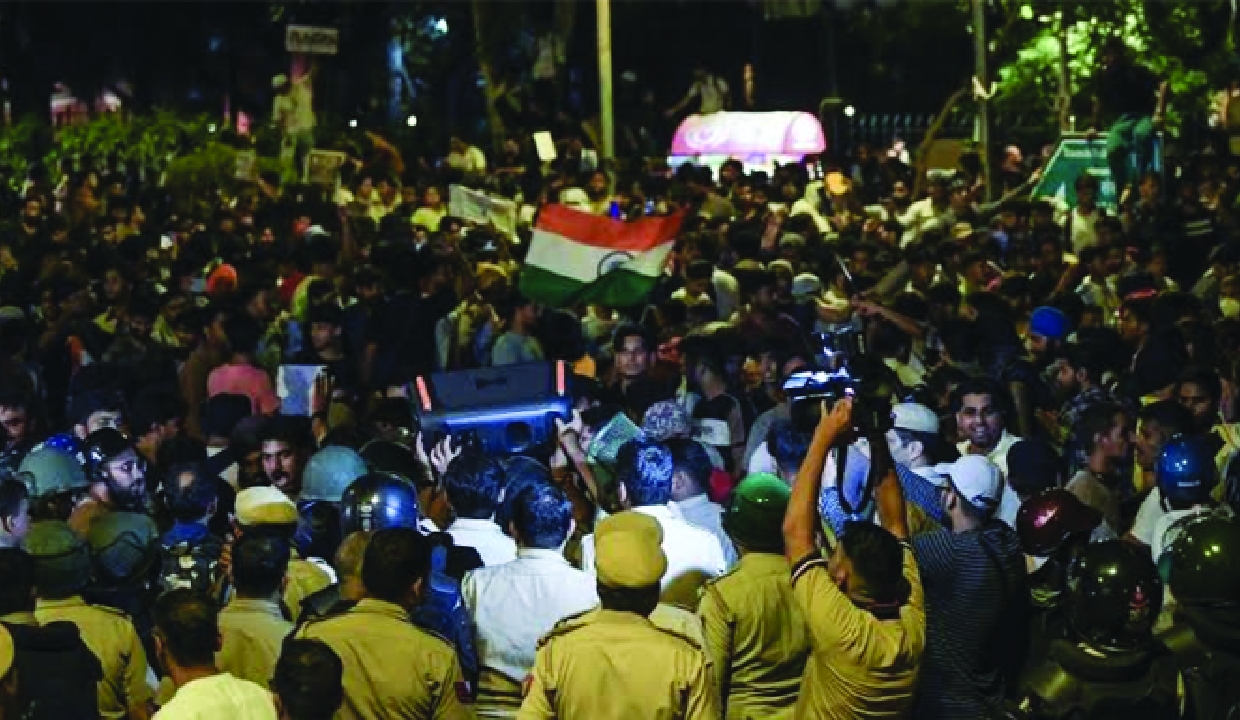
New CCTV footage shows Cockroach Janata Party (CJP) protesters getting within 100 metres of Parliament during their ‘Chalo Sansad’ march on July 20. The videos, recorded by several cameras in the high-security area, show the crowd clashing with police, breaking through barriers, and getting dangerously close to Parliament. These images point to major security lapses in the heart of the Capital.
Scuffles broke out as police tried to hold back the crowd. Officers struggled to push the protesters away, and the temporary barricades looked unfinished or too weak to stop them. These scenes have raised serious questions about how ready the Delhi Police were, how strong the barricades were, and whether the prohibitory orders under Section 163 of the Bharatiya Nagarik Suraksha Sanhita were enforced that day. Section 163 lets authorities ban gatherings in sensitive areas to prevent incidents like this. But the footage suggests the order was not enforced properly.
The area also looked short-staffed. Permanent concrete barriers and mobile steel barricades, which usually form several layers of defence around Parliament, did not seem strong enough. If there were any intelligence warnings about the size of the march, they did not lead to enough police being deployed in time. Police sources say the situation was eventually brought under control and that no protester entered the Parliament premises.
More police units were sent in, and the crowd was pushed back after the first breach. Still, the new videos show that in the early moments, there was confusion, physical clashes, and a lack of coordinated response. Security experts say that protesters getting within 100 metres of Parliament is a serious failure, especially for such a heavily guarded place. This incident has renewed worries about how well India’s democratic institutions are protected.
Any prolonged presence of an agitated crowd so close to the Parliament carries risks that go beyond traffic disruption or routine law-and-order management. Questions are now being asked about why standard operating procedures for high-threat zones appeared to fail, whether the police had accurate real-time intelligence on the size and intent of the gathering, and whether inter-agency coordination between the Delhi Police, Parliament security and central forces was effective.
Political reactions followed soon after. Critics of the government are using the footage to demand a clear investigation into possible failures. Government supporters argue that since the protest was eventually contained, the system worked and that single video clips should not cause alarm. The ‘Chalo Sansad’ march was announced in advance by CJP, giving officials time to prepare, but the planning appears to have been poorly handled.
This incident has once again shown how difficult it is to balance the right to protest with the need to protect the country’s main institutions from disruption or violence. As the videos continue to spread, there is growing pressure on the Delhi Police and the Ministry of Home Affairs (MHA) to explain what happened. Allowing protesters to get within 100 metres of Parliament is a serious issue and cannot be brushed aside as a minor mistake. In a city that houses the country’s top institutions, people are demanding real answers.