Blasé Capital crude oil @ $100
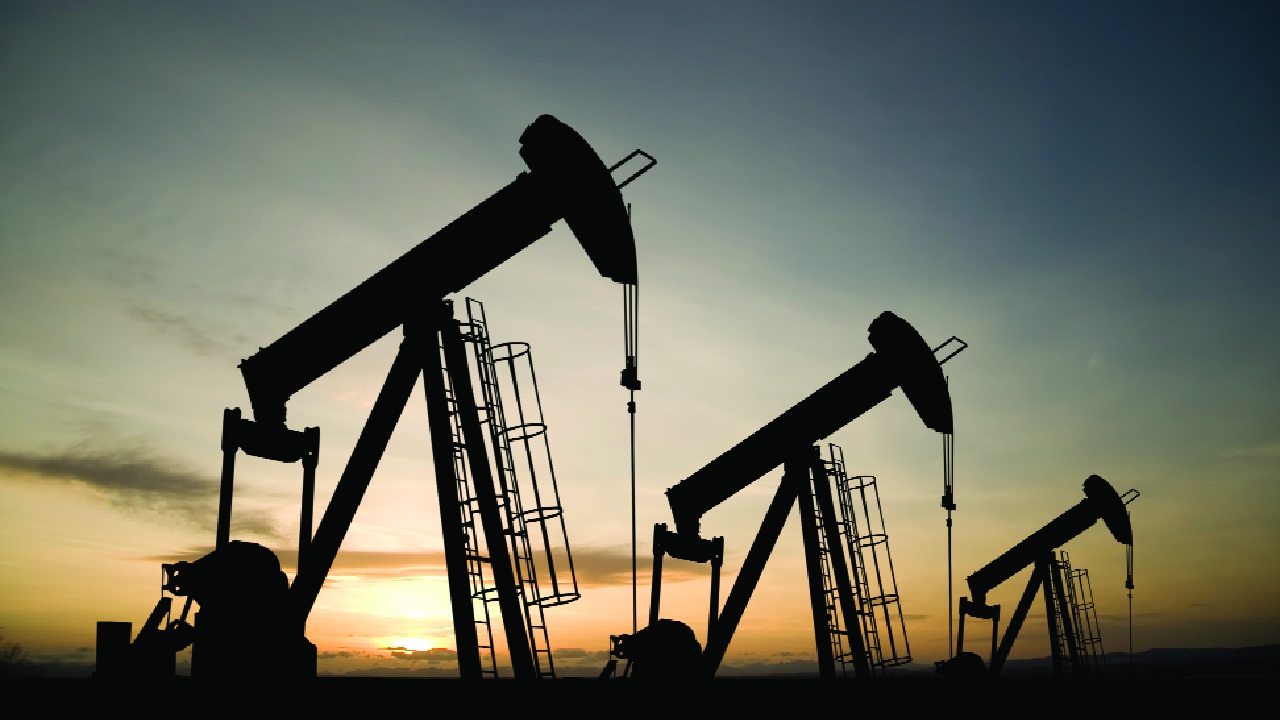
As expected, after the combined US-Israel strikes on Iran, and counter-attacks by the latter, global crude oil prices jumped. They inched upwards of $70, the highest since August 2025, and almost a quarter up from the lowest level in December 2025. Indeed, the recent rise over the past several weeks was prompted by the fears that the US was likely to attack Iran, not if but when. Now that the missiles have hit Iran, its supreme leader, Ali Khamenei, is dead, and Iran has launched attacks on the US bases in the Middle East, and struck high-profile airports, ports, and landmark buildings in the region, the prices are likely to shoot up. A figure of $100, say experts, is a distinct reality. If the war escalates for a few days, or several weeks, and if some oil-related infrastructure and ships are destroyed in the process, who knows what will happen. Think of crude oil at $125, or even higher.
Such dire predictions stem from several factors. The most important is the disruptions in oil flows through the Strait of Hormuz, “a chokepoint that carries roughly 20 per cent of global oil supply. Tanker traffic through the waterway has already been significantly curtailed, heightening concerns,” states a media report. If Iran's Islamic Revolutionary Guards Corp (IRGC) escalates the war, the Strait will be on their radar. According to an analyst quoted on a website, “Though the IRGC may not be able to physically close the Strait of Hormuz, it could potentially still deploy small boats, mines, drones, and missiles to compel insurers and shipping companies to avoid the waterway.” Another media report adds that oil tankers have begun to avoid the Strait since the attacks started on Saturday. “Historically, crude prices often jump whenever there are major oil supply issues at the Strait of Hormuz,” it explained. Huge risk premiums will be added to oil prices.
Worse, the options for fresh and additional supplies from producer nations through alternate routes are limited. For one, the huge spare capacity in the Middle East will remain blocked, if Hormuz remains under siege, or fear of one. Couple this with the fact that most OPEC+ producers are “already near maximum output, leaving Saudi Arabia as the primary holder of meaningful spare capacity.” Non-OPEC supplies can increase, but scaling up will require some time. The transport will happen only if the crucial sea lanes remain open and safe. Add to this the thinking among most producer nations, who wish to hike profits due to higher prices, and have suffered for long from subdued ones in the recent past. Even the US, saddled by the recent Supreme Court judgment on trade tariffs, may wish to boost export revenues via more expensive crude oil to make up for lower import revenues, and the inevitable refunds of earlier revenues collected at higher tariffs.
Technical charts forecast a coming bullish phase. According to a website, “The weekly timeframe chart shows… crude oil price has rebounded in the past few weeks. This rebound started after it formed a double-bottom pattern at $55.15. A double-bottom is one of the most common bullish reversal signs in technical analysis.” The prices have moved higher than the 50-week and 100-week averages, and the directional index on the charts has jumped to the highest level since August 2025. The same is the case with the relative strength index. “Therefore, the most likely scenario is where the price continues rising now that the war in Iran is escalated. The price may soar to over $80 when the market opens today,” states the website. Thus, there was a clear possibility of an upward movement, which got fresh impetus due to the Iran war. Remember, there is still a war on in Ukraine, and Pakistan and Afghanistan are at loggerheads on their borders.
According to some analysts, the Hormuz scare is horrifying, and the world is yet to come to grips with it. Most of the oil that passes through the Strait moves from the Middle East to the largest consumers such as China, India, Japan, and South Korea. Half of China’s supplies pass through it. Hence, a prolonged closure of the Strait, says one analyst, is a “guaranteed global recession.” He adds that if this happens, the Asian consumers will go crazy. “What you would see is hoarding, especially by Asian countries that were big importers of oil and gas when they realised that Hormuz is closed. You could see the mother of all bidding wars.” The end-result: Prices will go through the sky. In the end, the duration of the war will matter, as it does during crises, and so will the scale of the war. In such situations, strategic stocks held by nations such as the US (inventory of more than 400 million barrels) and China will not matter. What will be evident is high prices.
Like in the case of the Russia-Ukraine war, there will be choices to make. Dependence on coal may go up, as it did in Europe in the past few years. Oil consumption may be curtailed, as happened in consumer nations. Renewables may get a boost. However, the oil giants will have a gala time, even as they aim to use the cash flows to discover more oil, acquire more oil reserves, or force production to meet future demand.