Blasé Capital visa schema
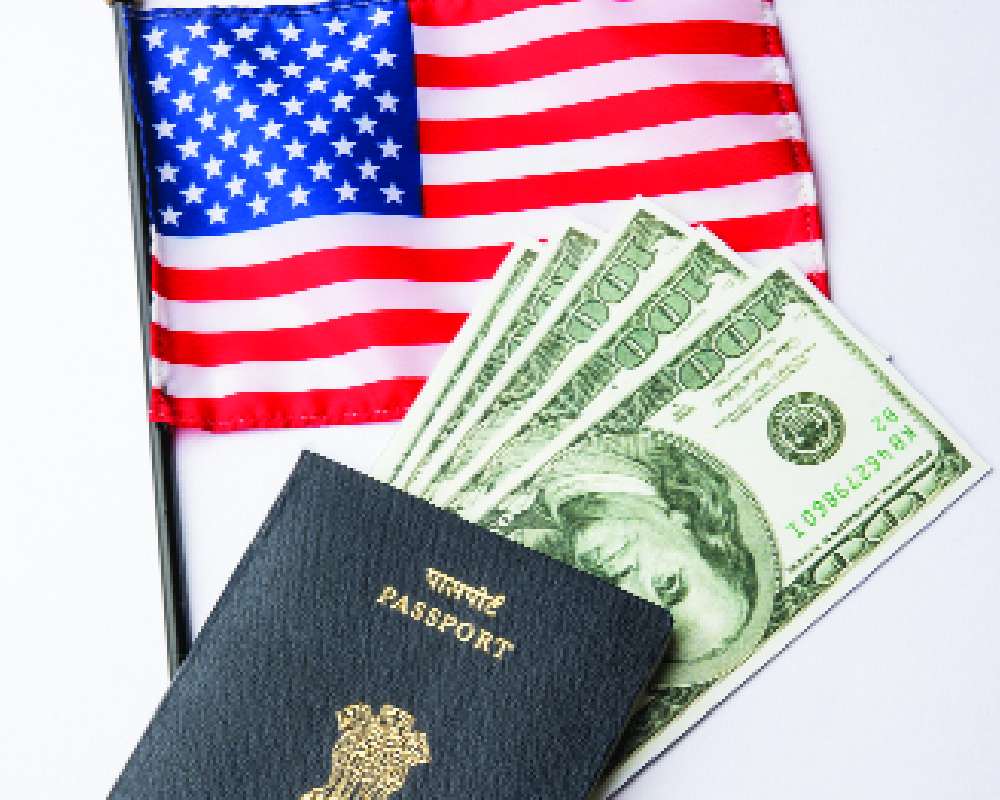
There is a new twist in the H-1B visa imbroglio. Although the debates till now have focused on manipulations, salaries, misuse, skills, and similar issues, a new element was introduced. The latest allegation against the present visa regime is that India possibly grabs more visas than are mandated by the US laws. America fixes an annual quota of 65,000 visas for outsiders, which can be increased by another 20,000. But latest reports indicate that a single Indian city, Chennai, accounts for 2,20,000 applications a year, or more than two-and-a-half times the yearly quota. The implication is that India breaks the US laws, and sends more people to the US. This is in addition to the Indians already based in the US on existing H-1B visas, which are valid for a specific period. The Chennai example is that of new visas, which increases the population of Indians, as they are coupled with separate ones for spouses, and dependents.
A simple rationale that explains this gross mismatch between quota and applications is the error in the math. The number of applications does not equate to the number of granted visas. It may be true that 2,20,000 individuals apply in Chennai, but only some of them may get the visas. In any case, Indians account for 70 per cent of the H-1Bs granted every year, and Chennai is the hub for the applications from the IT industry, which is centred in South India. Indeed, the large number of applicants results from the American rules. It is not the skill, salary, or any other merit-related factor that determines who gets the visa. The allocation is through a lottery system. The applications are put in a basket, and the fortunate names picked up through random computerised selection. Destiny, and luck, rather than skill, decides the names of the new visa holders.
Obviously, Indians devised a way to beat this random system. The firms used their own random, but sophisticated, though simple, math to grab the visas. The trick was to apply in bulk, in numbers that far exceed the quota. The arithmetic is simple. If 100 visas are available, and India puts in 1,000 applications, while other nations account for another 200, the odds of an Indian selection go up. An Indian has several times more chances to get the H-1B compared to the other nations. This may explain why Chennai is flooded with such a huge number of applications. For the Indian firms, it simply does not matter who gets the visa: A, B, or C, if their employees get it. The skills required to work with the American clients are easy enough to teach to the Indians, who are comfortable with arithmetic, and sciences. One can call it smartness, or manipulation.
What is more important is how to make the H-1B regime stable, solid, and efficient. The US feels that the way to attract more skilled outsiders is to make it merit-based. This seems perfect except, as one can expect from Americans, their way to gauge merit is through salaries. There are moves to shift from the lottery system to a pecking order based on incomes. The higher the salary of an applicant, the more chances she has. Indeed, the applicants will be arranged in an order from higher-to-lower incomes. The top 65,000 or 85,000 will get the H-1Bs, and the rest rejected. The thinking is that salary equals skills, and experience. The person who earns more is obviously the one that America needs. This will weed out the less-skilled, lowly-paid employees that Indian firms routinely send to the US. This will allow Americans to fill in the mid-level jobs.
However, there is the flip side. As more experienced Indians enter the US on H-1Bs, they are likely to occupy senior positions within the offices of the American clients. Hence, instead of being individual employees, they will emerge as team leaders, or project managers, who handle several employees under them. Strangely, the mid-level Americans, who possibly find jobs because of the changes in the H-1B regime, will work under these Indians. Now, we have a new situation. Earlier, the Indians flooded, and ate up local jobs. Now, they will continue to enter the country, and be in responsible jobs, and manage and order the Americans. Clearly, this will lead to fresh tensions between the locals and outsiders. More importantly, Americans will give up better jobs, and meekly accept the mid-level ones. The US firms will be managed by Indians. Already, there are Indian CEOs, who head leading American firms.
The need of the hour is not to make the visa regime simple, like lottery or salary-based, but more nuanced. One of the ways to do so is to make a distinction between the US-educated immigrants, and non-US ones. If an Indian, or Chinese has a higher education American degree, she may be given a preference to get the H-1B. A non-US-educated person will get it only if there is unused quota. This serves two purposes. One, it aligns the outside worker’s mindset, and thinking with the American system, and processes. Two, it ensures, thanks to the stringent admission system, that only the best get local jobs. For America, it has a dual bonanza. Outsiders will first spend huge sums to get educated in the US. Once they begin to work, they will contribute more in taxes, and consumption.