BJP storms across West Bengal
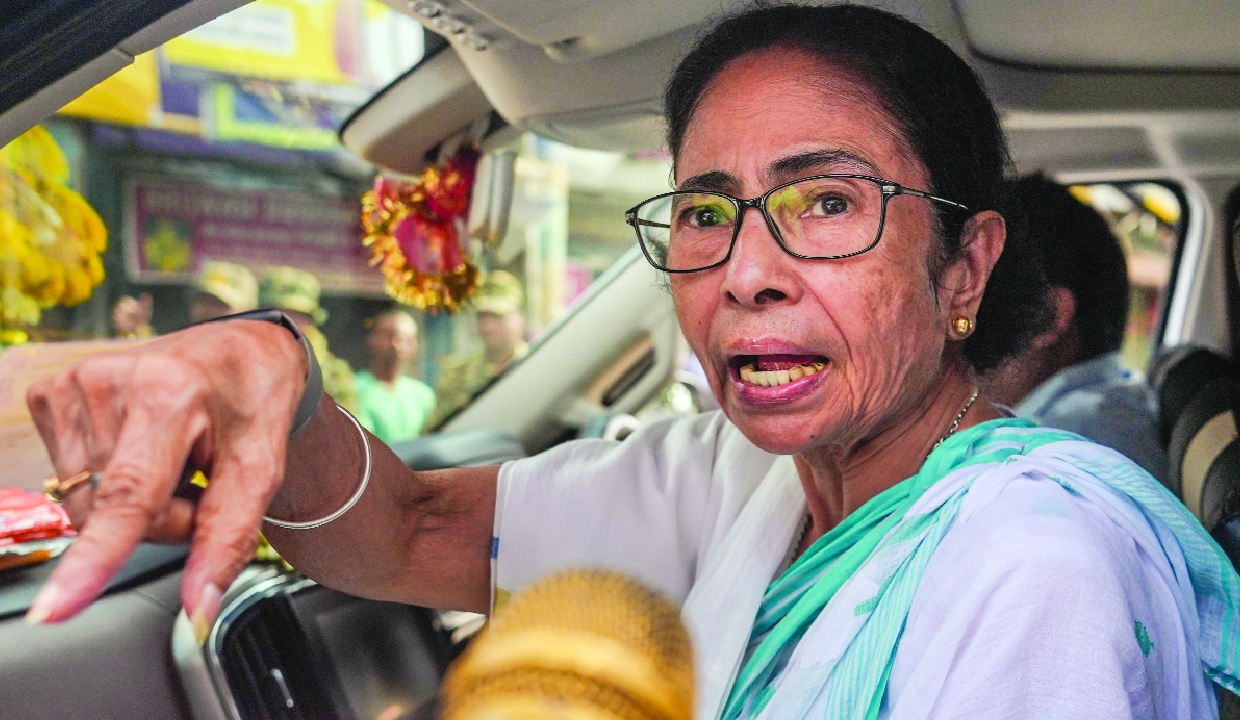
The BJP’s landslide victory in the 2026 West Bengal Legislative Assembly elections, decimating the 15-year-long rule of Mamata Banerjee’s Trinamool Congress (TMC), is no overnight miracle. It reflects a perfect storm of anti-incumbency, strategic planning and messaging coupled with TMC’s self-inflicted wounds.
By the fag end of her term, the West Bengal Government led by Mamata Banerjee faced accusations of entrenched corruption, syndicate raj, extortion networks and governance failures. Scandals ensnared senior TMC leaders, leading to even the arrests of ministers like Partha Chatterjee and Jyotipriya Mallick. These cases, probed by central agencies (CBI, ED), eroded trust even among TMC’s traditional welfare beneficiaries.
15-years since coming to power, silent resentment had started to set in against the TMC-led State Government.
Voters in both rural and urban Bengal signalled a desire for change. Exit polls and early trends showed the BJP consolidating not just its 2021 base of 77 seats but expanding dramatically into TMC strongholds. The silent wave, described by BJP leaders, captured hidden discontent that pollsters and political analysts often miss.
High female turnout, especially in border districts in Cooch Behar, Malda, and Jalpaiguri, delivered a BJP lead across those seats. Women voters, traditionally a TMC pillar via schemes like Kanyashree and Lakshmir Bhandar, swung heavily against the incumbent. BJP framed these cases not as isolated events but as a pattern of TMC impunity, a narrative that resonated emotionally and electorally.
Women’s Safety was the emotional trigger as horrific incidents of Sandeshkhali and RG Kar shook West Bengal. The two high-profile incidents became the BJP’s most potent campaign weapons.
BJP fielded Rekha Patra, a victim of Sandeshkhali from Hingalganj seat, and RG Kar, the victim’s mother, Ratna Debnath from Panihati seat. Both won their seats, turning personal tragedies into political referenda on TMC’s handling of women’s safety.
Further, remnants of the Left front and the Congress voters, disillusioned after years of irrelevance, shifted to the BJP rather than TMC, as the party positioned itself as the only credible alternative in a bipolar contest.
BJP blended a development pitch with promises of central schemes such as PM Awas Yojana, Ayushman Bharat, unhindered by syndicate cuts, plus an infrastructure focus in North Bengal, already a BJP bastion since 2019.
Leaders like Suvendu Adhikari, who defected from TMC, led aggressive grassroots campaigns, highlighting TMC’s internal factionalism and local corruption. Prime Minister Narendra Modi and Home Minister Amit Shah’s rallies emphasised governance over confrontation.
The Special Intensive Revision (SIR) of electoral rolls conducted by the Election Commission of India, deleting around 9 million names, sparked TMC allegations of bias, but it cleaned the rolls and neutralised some ghost voting concerns without derailing BJP momentum.
BJP’s 2021 footprint was largely in North Bengal and parts of Junglemahal. In 2026, it penetrated South Bengal and urban Kolkata seats, namely Shyampukur, Entally and Behala. This geographic expansion turned a regional challenger into a state-wide force. Record turnout and migrant worker participation further amplified anti-TMC sentiment among voters.
TMC chief Mamata Banerjee’s confidence that TMC will cross 226 seats underestimated the depth of public anger. The party leaned heavily on incumbency advantages and welfare schemes but failed to address corruption perceptions or project a fresh face. Internal rifts, defections to the BJP and an over-reliance on muscle power in some areas backfired amid heavy central forces deployment.
BJP’s victory marks the first time since 2011 that a non-TMC Government will rule West Bengal. BJP’s win has underscored how sustained anti-incumbency, coupled with emotive issues like women’s safety and a disciplined opposition strategy, can dismantle even the strongest regional satrap. For TMC, this is a moment of reckoning; rebuilding credibility on governance rather than confrontation will be essential if it hopes for a comeback.
West Bengal watchers say this decisive mandate reflects Bengal’s voters demanding accountability, development and change after a decade and a half of one-party dominance. Now the onus is on the BJP to delivers on its promises. For now, the Lotus has bloomed decisively in the land of Maa, Mati, Manush.