Bihar’s Bawan Buti sarees, Patharkatti stone craft, Pidiya painting get GI tag
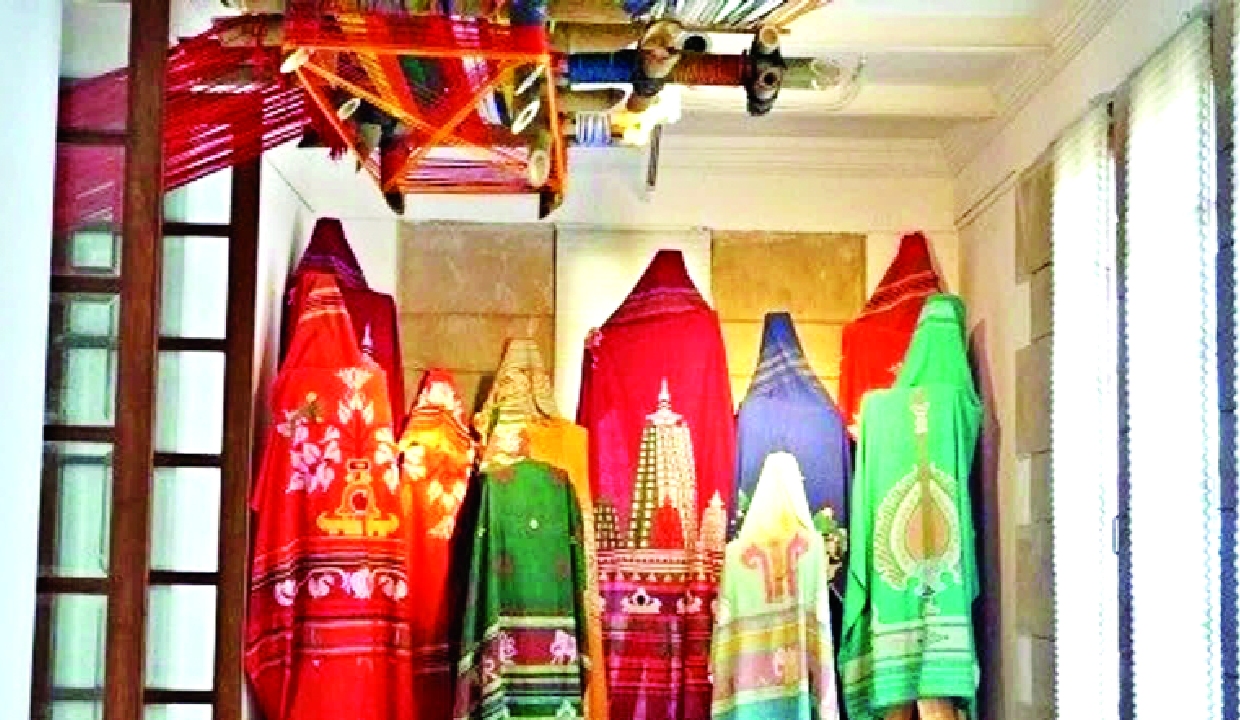
Bihar’s three distinctive traditional products — Nalanda’s Bawan Buti sarees and fabrics, Gayaji’s Patharkatti stone craft and Bhojpur’s Pidiya painting — have been awarded the Geographical Indication (GI) tag, an official statement said on Saturday.
The statement issued by the National Bank for Agriculture and Rural Development (NABARD), Bihar said that the grant of GI tags to these three products will provide Bihar’s handicraft and handloom sectors with a new identity at national and international levels.
It will create new employment and income opportunities for local artisans, weavers, and women’s self-help groups, it said.
“Through the joint efforts of the NABARD and the Bihar Government, this significant achievement has been made,” the statement said.
The GI tag ensures that no one other than those registered as authorised users is allowed to use the popular product name. A GI is a label applied to goods with a particular geographic origin and characteristics or a reputation derived from that origin.
Nalanda’s Bawan Buti weaving tradition is an outstanding example of Bihar’s ancient textile heritage. This distinctive art involves hand-weaving 52 types of traditional motifs and cultural symbols (butis) onto fabric. The craft primarily developed in and around Baswan Bigha, where weaving families have preserved this tradition for generations, the statement said.
“Similarly, Gayaji’s traditional stone craft is renowned for its excellence and has a history of nearly 300 years. Artisans create idols of Lord Buddha, Goddess Mahagauri, various deities, and other folk figures using locally available black granite stones. It is believed that granite stones from this region were also used in the construction of the Vishnupad temple,” it said.
Likewise, Bhojpur’s Pidiya painting is a unique folk artform, traditionally created by women during festivals and social occasions. Through natural colours and traditional symbols, this art depicts folk life, family relationships, religious beliefs, and rural culture, it added.
Expressing his happiness over the development, NABARD (Bihar) Chief General Manager (CGM) Gautam Kumar Singh told PTI, “These products are not only symbols of Bihar’s cultural identity but also the primary source of livelihood for thousands of artisans.”
“Obtaining GI tags for these products is not merely an achievement but the beginning of a new journey. The real work starts after GI registration is secured, as various interventions are required to ensure that producers and artisans derive tangible economic benefits from it,” he said.
While GI registration provides a product with legal recognition and protection, its true success depends on how effectively it is positioned in the market. For this, initiatives such as market linkage, product development, branding and packaging, quality enhancement, skill upgradation training, and registration of producers as authorised users are of utmost importance, the CGM said.
NABARD will play a leading role in these areas in collaboration with the Bihar Government and other stakeholders, with the objective of establishing a strong presence for these products in both national and international markets, he added.