Animal spirits hound the rupee
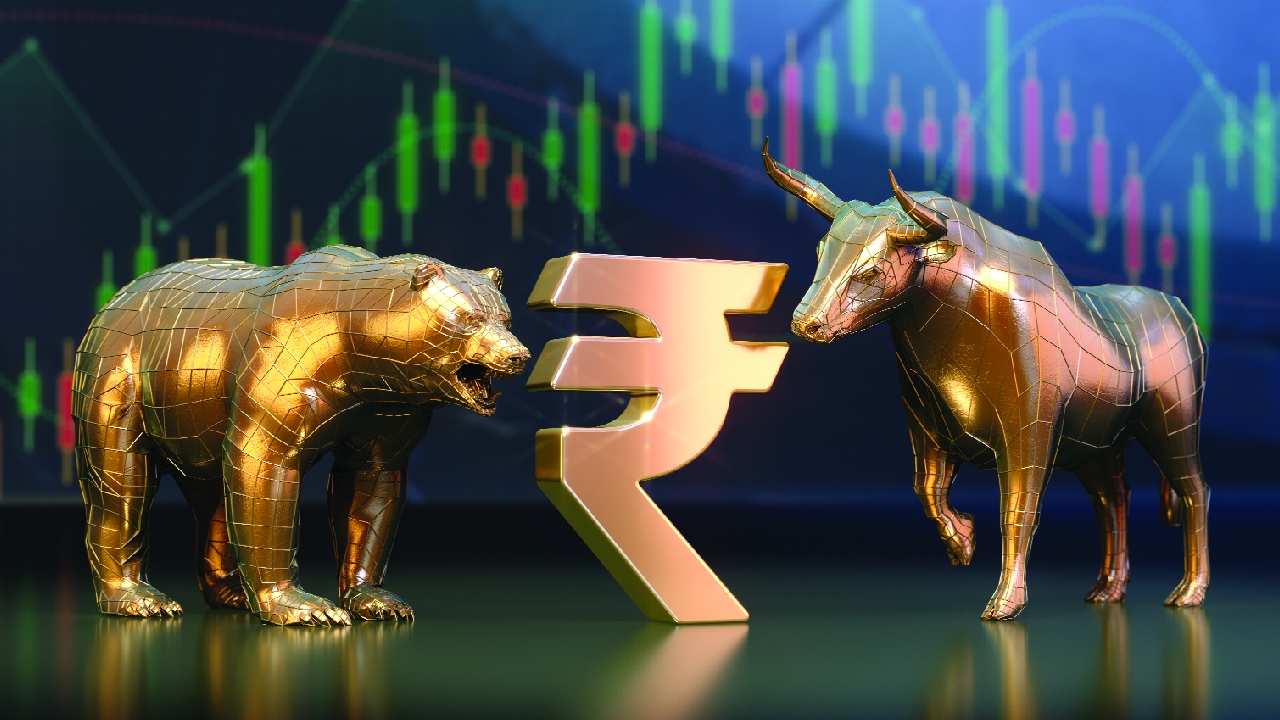
One is not sure which animals are involved. They can be pure-bred bulls, standing bears, sheep in the clothing of the two, half-bull-half-bears, half-bear-half-bulls, wolves, foxes, jackals, or tigers. However, the result is evident. The rupee is under tremendous attack by animal-spirited investors, even as others defend it staunchly. One has seen the pattern repeatedly over the past several months. There are days when the rupee dips, and there are those when it perks up. Yet, maddening Monday (March 30, 2026) was one of the rare days when the animals came together to the currency jungle.
They played their wild games, the rupee was tossed around from one jaw to another, different sets of teeth pulling and biting it, even as there were some animals who rode on its back, and whose back the rupee rested on for a few seconds. Thank God, Tuesday (March 31) was a holiday, and the markets were closed. Hence, one does not know what kind of mania, speculation, manipulation, split-personality, paranoia, and madness will engulf it today. Remember, today may be the worst, or the most clownish day, being April 1, the fool’s day.
Everyone knew that the rupee will regain its much-lost strength on Monday. It was evident, logical, and expected. The Reserve Bank of India (RBI) clamped down on the short positions of the banks, and asked them to unwind them by April 10. The no-limit regime would change to a daily one of $100 million, which meant that each bank could not exceed it. The unwinding would imply getting rid of the positions, even if it meant losses, and less selling pressures on the rupee. By default, the rupee would leap out of the battering table.
It did. On the morning of Monday, the rupee immediately gained more than a rupee, and found itself in the INR 93-to-a-dollar zone. This was an unprecedented gain of more than a per cent, almost 1.5 per cent. To put it in perspective, the normal historical dip in the currency is four per cent a year, yes, in 12 months. In the recent past, it lost four per cent in a month. Yet, more than one per cent, not in a day, week, or month, but within hours was a shocker. A pleasant one for the central bank, and policy-makers, and a repulsive one for the banks, and speculators.
Of course, if the story had stopped then, and the rupee had stabilised at the same or similar levels through Monday, there would not be much of a story. It was an expected climax, although the heights of the recovery were more than the estimations and predictions of one per cent until April 10. But as the day progressed, another anti-climax gripped the rupee, and began to squeeze the air out of its lungs. The rupee plunged down, as if there was no Tuesday. It breached INR 95, from the over INR 93 level, and a wilder speculative dance was visible.
Another defeat for the central bank! While most of the investor-animals were planning to take a break, relax a bit after the massive seesaw battles between the bulls and bears, for the other animals, and many in different clothing and disguises, there was the last climax to unfold. The directors of this never-ending-excitement, and writers of this edge-of-the-seat plots and sub-plots were not done. Towards the end of Monday, the supporters of the rupee came back with a vengeance, and with a never-imagined-before force. It was jungle raj, where the power equations changed rapidly, several times, within a day.
When the drama was over, each animal was tired and exhausted, the rupee gained massively, almost another rupee, which was like more than one per cent. In the craziness, the currency gained by a per cent, lost by more than two per cent, and gained another per cent. In effect, the rupee moved four per cent up and down, like a wild roller coaster ride. In essence, the rupee did in a single trading session what it has historically done over 12 months, or 30 days. It was a day like never before, and one that one hopes does not repeat itself.
After the day was over, or while it was still on, the policy-makers began to verbally defend the rupee. Finance Minister Nirmala Sitharaman said that there was nothing wrong with the currency since the plunge one has witnessed over the past few months and years is less compared to how the other Asian currencies fared. In comparison, the downward movement of the rupee is less than the others. She highlighted that the strength of the economy, fiscal position, prudent deficit management had earned global praise. “Compared to other emerging economies, the rupee is doing fine. Absolutely fine,” she explained.
One knows that the RBI’s decision to force banks to unwind the short positions, down to $100 million per bank per day by April 10 was to stem or stall the speculation in the rupee. Yet the minister of state for finance categorically said that the currency’s value is “determined by market forces, and influenced by multiple global and domestic factors.” He admitted that the Government and central bank had the rupee on their radar, and were monitoring the daily gyrations. Hence, the central bank may intervene, but it will do so strategically and irregularly.
However, apart from the daily movements, let us look at the currency in perspective. Between 2004 and 2014, the rupee’s slide was a third, from INR 45 to INR 60 to a dollar. Between 2014 and now, the downward glide is more than 60 per cent, to INR 95. Some experts contend that the lowest level may be INR 100, although there will be several ups and downs, before it reaches it, if it does. Logically, one can assume that as India has gained in terms of economic growth, and prosperity, the currency was beaten and thrashed, as it went downhill.
Over the years, the various regimes, and the central bank, especially after reforms, have maintained that the exchange rate is determined by the market forces. There is never a target that the RBI has in mind, and it allows it to settle down on the relevant level. The RBI contends that its role is to manage volatility, and speculations, as it did with the limit on short positions, and it does not defend a specific exchange rate. But no regime wants to see the currency in a free fall.