Amidst peace, uncertainty lingers on Noida Sector 63 streets
The smoke from Monday’s arson has cleared. The stones have stopped flying. Yet, by Thursday, as you walk through the industrial sectors of Noida, what you find is not calm. Instead, it is the particular stillness of a place holding its breath.
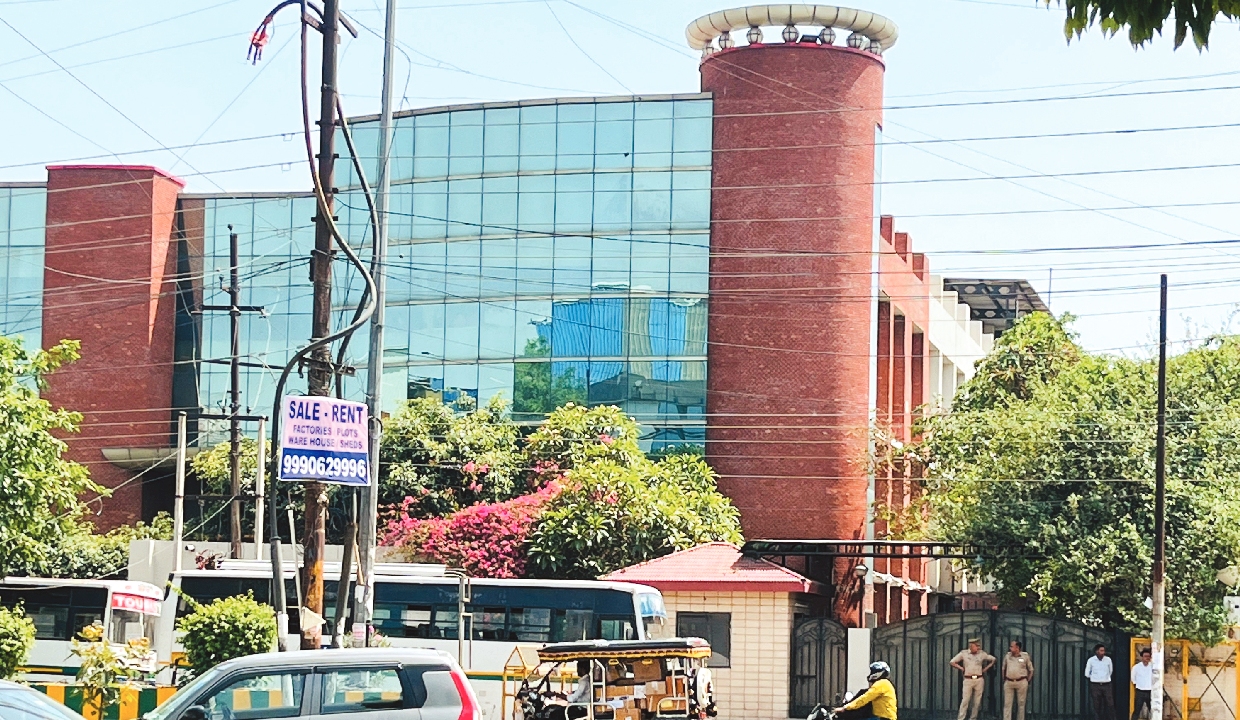
Police pickets stand at every significant junction in Sector 63 and the surrounding blocks. Constables in riot gear sit on plastic chairs outside factory gates that are either shut or half-open. The roads, usually choked with workers, are thin with traffic. The district looks like a town that had a bad week and is not yet sure the week is over.
Uncertainty lingers. “There is an atmosphere of fear here,” said a worker outside a factory in Sector 63’s B Block, glancing at the police post nearby. “As long as the police are here, things are quiet. The moment they leave, trouble will start again.” He did not reveal his name.
This is the mood four days after over 40,000 factory workers poured onto Noida’s streets, blocked key roads, and clashed with police across 80 locations in what began as a protest over wages and quickly turned into a day of fire and stone-throwing. More than 60 people have been arrested. The Uttar Pradesh government has said 45 of the 66 arrested were not factory workers, and has alleged that external elements orchestrated the violence under the cover of a labour movement.
A worker employed at Motherson, one of the larger industrial employers in the area, said the immediate trigger was straightforward. “Every year, the company used to raise salaries by about Rs 500 a month. This year, they have not increased it. That is what started the protest.” He said work has not resumed at his factory. “In some nearby companies, a few workers have come back. But many have still not returned.”
A man who works as a cleaner in one of the sector’s units earns Rs 11,000 a month for an eight-hour shift. He pays Rs 4,000 in rent. “How do we survive on what is left?” he asked. He was not at the protest. He said he cannot afford to lose a day’s wage.
A migrant worker from Samastipur in Bihar, who gave his name as Suman, described the day of violence as overwhelming and leaderless.
“There were so many people. It was completely mixed, workers from all kinds of companies together. It could happen again any time,” he said. He added, with a tired laugh, that the money was so little he sometimes thought people would be better off selling goods from a cart on the street, if only the local committees did not harass street vendors.
The revised wage structure that triggered the unrest took effect on April 1, raising minimum monthly salaries by up to 21 per cent for workers in Noida and Ghaziabad. But on the ground, it has not yet arrived. “The government has said salaries have been increased,” one worker said. “But the company has not increased anything. No notice has come from the company. If they do not increase it, there will be violence again.”
Lalit Thukral, president of the Noida Apparel Export Cluster, has said rising input costs make it difficult for exporters to absorb the wage hike. “Our margins are already under pressure, and buyers are renegotiating to lower prices. If we do not comply, they will shift orders to Bangladesh, Cambodia, or Vietnam,” he said.
He added that the association was raising the issue with the state government.
Another company, Motherson, which has been at the centre of the workers’ protest, has said its operations have not been materially impacted and described the unrest as driven by misinformation about wage revisions.
In Sector 63, the afternoon light falls on near-empty lanes. A tea stall owner ladles out cups to a handful of workers sitting in silence. The factories behind them are quiet. The police are still there. For now, that is the only reason things are as they are.