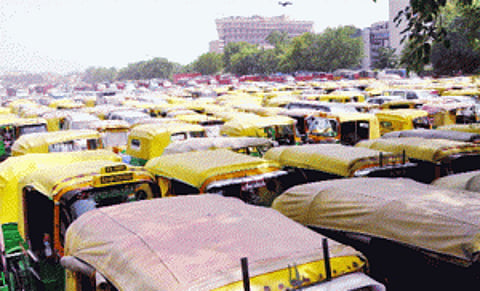

Commuters had a harrowing time on Wednesday in the national capital as a large number autorickshaws and taxis went off the roads during a one-day strike against the ‘City Taxi’ scheme launched by the AAP Government.
The strike, which coincided with the one called by trade unions across the country against the NDA Government’s policies, left people stranded at bus and railway stations while metro and Delhi Transport Corporation (DTC) buses saw huge rush.
People were seen waiting for hours at bus stops in several parts of the city as the buses were over-flowing with passengers. A few auto rickshaws that plied on the roads over charged the passengers and often refused to travel long distances.
Rajendra Soni, general secretary of Delhi Autorickshaw Sangh and Delhi Pradesh Taxi Union, claimed that their strike was successful. He said if the Delhi Government doesn’t agree to their demands, they will hold more strikes in the future. “We cannot compromise with the livelihood of drivers as this scheme will snatch their livelihood,” Soni said.
On the other hand, the Delhi Government claimed that auto and taxi unions did not approach the Government before going on strike. Transport Minister Gopal Rai said he got complaints from some autorickshaw drivers that representatives of unions were not allowing them to run their vehicles on the roads. “In view of this, police should ensure protection for those drivers who want to play autorickshaws on the roads,” he said.
However, Soni refuted the allegations.
Auto and taxi unions had called for a one-day warning strike against the new City Taxi scheme. According to the new scheme, vehicles having capacity of 600 cc onwards can register with the Government as taxis. Until now, only those vehicles which had capacity of 750 cc or more were issued permits. Auto and taxi operators believe that the new scheme will negatively affect their livelihood.
Meanwhile, major trade unions of the country had also called for a country-wide strike to press for their 12-point charter of demands which includes urgent measures to contain price rise, contain unemployment, strict enforcement of basic labour laws, social security cover for all workers and minimum wage of Rs15,000 per month.
Also, they demanded enhanced pension for workers, stoppage of disinvestment in PSUs, stoppage of contractorisation, removal of ceiling on bonus and provident fund, compulsory registration of trade unions within 45 days, no amendment to labour laws unilaterally and stopping of FDI in railways, defence, etc.