
- HOME
- INDIA
- WORLD
- BUSINESS
- STATES
- LAW & JUSTICE
- ENTERTAINMENT
- SPORTS
- VIEWPOINT
- LIFESTYLE
- TECH
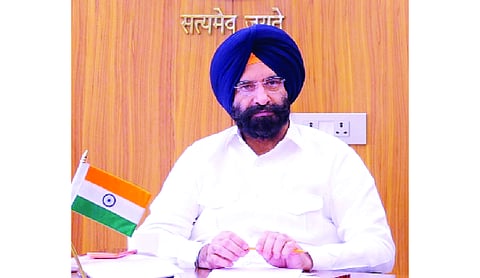
The air that settles over Delhi each winter doesn’t respect state lines, and on Sunday the city’s Environment Minister said the response shouldn’t either. Manjinder Singh Sirsa held a virtual meeting with traffic police officials from five neighbouring NCR areas to plan a joint push against vehicular pollution. The focus is on border congestion, polluting vehicles and buses that do not meet emission rules.
Senior traffic police officials from Noida, Faridabad, Gurugram, Sonipat and Bahadurgarh took part. Delhi Police Special Commissioner (Traffic) and the Delhi Transport Commissioner were also present. The meeting aimed to strengthen coordination and ensure effective implementation of measures under the Graded Response Action Plan (GRAP) and the Commission for Air Quality Management (CAQM)’s directions.
The meeting discussed five areas. First, traffic will be synchronised, and enough personnel will be deployed at high-traffic corridors and congestion-prone spots, especially near NCR borders. This is meant to keep vehicles moving and cut emissions caused by long jams.
Second, enforcement of Pollution Under Control (PUC) norms will be tightened. Visibly polluting vehicles will be stopped. Strict action will follow, including impounding of vehicles and maximum permissible penalties where applicable. Third, truck traffic not destined for Delhi will be diverted through the Eastern and Western Peripheral Expressways, as directed by the Supreme Court. This is meant to reduce unnecessary heavy-vehicle movement through the city.
Fourth, the National Green Tribunal and the Supreme Court’s orders restricting overage diesel and petrol vehicles will be strictly implemented, along with other restrictions under prevailing rules. Fifth, buses coming into Delhi-NCR from outside Delhi must meet applicable fuel and emission standards. Only electric, CNG or BS-VI-compliant diesel buses will be allowed to ply in Delhi-NCR.
For motorists and bus operators, the Transport Department and other agencies will put up prominent banners, display boards and public information material at border checkpoints. They will explain the restrictions. Awareness campaigns will also run through print, electronic, and social media to explain pollution-control measures and promote public transport.
Additional enforcement teams will be deployed at the district level as further restrictions under the Winter Action Plan and GRAP come into force. Delhi Traffic Police told the meeting that it has already stepped up enforcement. On average, agencies are issuing more than 10,000 challans for traffic and pollution violations every day.
The agencies also stressed real-time coordination and quick information sharing so action against non-compliant vehicles can be taken at the earliest, particularly at NCR borders.
Along with vehicle checks, the Delhi Government will intensify water sprinkling, mechanical road sweeping, dust suppression and cleanliness drives across the city.
Sirsa said air pollution is a regional issue that needs coordinated action by Delhi and its neighbouring States. He said the aim, under Chief Minister Rekha Gupta, is to implement pollution-control measures not only inside Delhi but also in coordination with adjoining NCR districts. He said effective border management, strict enforcement, smoother traffic, cleaner public transport, and joint action against non-compliant vehicles will remain key parts of the winter strategy.
The meeting ended with directions to all agencies to stay in close coordination and implement the decisions promptly.