
- HOME
- INDIA
- WORLD
- BUSINESS
- STATES
- LAW & JUSTICE
- ENTERTAINMENT
- SPORTS
- VIEWPOINT
- LIFESTYLE
- TECH
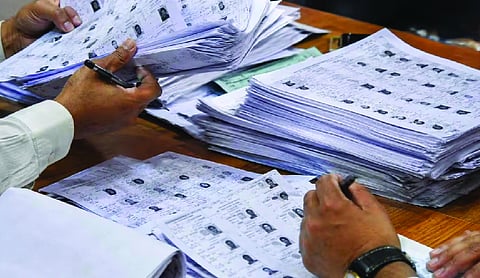
With just three days remaining before the Special Intensive Revision claims window shuts on October 30, nearly 47.57 lakh people who were on Delhi’s electoral rolls at the start of the exercise have still not made it onto the draft roll.
The chief electoral officer’s office has claimed that more than 31.26 lakh notices, or 94.34 per cent of the 33.14 lakh issued to voters under the ongoing SIR of electoral rolls in Delhi, have been disposed of, and the names are parked for inclusion in the final voter list to be published on December 4.
The CEO office urged every citizen to check their name before time runs out.
According to the CEO’s press note, Delhi had 1,45,10,299 electors enrolled when the Special Intensive Revision began on June 30, 2026, with the enumeration phase running until August 17.
Of these, only 97,53,577 electors submitted their Enumeration Forms, while 47,56,722 did not return them and were classified as Absent, Shifted, Dead, or Duplicate (ASDD) electors; their list remains published on the CEO’s website. The draft electoral roll, published on August 31 based on these submitted forms, lists 49,88,993 male electors, 47,64,137 female electors, and 447 third-gender electors, totalling 97,53,577.
Of these draft roll electors, 33,14,032 have been issued notices, comprising 13,79,789 cases where electors could not map themselves to the 2002 SIR rolls and 19,34,243 cases flagged with logical discrepancies. As of the bulletin’s date, 31,26,576 notices, or 94.34 per cent, have been disposed of and parked for inclusion in the final roll.
All notices for logical discrepancy cases have been generated, with 18,96,675, or 98.05 per cent, already resolved following ECI instructions issued on September 29.
Since the draft roll’s publication, 3,88,429 fresh forms have been received, in addition to 5,24,639 forms filed before August 31.
Between August 31 and October 26, Delhi recorded 2,67,441 new Form-6 applications for inclusion, 20,074 Form-7 applications for objections or deletions, and 1,00,914 Form-8 applications for corrections or address changes. The CEO’s latest bulletin also said that 470 Form-6A applications for overseas electors were filed during this period, bringing the cumulative Form-6A count to 1,821.
District-wise figures released by the CEO’s office showed West district recording the highest number of fresh Form-6 applications since August 31, at 32,938, followed by South East district at 25,650 and East district at 25,814. North East district recorded 25,596 such applications, while South West district recorded 23,594 during the same period.
For corrections and address changes, East district led with 10,525 Form-8 applications filed since August 31, followed by North East district with 13,233 and South East district with 8,974. West district recorded 10,643 Form-8 applications, while South district recorded 8,660 during the period.
Form-7 applications, used for objections or deletions, were highest in South West district at 3,057, followed by South district at 2,762 and South East district at 1,949. North East district recorded 2,436 such applications during the same window.
To boost enrolment, authorities held more than one lakh special camps, exactly 1,04,629, across all 14,947 polling stations over seven Sundays between September 20 and October 25, collecting 36,305 forms. Separate camps at colleges and universities on four dates in late September and early October collected 1,987 forms for young electors aged 18 to 25, while camps for homeless persons, transgender individuals and sex workers at DUSIB night shelters collected 557 forms.
Special camps were also organised for electors displaced from recently demolished colonies including Bela Estate, Jailorwala Bagh, Narela, Bawana, Mangol Puri and the Wazirpur Industrial Area. The CEO’s office reiterated that no name can be deleted from the draft roll without a notice and a fair opportunity to be heard.
House-to-house visits by Booth Level Officers continue to identify eligible electors left out. At the same time, 33,226 Booth Level Agents appointed by recognised political parties remain involved at every stage of the process as part of a concurrent audit.