
- HOME
- INDIA
- WORLD
- BUSINESS
- STATES
- LAW & JUSTICE
- ENTERTAINMENT
- SPORTS
- VIEWPOINT
- LIFESTYLE
- TECH
For a week, the stretch of service road beneath the Old Rao Tula Ram flyover had become South Delhi's slow-moving punishment: a daily queue of taxis, airport-bound travellers, and office commuters inching past a structure meant to carry them, not watch them crawl beneath it. On Monday evening, that queue finally began to move again, as Public Works Department Minister Parvesh Verma announced the flyover would reopen for light vehicles after personally inspecting the completed repairs.
Built in 2009, the Old RTR flyover has served as a key link between South Delhi and Indira Gandhi International Airport for over 17 years, carrying thousands of vehicles daily from Vasant Vihar and surrounding areas.
Delhi Traffic Police shut its carriageway toward the airport on October 20 after spotting cracks in the road surface at two locations. A follow-up inspection found deteriorating concrete in the gap slab section, visible cracks, and exposed iron reinforcement rods, prompting authorities to immediately halt traffic on the stretch as a precautionary measure.
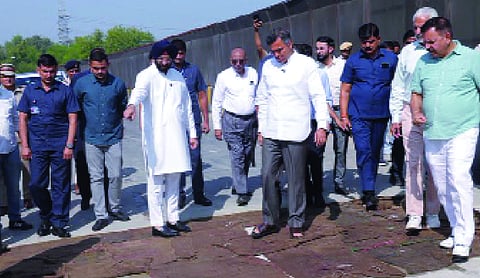
“The necessary repair work has been completed, and the flyover will be reopened for light vehicles starting this evening. A comprehensive structural audit is also underway to ensure the strength and long-term safety of this flyover, which was constructed in 2009,” Verma said, after visiting the site with senior PWD officials to review the work before clearing it for use.
He said the closure, though inconvenient, was a necessary step taken solely in the interest of public safety, and that the department worked to restore connectivity within a week of detecting the damage. For commuters, the past week had meant exactly the kind of disruption a flyover is built to prevent.
With the main carriageway shut, traffic was diverted onto the adjoining service road, creating heavy congestion and long queues at the flyover's approach, particularly during peak hours. The reopening is expected to bring immediate relief to daily commuters, airport travellers, taxi operators, and residents of nearby colonies who have been absorbing extended travel times for days.
For now, the relief comes with a condition. Only light vehicles are being allowed onto the flyover in this phase, with any further easing of restrictions dependent on the findings of the structural audit still underway. The PWD said this audit is meant to assess the overall health of the now 17-year-old structure and identify whether additional strengthening or maintenance work is needed before heavier traffic can safely return.
The Delhi Government said the sequence of events, prompt detection of the cracks, immediate closure of the carriageway, swift repair work and the decision to commission a detailed structural audit, reflected a proactive approach to maintaining the city's ageing infrastructure, much of which, like the RTR flyover, is now entering its second decade of heavy daily use.
The PWD has asked commuters to follow traffic advisories and observe the light-vehicle restriction. Meanwhile, the restriction remains in place, and commuters are asked to cooperate with Delhi Traffic Police personnel deployed in the area to keep movement smooth as the flyover returns to use.
The department said it would continue monitoring the structure closely, with further updates expected once the structural audit is complete, a report that will ultimately determine when, or whether, the flyover can be opened to the full range of vehicles it carried before the cracks first appeared.