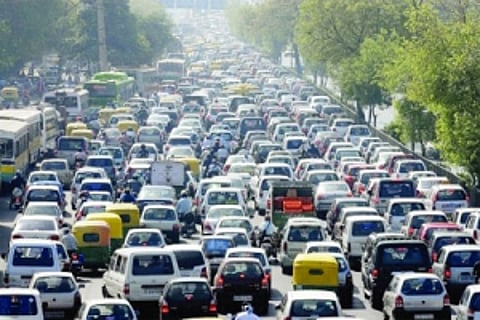

In a bid to reduce the ever-increasing number of private vehicles in the national Capital, the Delhi Transport Department has decided to roll out an inter-connectivity public transportation plan for the city. Among a slew of measures taken to reduce pollution levels, the department is also planning to revive the Northern Railways ring rail and integrating it with the Delhi Metro.
The Government is also planning to increase the number of coaches of each Metro to eight besides adding 1,100 new buses and inducting mini eco-friendly 10 to 15 seater CNG-run buses. A high-powered committee, formed by lieutenant-Governor Najeeb Jung and headed by Chief Secretary Deepak Mohan Spolia has recommended that all public transport vehicles, including new Delhi Metro Rail Corporation feeders buses, new Delhi Transport Corporation buses and 15,000 new four-wheeled auto-rickshaws should be run on compact natural gas to check pollution and improve public transport system.
“Our plan is to make travelling so comfortable for passengers that they do not feel the need to use private vehicles, which is one of the major causes for pollution in the Capital,” said a senior official. By the end of 2016, the administration plans to buy 11,000 new buses for the DTC. At present, the city has approximately 6,500 buses, of which 6,088 buses are owned and operated by the DTC.
According to a study conducted by the Ministry of Urban Development in 2012, there is half a bus available per 1,000 passengers in the national Capital. The average waiting time on the DTC’s 517 routes is an hour. “We want to ensure that the average waiting time for passengers seeking to use DTC buses is not more than 15 minutes. The addition of 11,000 new buses will help us not only to improve the frequency in the urban parts of the Capital, but also ensure better connectivity in the rural areas,” said a senior official.
Besides, the committee has also recommended that the DMRC should increase its fleet of feeder buses for the last-mile connectivity. At present, there are 120 functional feeder buses, but according to DMRC officials, 400 more feeder buses will be made operational by the end of 2016.