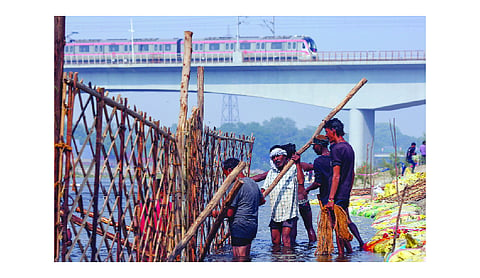

Bamboo baskets are finding space outside shops, sugarcane stalks are being stacked alongside fruit stalls, and vendors are laying out coconuts, bananas and other offerings. Across East Delhi’s markets, the preparations for Chhath Puja are becoming increasingly visible.
Inside homes, too, families are beginning their preparations for a festival that demands not just elaborate arrangements but days of discipline and devotion.
With Chhath Puja beginning on November 13, the familiar preparations are gathering pace across the Capital, particularly in neighbourhoods with sizeable populations from Bihar, Jharkhand and eastern Uttar Pradesh. In markets across Seelampur, Jafrabad, Maujpur, Bhajanpura, Gandhi Nagar and Karawal Nagar, shops selling traditional puja essentials are drawing customers.
Bamboo soop (winnowing baskets), daura (bamboo trays), and smaller baskets occupy prominent spaces in shops. Fruit sellers, meanwhile, are preparing for increased demand for bananas, coconuts, sugarcane, water chestnuts, apples and other seasonal produce.
Traditional baskets, some in their original form and others decorated with colourful fabrics and flowers, remain central to the shopping list. For small traders, bamboo artisans and fruit vendors, the days leading up to Chhath also bring an important seasonal business opportunity. The demand is not limited to decorative items; the emphasis remains on procuring the traditional materials required for the offerings.
Inside households, preparations follow a different rhythm. Families begin by cleaning their homes and arranging the ingredients required for the rituals. Those observing the fast pay particular attention to preparing offerings, ensuring the food and utensils used for the rituals are kept clean and separate. Thekua, a traditional sweet made from wheat flour and jaggery, is among the most recognisable offerings associated with the festival.
For many families who have moved from Bihar and eastern Uttar Pradesh to Delhi in search of work, Chhath is also an occasion to reconnect with their roots. The preparations bring back memories of ancestral homes, village ponds and riverbanks where generations of family members observed the festival together. Even when celebrated far from their native places, the rituals offer a sense of continuity and belonging.
The festival’s significance lies in its distinctive form of worship, dedicated to the Sun God and Chhathi Maiya. The four-day observance begins with Nahay Khay on November 13, when devotees take a ritual bath and prepare a meal. Kharna, observed on November 14, will involve a day-long fast followed by prayers and an offering of kheer and other traditional food. On November 15, devotees will offer Sandhya Arghya to the setting sun, followed by Usha Arghya to the rising sun on November 16.
The fast, particularly observed by women in many households, is regarded as an expression of devotion, gratitude and discipline. Fruits, sugarcane, the kua and other offerings are carefully arranged in bamboo baskets, reflecting a tradition in which natural produce and simplicity hold particular importance.
Alongside household and market preparations, civic agencies are racing to ready the ghats. The Delhi government has identified 1,482 ghats across 996 locations for this year’s observance, with multiple government departments and civic agencies coordinating arrangements. A nearly 11-km-long dedicated ghat along the Munak Canal is among this year’s major additions.
The Municipal Corporation of Delhi has also stepped up inspections, directing officials to ensure sanitation, lighting, security, adequate dustbins, and proper water arrangements. At Haathi Ghat near ITO, officials have been asked to clear accumulated waste along the riverbank and coordinate the removal of floating garbage from the Yamuna. Separate arrangements are also being made to collect and dispose of puja offerings.