
- HOME
- INDIA
- WORLD
- BUSINESS
- STATES
- LAW & JUSTICE
- ENTERTAINMENT
- SPORTS
- VIEWPOINT
- LIFESTYLE
- TECH
The Delhi transport department has deployed around 250 enforcement personnel at key entry points, toll plazas and identified pollution hotspots across the national capital as it prepares to strictly enforce restrictions on vehicles below Bharat Stage VI from November 1, officials said on Tuesday.
Transport Minister Pankaj Singh said that preparations are in full swing to implement the rules under the action plan across the city starting from November 1.
“Our enforcement teams are deployed round the clock at major entry points, toll plazas and identified pollution hotspots. The Government is fully committed to taking every necessary step to control vehicular pollution and ensure cleaner air for the people of Delhi,” Singh said.
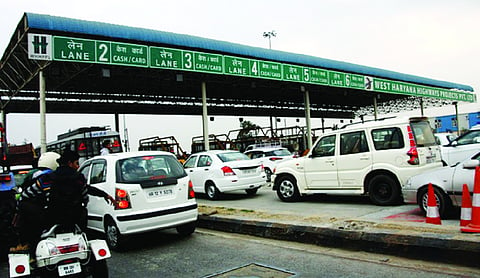
Officials said 39 enforcement teams will be stationed at 13 major toll plazas for constant vigilance. Each team will consist of four to five officials, bringing the total deployment to around 250 personnel.
Additionally, 14 teams have been assigned to work with district magistrates’ offices on pollution enforcement and may be redirected to border areas as needed.
Deployments have been made at major toll plazas including DND, Rajokri-NH 48, Ghazipur, Singhu border, Tikri, Badarpur and others. “Teams are also deployed at major pollution hot spots and adjoining areas along with district transport officers,” an official said.
The department has already intensified action against vehicles operating without valid Pollution Under Control (PUC) certificates. Over the past 14 days, it issued 4,572 challans for violations related to invalid PUC certificates, officials said.
“If the objective is a genuine reduction in vehicular emissions, the policy’s selective targeting undermines its own credibility. The directive bans BS-IV passenger cars and commercial goods vehicles but completely exempts two-wheelers. Two-wheelers outnumber passenger cars by nearly three to one in the capital,” former deputy commissioner of transport Anil Chhikara said.
He pointed out that most two-wheelers run on older engine configurations, which significantly contribute to hydrocarbon and carbon monoxide emissions. Exempting this largest segment of the city’s active fleet while sidelining compliant and relatively new four-wheelers defies environmental logic, Chhikara added.
Under the winter action plan, vehicles without a valid Pollution Under Control Certificate (PUCC) and those that have completed their prescribed lifespan will not be provided fuel.
Delhi currently has around 780 PUCC centres, and Singh noted that CCTV cameras are being installed at 500 of them.