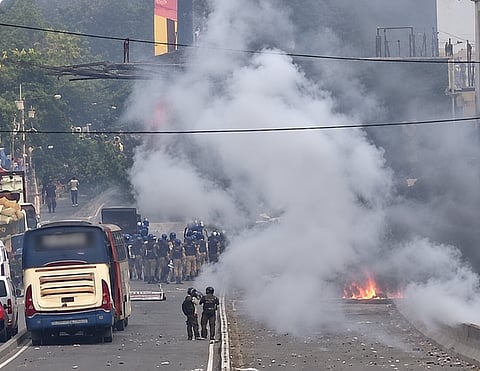


DHAKA: Garment workers in Bangladesh staged fresh demonstrations across major industrial areas on Tuesday, November 17, demanding higher minimum wages. Protesters blocked highways and roads in Gazipur, Savar and Ashulia, while police used tear gas and sound grenades to disperse demonstrators in several locations.
In Savar, demonstrations were reported around Hemayetpur, where workers blocked roads and set tyres on fire. A separate blockade at Fulbaria brought traffic on the Dhaka-Aricha Highway to a standstill from around 11 am to 11:50 am, causing congestion in both directions. Similar attempts to block roads were reported in Ashulia's Jamgora and Khejurbagan areas, where police dispersed protesters.
In Dhaka's Mirpur, garment workers attempted to march towards the Mirpur-10 roundabout but were stopped by police. Tear gas and sound grenades were used to disperse the gathering, and several people were reportedly detained.
The demonstrations also affected factory operations. The Business Standard reported that at least 26 factories in Gazipur remained closed indefinitely, while several others announced holidays. In Savar and Ashulia, eight factories reportedly shut under the Bangladesh Labour Act, with three others declaring general holidays.
Workers are demanding an increase in the existing minimum monthly wage of Tk 12,500 to Tk 30,000, citing rising expenses on food, housing, transport and healthcare. They say their earnings have not kept pace with the increasing cost of living.
The latest demonstrations followed the postponement of a Minimum Wage Board meeting scheduled for November 16. The meeting, which was expected to discuss proposed salary revisions, has now been rescheduled for November 23. The government constituted the board on November 1 to recommend a revised wage structure.
The revised pay structure is expected to be announced in December and is scheduled to take effect from December 1, with workers expected to receive the revised salaries in January.
Bangladesh's garment industry employs more than four million people and contributes over 80 per cent of the country's export earnings. Factory owners have warned that continued disruptions during the peak production period could delay shipments and affect orders from international clothing brands.
(With inputs from agency)