
To do or not to do

To do or not to do
Published on: 

Yogi Ashwini points out the various ways by which the concept of power yoga is harmful to the body and lists the beneficial ones

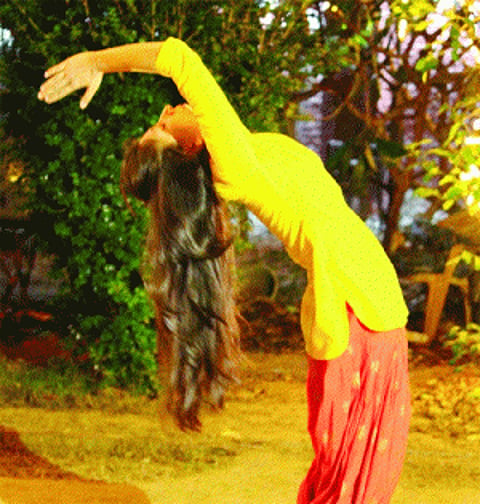
Yog is a practical subject the results of practices are tangible and physical. These days one hears of yoga courses, which claim to make you fit and healthy through certain postures and breathing exercises directed at the physical. While one does feel good after doing such practices, their effects are limited to the physical body and do not touch upon the root of the problem. As a result, the ‘problem’ reappears in some other shape or form and once again one starts looking for a solution and more courses. What you lose in the process, is not the heaviness and negativity, but your bank balance!

Yog is not about twisting and turning your body or breathing abnormally, it does not tie you to any particular religion, ritual, lifestyle or diet. Yog sets you free and this can definitely not be given by one who is himself tied in the bondages of maya and charges a fee/favours from you.

When Rishi Patanjali wrote the Yog Sutra he merely mentioned asana as Sthir Sukham Asanam. A posture, which gives you pleasure and peace and can be maintained for a long period of time is called an asana. Pranayam is natural cessation of breath. And, there is only one yoga, which happens (and is not done) in thesanidhya of Guru, who is non-commercial.

Unfortunately, today there exist a lot of misconceptions about yoga, and a lot of people have found lucrative business opportunities in innovating and selling modern forms of exercise/breathing wrongly termed as yoga. Think about it, if twisting and turning your body was yog, then wouldn’t acrobats be called yogisIJ

Dhyan Foundation, under the guidance of Yogi Ashwini follows Yog, as it is, the way it was laid out thousands of years ago as per the ancient guru-shishya-parampara. “The purpose of asana is cleansing the body — nadis (etheric channels) and chakras (energy centres). 4500 years ago, there was no requirement for this cleansing, the thought, actions and environment were relatively pure and conducive to the practice of yoga. Therefore, no mention of asanas in Patanjali Ashtanga Yoga”, says Yogi Ashwini.

ASAN VS EXERCISE

  • Asanas slow down your pulse rate and breath rate
  • Exercise works on the principle of increasing metabolic rate of the body, asanas brings it down to an optimal level. Former results in faster wear and tear of the body (ageing), latter is the key to longevity and forever youth.
  • Monitoring breath and keeping eyes closed are important requisites for asanas.
  • Asanas draw your awareness inwards, so that you become aware of the physical and subtler aspects of your own body, and attune you to nature. On the other hand, while following modern exercise routines, your complete focus is taken away from yourself and you are made to follow others. Following others mechanically is not going to help, rather it may cause damage while trying to outperform others.
  • Yoga increases with age, exercise decreases with age.
  • If you do yoga under the sanidhya of a Guru, it cannot cause bodily harm, whereas in exercises every two years you get to know about how an old method is defunct or not right and a new method is introduced. It is said that gymming continuously for years can ruin your knees, dry up your vital fluids, and damage your spine. So perfect is the science of asanas that not even one asana puts strain on 5th or 6th vertebra, which can cause serious damage to the body.
  • Exercise only acts on the physical. It is a mistaken realisation that things change from the gross to the subtle, while in reality changes in the physical are controlled through the subtle. Asanas not only train your body but they affect various states of consciousness, body and mind are just one level of awareness. When a Guru takes you through their practice,asanas touch all layers of your being and elevate consciousness. With this heightened consciousness, changes in the physical body take place.
  • Asanas bring stillness and stability. They are maintained for long periods of time unlike exercises that are repeated vigorously. Slowly asanas increase the capacity of the body by maintaining optimal level of efficiency, where without straining yourself you can achieve seemingly impossible feats.
  • Every asana represents a yoni (level of existence), like padmasan represents yoni of lotus. Perfecting the asana helps one imbibe the subtler attributes of the yoni and evolve through it.

The author is from the Guiding light of Dhyan Foundation

Daily Pioneer
dailypioneer.com