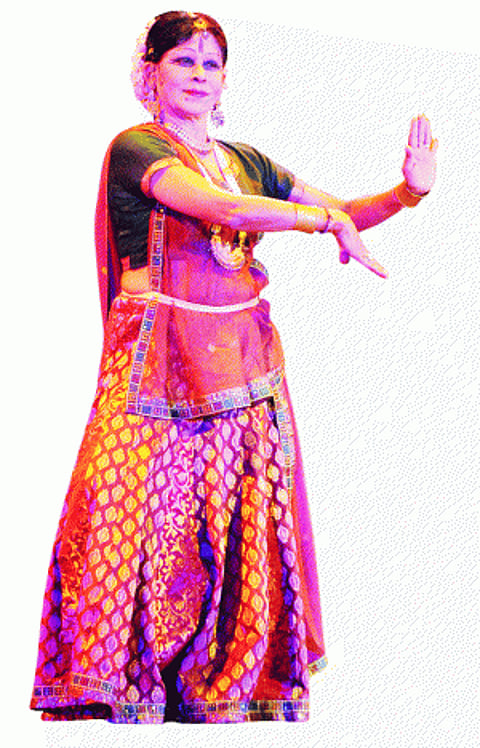

World Dance Day calls for understanding of human responses, of harmonisation of the extreme emotions within and of an appreciation of different cultures. In this process it exhorts educational systems to take cognisance, says Shovana Narayan
In an age where hard materialism defined by economic and material gains are the byword, is there a need to discuss a subject like traditional and classical dance, is the issue. To find an answer to this, we may have to turn our attention to the happenings around us. The age of commercialisation seems to have brought in its wake, an atmosphere of “more affluence but less happiness and much greater risk of depression and assorted social pathology” as stated by Hope College psychologist David G Myers. It seems that everything today preys on our inner self to make us unhappy and more dissatisfied and bolsters the age old adage that “wealth does not ensure happiness.” In this atmosphere there comes the imperative need to be able to withstand pressures of crass materialism and harmonies our inner self. Inability to do so leads to unfortunate situations where suicides and violence of various kinds dot the media pages. In sharp contrast is the world of classical dancers who seem to be largely distanced from the world of violence.
Traditional Indian method of education had recognised the power of performing arts that helped in harmonising energies and tendencies of tandava and lasya within. Perhaps this formed the underlying principle of imbuing our deities with artistic attributes whereby Goddess Saraswati held a veena, lord Shiva performed the tandava and was dubbed Nataraja and ‘Natwar’ lord Krishna could not be seen without his flute! Dance has been taken to be one of the higher forms of Yoga in traditional Indian philosophy whereby its practice brings about the harmonisation of the physical, the mental and the spiritual as it keeps the balance between the three gunas (rajas, tamas and thesattva). The three gunas are the energies through which our deeper consciousness functions.
This need is ever so evident today when the threats or influences being faced are quite different from the influences that were faced in the last 1,000 years of Indian history. With increasing globalisation, every country is under increasing pressure today from outside influences. With increasing speed of technical advancement, pressures are mounting and in this scenario, the development of a balanced individual becomes all the more necessary. It is this pressure that led to the escapism phenomenon in different eras the ‘flower children’ of the sixties and the spate of suicides and criminal acts of later decades! As an answer some have taken to spiritualism.
There is thus the need to understand the relevance and importance of ‘culture and performing arts’ in the growth and development of every individual and therefore, of society. Inter-linkages between science, performing arts, ancient Indian texts on range of subjects and philosophy that impacted and influenced development of science and maths, should form part of education and there should be a policy to cultivate the minds from a very young age and appreciation of these genres with associated appreciation of classical and traditional folk performing arts, ancient and vernacular language, literature and their transliteration, Indian folklores and their relevance today. These should, to my mind, be part of mainstream subjects in all elementary and middle school curricula with a cautionary note that it eschews any hint of regional cultural imperialism and biases.
The area of performing arts bridges the gap of understanding and essays humanism and in the words of director-general of UNESCO Irina Bokova, it opens a ‘vision to the entire human community, providing a humanist response to globalisation and crisis’ that aims ‘at the safeguarding of social cohesion and the preservation of peace’. Thus the World Dance Day calls for understanding of human responses, of harmonisation of the extreme emotions within and of an appreciation of different cultures. In this process it exhorts educational systems to take cognisance. The imperative to keep an open mind and develop firm roots in our traditions increases day by day. It is necessary to see that the tree of our individual person is a strong and balanced one, able to withstand pressures of all kinds of storms and tempests and which is also capable of appreciating various cultures of the world.