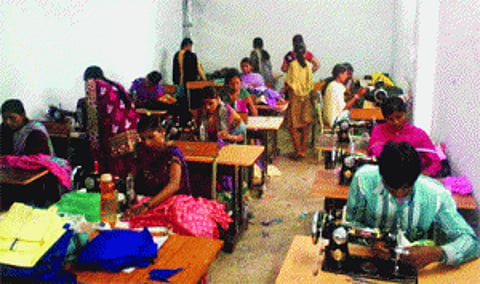

The Ministry of Tribal Affairs is chalking out a host of schemes and policies to benefit the backward classes
The Ministry of Tribal Affairs is committed to overall development (including health and education) of the people belonging to scheduled tribes and to protect their rights and preserve and promote tribal culture and heritage.
The Ministry has taken a gap-filling role in the activities of various line ministries in so far as the welfare of the tribal population and has implemented a number of schemes through the State Governments/Union Territory administrations or organisations, recommended by the multi-disciplinary state level committee of the concerned State Government/UT administration.
The capacity of tribal people to harness the fruits of development and to access various schemes for delivery of public goods and services has remained limited. The integrated tribal development agencies were the institutions who were assigned with the role to facilitate such access. But over the years, several scheme-specific bodies at district level became stronger whereas ITDAs/ITDPs have become weak or non-existent in most of the states.
Similarly, tribal research institutes have become weak in many States. This has reduced knowledge support to persons in charge of tribal development. Urban areas have seen increasing number of tribal people but there is no agency to look after their special problems.
During the current year, the Ministry has taken up the strengthening of these institutions on priority and also to create new ones so that they can deliver goods and services more effectively. Under the existing scheme of SCA to TSP, grants under Article 275(1) of the Constitution and the scheme of ‘Grant-in-Aid to Tribal Research Institutes’, the guidelines have been revised so that these institutions may be equipped with proper infrastructure, manpower and flexibility.
RECENT INITIATIVES TAKEN BY THE MINISTRY
Health and nutrition
Sickle cell anaemia: A protocol for identification of sickle cell haemoglobin in tribal students through a low cost ‘turbidity test’ has been developed by ICMR. Training workshops organised by the Ministry to carry out these tests within this financial year. A card is being issued to each child on sickle cell status which would be used to counsel parents of sickle cell carriers not to marry other sickle cell carrier. Gujarat has already completed more than 80 per cent screening. Training workshops have been held in Odisha, Gujarat, Jharkhand, Madhya Pradesh, Assam, Tripura, Mizoram, Manipur and Arunachal Pradesh.
Malaria: To reduce the incidences of Malaria amongst the tribal population, composite fish cultures in the local ponds has been advocated. Using space technology mapping of existing ponds and potential ponds have been started and training workshops are being held in all States/UTs with ST population. This prevents the breeding of mosquitoes.
Culture
The Ministry provides a national platform for conservation and promotion of cultural heritage of the tribals. A national festival was organised in Delhi to showcase tribal art, craft, food, literature and medicines.
livelihood
OTHER INITIATIVES INClUDE: