
Filmmaker Goutam Ghose and theatre personality Ashoke Vishwanathan spoke about the interdependence of cinema with different media. Shrabasti Mallik reports
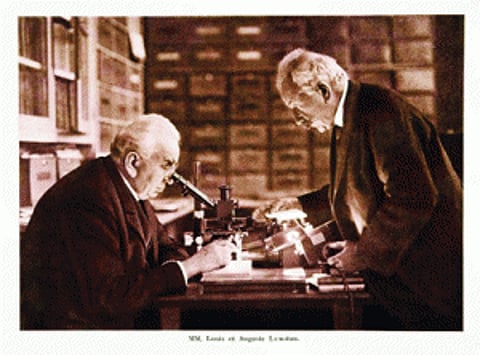
When the lumiere brothers, Auguste and louis, first screened a motion picture in 1895, it took the world by surprise. Be it the moving trains or a boy jumping on a hosepipe, the motion had just begun to be seized in a frame. Once after the screening of a movie, the lumiere brothers told scribes, “look we are scientists and now, our job is over. We need artistes and sensible folks to take over to create new language and grammar.”
Since then, experiments with the motion picture kicked off and creative people collaborated the medium of cinema with other forms. Be it poetry, painting or theatre, the relationship between evolving media just grew. Contemplating on the interdependence of cinema and other allied arts, Bengal’s eminent personalities such as Goutam Ghose, Ashoke Viswanathan and Jahar Kanungo came together in a session moderated by film critic Manojit lahiri.
“Ever since the lumiere brothers invented their technology, the cinema started evolving and eventually became mass media. At the beginning, it was only about the director, cameraman and editor. But then people started asking more than the story or its connection to the narrative. From there, the journey really began. In the United States, Soviet Russia or Europe, filmmakers did experiments and in those attempts, the elements of other arts seeped in. Although it was a silent cinema, it had tremendous influence of musical structures like in the movies of DW Griffith, which were like symphonies. Music and literature entered movies because they had tremendous stories to offer. Painting lent dynamic compositions,” said Goutam Ghose.
For Ghose, an award-winning filmmaker, movies are not just mere imitation, they are a kind of a transformation from one art form to another.
But he also points out a difference, “If you look at a still frame or a painting, your eyes will go to the brightest part. But if you look at motion frame, your attention will go to a movie part, something that moves and not just the colour. Cinema is a universal language that can be used for entertainment.”
With theatre failing to generate as much interest in the people as the cinema, Vishwanathan let his heart out about his views of the times we are living in and it treating the arts.
“We are living in an age where we seem to be faltering at every step. We are going through dangerous times and I have a feeling that only culture and art that can rescue us. Shelley pointed out, ‘Poets are the unacknowledged legislators of the world.’ One can only hope that it will come true. We are eager to dispense a film altogether succumbing to political pressure not because the alternative media that is coming to the fore is superior, but some companies want to flood us with their products. This is a problem that has been happening for a long time and I believe that we can only be rescued by films relating to the other arts. We must try and understand that art cannot be dominated by commerce,” he said.
He shared an example of an epic judgment issued by the Supreme Court of Italy, stating that art must not be influenced by commerce.
He, however, was of the opinion that it is important to realise that cinema is an art form and that theatre, painting and music must move hand in hand with cinema. He felt that for some reason the film and celluloid experience that we know is gradually being shelved.
“We are slowly moving towards a world where books would become obsolete, people will read newspapers in a tab and we would all live in a virtual world. We can only be recognised and rescued if we give due importance to the arts,” he pointed out. He also spoke about the importance of music in cinema; how when Satyajit Ray shot Kanchenjungha, it was not the music of the movie that made it musical but the Rondonite structure of Kanchenjungha, which was instead borrowed from music. He added, “The elements of the movie repeat themselves at intervals and in parallel tracks. In fact it is this model that is followed in television serials today. It is an interesting kind of parallel; almost like osmosis between cinema and the other arts.”
He brought out the fact that everybody is aware of cinema being borrowed from literature, but also shed light on the fact that no one ever wondered that even literature followed the pattern of a parallel narrative. He explained, “Be it in the works of Salman Rushdie, Arundhati Roy, Jhumpa lahiri or Amitava Ghosh, who not only use parallel narrative but also juxtapose them with scenes, which come primarily from cinema.”
He concluded by saying that, “The subject — though a little exotic, a little problematic and perhaps not framed in the best possible way — brings up several questions. And we must think of how cinema, while maintaining its pristine purity and not being a conglomerate of all the other art forms, can borrow from other art forms and also give back to other art forms.”