
With Infosys’ new CEO, Vishal Sikka, pointing out that “there is an incredible fascination for Nach Baliye”, we review how the ratings war and aspirations of young India to be part of instant fame and glamour through reality shows marked the end of knowledge-based content on the small screen
When Infosys’ new CEO, Vishal Sikka, recently commented that “there is an incredible fascination for Nach Baliye and singing and dancing, and I wish we get back to a little bit of math and science,” he just gave words to the feelings of most of those who grew up in the late 70s or 80s, watching quiz shows like The Cadbury Bournvita Quiz Contest, that began on April 12, 1972. That was a time when no parent had to force children to watch quiz shows. They were as much a part of TV watching routine as was Tom and Jerry. Sikka was talking about his growing up days and said that “we didn’t have Dance India Dance at that time. Getting people back into sciences, maths and engineering is going to be critical.”
A series of quiz shows followed Derek O’Brien’s quiz show. Shows like Quiz Time, Spectrum, The India Quiz, Mastermind India, University Challenge as well as India’s Child Genius formed quite a chunk of TV programming earlier. The change began to happen when the focus started to shift to ratings. In a bid to be ahead in the ratings war, channels rigorously promoted song and dance shows and least attention was paid to knowledge-based shows. Siddhartha Basu, one of the pioneers of quiz and game reality shows in India recently commented that the simplest reason for the absence of quiz shows is ratings. He said, “Knowledge-based shows and English-language programmes rarely show up well on the ratings chart. So unless a quiz show ties up with a broadcaster’s or advertiser’s profile, it becomes an endangered species. If children need value addition on the knowledge front, I’d say watch less TV. Or rather, watch very selectively.”
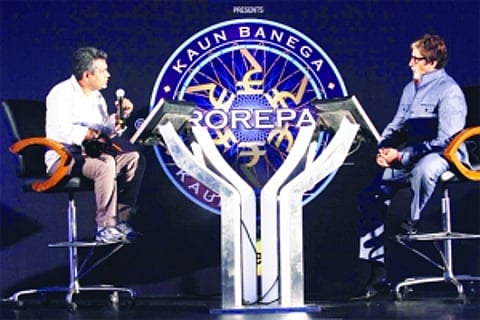
The trend of reality shows, that fuelled the aspirations of young India to an extent that people sought to extreme measures like burning themselves and threatening to commit suicides at the venue of auditions, only spoilt the case for quiz shows. Be it parents or children, the trend over the years has been to somehow be the part of glamour and glitz of reality shows and earn instant fame. The more popularity these shows received, more producers and channels were interested in them. The concept of reality shows moved further from dance and songs and then came more masala-loaded shows like Bigg Boss. The reason, why we saw knowledge-based content vanishing gradually from major channels was also that for information came the Internet. Policy makers on Indian television started to argue that children no more need to watch TV for information. Information on any subject, in today’s age is easily available with the click of a button. The change came with the coming of the Amitabh Bachchan starrer Kaun Banega Crorepati. The show has been an immense success and soon after the first season of the show, even other producers came up with shows with similar content. But they could not take away the focus from the game show. On one hand, where major channels have stayed away from the quiz shows, there have been some popular shows on kids’ channels. Classmate Spell Bee on Discovery Kids this year was conducted pan India and engaged with more than 2.5 lakh students across 750 schools in 27 cities.