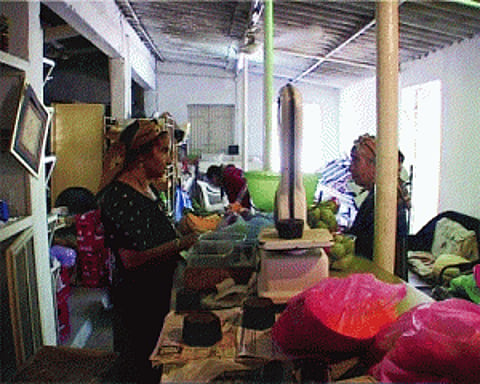

The Israeli documentary Neighbourhood will open the Delhi International Film Festival today. Its director Ilan Yagoda tells Karan Bhardwaj that his movie is a sweet reminder of a time when people would spend hours chatting with each other in street corners
Curiosity is what dictates Israeli filmmaker Ilan Yagoda’s vision. Even while we are having a candid conversation, he keeps scribbling notes, noting down every thing that sounds interesting to him. It must have been that urge to know more about the things around him that led him to make his latest documentary Neighbourhood. It’s about four women who meet at a sidewalk bench everyday and talk about their lives. Ilan’s movie will open the Delhi International Film Festival today. “These are four elderly Yemenite women who live in an immigrant neighbourhood, very close to Tel Aviv. I used to cross that road and would often find them chatting. I realised how the culture of neighbourhood is lost amidst tall buildings and private apartments. So I thought it would be a good idea to relive those moments,” he says.
The hour-long movie captures ladies at different hours, areas, at their homes while doing daily chores. “I followed them for over three years to assemble the best moments of their lives. It makes you happy, saddens you and make you realise a lot of things that you might not have thought for a long time,” he says. Three of the four women are widows and share how they feel left out in the family. With their partners alive, they were the centre of their house running the show. But after their husbands’ demise, they were reduced to just another fellow in the family. “It also shows how modern people are becoming lonelier. They are guarded by their gadgets and jobs. When I was growing up, I remember how we used to go out more often in our neighbourhood and had a great time. Today, people are locked inside and they are less sharing and caring,” says the filmmaker.
Ilan says that Israeli women are catching up with modern times while people are becoming more money-driven. “like anywhere else, they are engaged with their jobs all the time. So their focus is to improve the standard of living,” he says.
Israeli documentaries have received accolades worldwide despite the limited support and funding. Ilan tells us that finding a financer for a movie, which is “not sensational”, is a struggle. However, the state finances movies and they are produced quite independently. “We manage to make some 30 movies every year for around seven million people, who can speak our language. But the impact is magnificent since these films travel across the globe. TV stations also support documentaries,” he says.
While the major funding comes from government’s cinema wing, filmmakers are given authority to select themes without any pressure. “Funding from the establishment doesn’t impact the content of the movie. They do not interfere in the filmmaking process. When you show them the script, they ask about your cinematic approach and not your opinions or views. I made a documentary Rain 1949 on Kibbutz, a collective community in Israel. The documentary featured Jewish refugees from the German Holocaust settled in Kibbutz. Despite touching upon the political issue, the movie was produced by Israel Film Service. The movie tracked the life of two Holocaust survivors. It was called Rain 1949 because there was a heavy rain which affected the people drastically in Kibbutz,” said the filmmaker whose mother was also a Holocaust survivor. On his maiden trip to India, he wants to make the best of it. He asks us the best of filmmakers, places and movies that he should know about. “I have heard a lot about this place but my knowledge about the Indian cinema is limited,” he confesses. His next stop is Kolkata where he is conducting a masterclass for students. “I might visit Taj Mahal and Rhishikesh once I come back,” he says.
photo Pankaj Kumar