

Hyderabad: Residents of a slum in Jubilee Hills’ Dr B.R. Ambedkar Nagar, a developed locality in the heart of Hyderabad, are facing a severe shortage of drinking water.
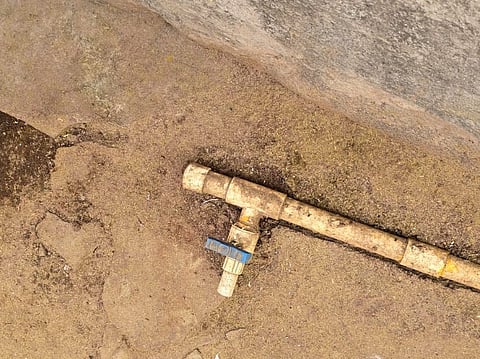
The drinking water pipelines laid in Dr B.R. Ambedkar Nagar Basti on Jubilee Hills Road No. 46 are yet to become operational, forcing families to fetch drinking water from elsewhere or purchase it. Water tankers are also insufficient to meet the water requirements of people living in the area.
The residents in the area are also dependent on common storage sumps and water tankers for their daily water needs. The delay in activating individual tap connections, coupled with inadequate tanker services and irregular water supply, has left several families struggling to meet their basic water requirements.
Residents said the water shortage had continued for the past three months, with some households going without an adequate supply for weeks. They alleged that government tankers were insufficient to meet the demand and that water was mostly released around noon, when many residents were away at work.
They also alleged that prolonged storage of water in sumps in households was causing health problems, including allergies. The stored water was being used for bathing, washing clothes and sanitation purposes, they said.
Chandrakala, a resident, said water was earlier supplied regularly in the morning, usually around 6 am. However, it was now released mostly around 11 am or noon and remained available for only one or two hours.
She said residents who have storage tanks at home manage to collect water when it is released, while others have to walk to the lower part of the locality and carry the water.
Residents said the number of government tankers had also declined.
"Around four tankers used to arrive daily earlier, but now only about two were coming for water supply. Water was first stored in a common tank and then supplied to different lanes through pipelines," Chandrakala said.
Pappaya, another resident,said repeated complaints to the authorities had not resulted in a solution and residents were arranging private water tankers by sharing the cost, paying around Rs 200 per household. He added that drinking water was also a concern, with families having to bring it from elsewhere or purchase it.
Residents said drinking water pipelines had been laid across the locality one or two months ago, but the individual tap connections were yet to become operational.
Sirisha said water for other household purposes was supplied once every 15 days, forcing families to store it in sumps and tanks.
"The main problems are water and roads. There is no proper road here. It is very difficult to carry water from below, especially for women who have to manage children as well," she said.
Residents said they were unaware of the occupancy certificate (OC) requirement reportedly cited by officials for providing individual drinking water connections. They alleged that nobody had informed them about the documentation needed.
Residents urged the authorities to ensure regular water supply and activate the newly laid connections. They sought morning supply, preferably before 7 or 8 am, so that daily wage workers could collect water before leaving for work.
Chandrakala said supplying sufficient water through tankers at least once a week, at a convenient time, would ease the difficulties faced by households.