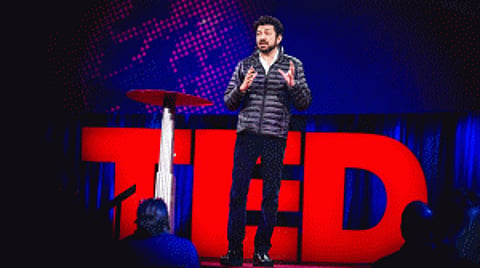

Has the gene influenced history, science and technology, or have they influenced the gene insteadIJ It works both ways, Siddhartha Mukherjee tells ANANYA BORGOHAIN
In The Gene (Penguin Random House), you have written about your family’s association with psychological challenges, which surely must have been difficult for you to write about. Did you find something new and unsettling about yourself while chronicling your family history; like, say, a psychological genetic testIJ
Unfortunately, there is no such thing as a psychological genetic test. With schizophrenia or bipolar disorder, there is no single gene. There are multiple genes, and they all interact with chance and environmental triggers, which ultimately cause the disorder.
It has been six years since The Emperor of All Maladies released. How has the general understanding of cancer changed since thenIJ How has oncology progressed over the years as wellIJ
These last six years have seen enormous progress in the field of oncology. Every day there are promising breakthroughs. We now have completely new drugs, new treatment regimens and a new genetic understanding of cancer. For example, immunotherapy — the ability to use the immune system against cancer — has been a particularly important breakthrough.
Can we look forward to an effective elimination of cancer in the near futureIJ
We certainly will be able to prevent many cancers, learn to treat some cancers, and hopefully even cure some cancers. It’s going to be a battle fought on all and many fronts. I’m not sure we can completely eliminate cancer from human history since cancer exploits normal processes in the body. However, I am sure we can drastically reduce the burden of cancer.
If the theory of human evolution from ape to Neanderthals to man is a fallacy, what in your opinion sustained this theory for so longIJ
It’s tempting to think of evolution as a linear diagram, and so it’s tempting to try to rank all apes and humans along a lineage. Actually evolution is more complex. Apes, Neanderthals and humans share common ancestors. It’s more like branches of a tree. Some humans — especially Europeans — contain some Neanderthal DNA because their ancestors cross-bred with Neanderthals centuries ago.
Who was Mitochondrial EveIJ
Thank you for asking about her. It’s really an astonishing idea. If we trace back our lineages in time, we arrive at a female from whom all our lineages arose. She is not the ‘first woman’, or the only woman who lived in her time. But she is a person that all our lineages happen to trace back to.
How can our understanding of race misguide usIJ
The old categories of race tend to underestimate the level of genetic diversity that exists within a particular race. There’s more intra-racial diversity than inter-racial diversity for most humans. ‘Race’ as a concept is flawed.
Is there a homosexual geneIJ
No, there is no such single homosexual gene. However, we know from many studies that genes can have a powerful influence on sexual orientation.
How much do our genes impact our political and religious inclinationsIJ
We do not know the answer to this, but identical twins that have been separated at birth often tend to share political and religious inclinations. It’s likely that there is some influence of genes on these factors although chance, environment and upbringing also clearly play a role.
The gene is the core of all existence. Has it influenced history, science and technology, or have they influenced itIJ
Actually, I would say it works both ways and they have played integral roles in shaping each other.
What about chronicling — cancer, gene — fascinates youIJ What will your next subject beIJ
I am not sure what it is that drew me to chronicle these subjects. For now, I am thinking about writing science fiction since I have always been attracted to writing about the future.
ananyapioneer@gmail.com