
Autumns are the most poignant season for high performance sportsmen, especially the likes of Sachin Tendulkar or Steve Waugh or Pete Sampras who did not know life outside the game when they quit. Be it Brian lara or Michael Clarke, the idea is to walk away with flourish, on a big stage and with minimum fuss. But there’s often drama too, like in the case of Diego Maradona who retired from his home balcony dropping down a dossier of allegations against ‘certain people’. MEENAKSHI RAO tells you more
I often wonder how Roger Federer, one of the greatest sportsmen to strut planet Earth, will walk into the sunset. Will he go after winning his Nth Grand Slam title on the strength of his mesmerising backhand smashes, perhaps getting one away from Rafael Nadal or showing Novak Djokovic that he can still be the boss once in a whileIJ Or, will he go after losing his Nth Grand Slam Final, semi-final, or even the initial roundsIJ Worse still, will he merely tweet at season end or from the confines of his beautiful Swiss chalet, cuddling in with his four twins and the ever-supportive wife MyrnaIJ
His fans across the globe, people like me, will want him to win and go in a blaze of glory even as they know he is progressing in age and the youthful excellence that the game of tennis requires. As retirements go in the sports world, they are each to his own — some on the grandest stage of ultimate victory, some, years after the player has peaked, some in the prime of career and some when least expected, like Brian lara.
In cricket, the autumns have been all amber and depressing. Around 40000 cried in unison when the iconic Sachin Tendulkar played his last match at the Wankhede stadium in Mumbai just the other year. Even the pompously objective scribes in the Press room shed their veneer and wiped their tears unabashedly. Sachin cried, gave an emotional speech and it was the first time ever I think that he spoke so openly, for so long and so publicly after he started his career as a cherubic 17-year-old in 1989 in the India-Pakistan series across the border.
Sachin’s retirement was not out of the blue but a much publicised event that brought the entire nation to a standstill. Those who were in the stadium called it a one in a millennium opportunity and those who were not were stuck to their television sets. Not that Tendulkar went in a blaze of glory — as in he fell short of making his 101th century.
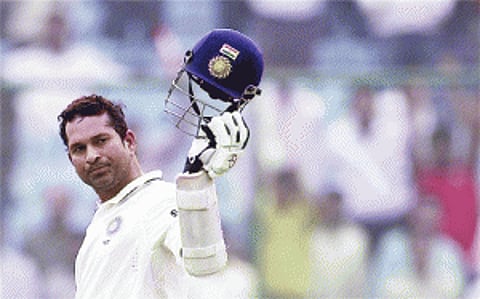
But his 74 was the new 100 for diehard fans and as he walked head down, bat tucked under his arm, you could see he was holding his emotions but failing. Even the West Indies players did not celebrate his wicket after he edged Deonarine to Darren Sammy at slip.There was pin drop silence and then as he took off his helmet, wiped his brow and waved to the crowd, all cheers, all tears, all lumps in the throat broke loose. And then he was gone, forever from the middle, surfacing only on non-cricket issues like Mumbai’s civic problems.
With Brian lara, however, it was completely different — unexpected, deliberately casual and slipped in skillfully late into the presser. When lara walked into the Press conference room that day after winning the Super Eight match against Bangladesh on April 19, 2009 at Bridgetown, he did not indicate till the death overs of questioning that the next Saturday would be his last day in international cricket.
It was a casual announcement just when I was packing up for the day. “I gave extensive consideration to this. I want everybody to know that on Saturday I’ll be playing my last international match,” he said. Every soul in the media room took a double take, not sure if they had heard correctly. Everyone was asking for confirmation and as the great run getter sat and silently watched the confusion, his manager Imran Khan nodded in confirmation.Though lara had always shared a volatile relationship with everyone around him except for his fans and his bat, it was a stunning announcement replete with max impact — just like the way he had scored those fiery runs all through his career.
In the next Press conference, after which West Indies lost to England at the World Cup in which lara was run out for 18 runs, he came with his two children on either side, talked a lot about family and commitment and turned into a much more open elder statesman of the game. He was diplomatic about the brittle nature of his cricket Board with which he had always been in a spat mode, talked about the future of West Indies cricket and his days as a non-cricketing persona.
While he did not take any questions after announcing his retirement in the earlier Press conference, he spent a lot of time taking questions and giving detailed answers to issues raised. “Did I entertain,” he asked. A loud cheer, applause and catcalls from journalists followed. And then he walked away not looking back even once.
As retirements go, the one that Diego Maradona announced from his balcony was the most dramatic. On October 29, 1997, came out to the balcony of his home in Buenos Aires and said to pressmen standing down below that he was quitting.And then he made clear cut allegations, saying that powerful people were trying to frame him for drug use in order to make him leave the game. He said he was quitting to protect himself and his family from people who wanted him out of football. He remained outspoken to the last, listing the names of the persons he held responsible for encouraging the early end of his career.
Incidentally, Maradona remained in the news both before and after retirement. He fattened on a steak, pizza, pasta, cake and cocaine diet, survived two heart attacks, got a facial cosmetic surgery done after his dog bit him on the lip and was also involved in a paternity litigation. In January 2000, the head cop of the province of Maldonado confirmed reports that cocaine had been found in his bloodstream, indicating excessive consumption. The 39-year-old Maradona was transferred from Uruguay to Cuba on January 18 for treatment and drug rehabilitation on an invite from none less than Fidel Castro himself. He spent four years of his life in Cuba.
Among the emotional ones, the function organised for tennis legend Pete Sampras befittingly at the Flushing Meadows centre court with Boris Becker and John McEnroe in attendance, was the most happening. For more than 15 minutes, the packed stands would not stop clapping. Sampras cried, sobbed and even broke down for some time during which time the applause only got louder. It was only after the people saw that he had composed himself that they stopped clapping. His wife and child were there besides him and Becker gave glowing tributes to him.
Sampras did not compete in any tour events for a year before announcing retirement until August 2003, just prior to the US Open. He chose not to defend his title there, but his retirement announcement was timed so that he could say farewell at a special ceremony organised for him at the Open. The greatest player of all time was there one day and gone from the courts the other with 14 Grand Slam titles in his pocket.
For his compatriot Andre Agassi, it was pain all the way down his final match, which he incidentally lost to a much lesser player. With a hurting back, he played under extreme physical duress. He had taken multiple jibes to keep his hurting back in the game and also had to improvise his otherwise unreturnable shots in order to manage his back pain. He lost to Benjamin Becker but his grit and determination became immortal.
Coming to cricket, Steve Waugh could score only 80, his team could not win the Test match and Sourav Ganguly’s India retained the Border Gavaskar Trophy after Waugh’s last Test at the SCG was drawn by a gritty India on the shoulders of Anil Kumble.
But Waugh broke other records in his last Test. The Australian media said that the most successful era in Australian sport officially ended with Waugh. His time at the helm of Australian Test cricket, which began in Trinidad on March 5, 1999, came to a close in his home town on January 6, 2004, with Waugh retiring with the best record of any long-term Test captain, with 41 wins from 57 matches.A record 189,989 fans went to the SCG during the five days to pay him homage, the most at the ground for a five-day match and second only to the 195,253 who watched the six days of the 1946-47 match against England.
At the end of the match, he was carried on his shoulders by his teammates who gave him a victory lap of the ground packed with fans. “It’s hard to really put it all into context. Getting a lap of honour around the ground on top of your teammates' shoulders is as good as it gets for a sportsman. It's something I will never forget,” Waugh known as Iceman throughout his career, said in a rare emotional burst.
In comparison, Michael Clarke’s retirement from ODIs was not so emotional but his choice of the occasion — eve of the World Cup Final — took the story away from the Final and from Brendon McCullum. Will it have an impact on the matchIJ Clarke said no but the 87000 strong crowd expected on Sunday would be making it special for Clarke.
The ever so flamboyant Imran Khan quit twice, living up to Pakistan cricket’s reputation of no permanency in any decision. After a disappointing semi-final defeat in the 1987 World Cup, Imran Khan put in his papers. You could say this was the shortest resignation in the history of the game with the Pakistani pacemaker rejoining the team again as skipper on a personal request by none higher than his nation’s President, General Zia-ul-Haq, a fierce cricket lover and proponent of cricket diplomacy with India.
Khan, on return, was an even better bowler taking 11 West Indies wickets for 121 runs. The series was drawn 1-1 and it was after 10 long years that West Indies had been defeated in a Test match on home ground. By the time of the 1992 World Cup in Australia, Khan had grown into an elder statesman of the team but was still leading by example, and leading greats like Wasim Akram. Pakistan won the Cup that year and some months down the line, after winning the Faislabad Test against Sri lanka he retired at the ripe old age of 39, only to start another innings in life as a philanthropist and later as a politician.