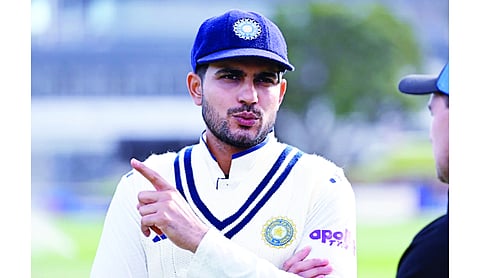

The International Cricket Council doesn’t plan to review its ban on applying saliva to the ball due to health and cricketing reasons despite calls from Indian captain Shubman Gill.
Following the drawn first Test on a benign pitch at the Basin Reserve in Wellington, Gill complained that the Kookaburra ball was getting soft too early and said allowing players to use saliva to shine the ball could have helped the bowlers in the batting friendly conditions.
The ban was first introduced in 2020 to protect the health of players and match officials following the COVID-19 pandemic and was made permanent in the ICC playing conditions a couple of years later.
This aligned with the Marylebone Cricket Club (MCC) Laws of Cricket, under which applying saliva is treated in the same way as any other unfair method of changing the ball’s condition.
Saliva can materially alter the ball when mixed with substances such as sweets, chewing gum and mints, also making the job of monitoring and regulating its use much harder.
The ICC also believes that saliva continues to pose a risk to players and match officials.
According to the European Centre for Disease Prevention and Control, the newly emerging SARS-CoV-2 variants pose a health risk globally.
It has been learnt that the saliva ban was not discussed at the ICC meetings in Bali earlier this month.
Also, any amendment to the playing conditions in the future would need to be raised by a member through the relevant ICC Committee for consideration before a final decision is taken by the ICC Board.
Gill brought saliva ban back into spotlight after India failed to bowl out New Zealand on day five of the first Test, missing out on crucial World Test Championship points.
