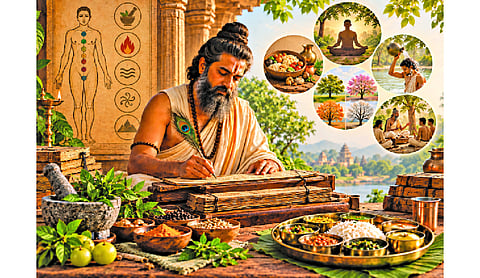

A Marvel of Holistic Health
Composed by Vagbhata around the 7th century CE, the Ashtanga Hridayam ("Heart of the Eight Branches") stands as a cornerstone of classical Ayurveda, synthesising earlier medical knowledge into an accessible, systematic guide to health, nutrition and wellbeing.
Structural and Pedagogical Excellence
Its clarity, compactness and precise verse construction made it the most widely taught Ayurvedic text in Bharat for over 1,200 years, constituting, with Charaka and Sushruta Samhitas, the brihat-trayi ("great triad") of authoritative treatises on Ayurveda.
Nutrition and Daily Regimen
Vagbhata elaborates detailed dietary rules (ahara vidhi), emphasising food consumed at the proper time, when hunger is manifest and digestion keen; freshly prepared, warm, hygienic meals containing all six tastes; mindful, silent eating in solitude or good company and observance of bathing, cleanliness and gratitude before meals.
Preventive and Holistic Wellbeing
Beyond diet, it prescribes daily (dinacharya) and seasonal (ritucharya) regimens to maintain agni (digestive fire), balance the three doshas (vata, pitta, kapha) and nurture the seven bodily tissues (dhatus). By integrating physical health with ethical conduct and mental clarity, it offers a comprehensive, evidence-informed framework for sustainable wellbeing.