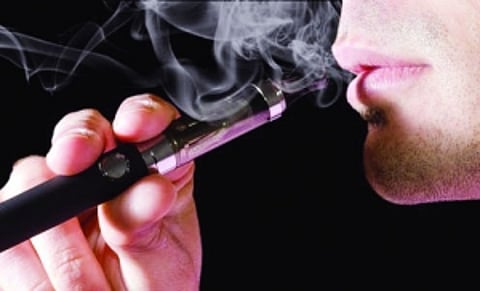

E-cigarettes are known by many different names like e-cigs, e-hookahs, mods, vape pens, vapes, tank systems, Juul and are called Electronic Nicotine Delivery Systems (ENDS). They are being introduced and sold in the shape/form of ordinary cigarettes, cigars, USB flash drives or pens to target youth. The challenges with such devices are their unclear long-term health effects. They are not 100 per cent safe. In the absence of long term studies claim for their present level of safety is objectionable. These devices cause nicotine levels in the blood to peak higher than they do with traditional cigarettes. Certain products like Juul deliver high doses of nicotine, probably even higher than tobacco cigarettes. The nicotine content in Juul is 0.7ml (59mg/ml) per pod which is approximately equivalent to one packet of cigarette or 200 puffs. Students get away with puffing Juuls/pen in class and home as parents and teachers may not recognise it as anything other than a flash drive/ordinary pen.
Hazardous nature and multiple addiction: The vapour (aerosol) contains several toxicants including Nicotine that damage human health, glycols, aldehydes, volatile organic compounds (VOCs), polycyclic aromatic hydrocarbon (PAHs), tobacco-specific nitrosamines (TSNAs), metals, silicate particles and other elements and flavouring such as diacetyl, a chemical linked to a serious lung disease. The heavy metals such as lead, chromium, nickel and chemicals like formaldehyde are often found more in the vapour of e-cigarettes than in traditional cigarettes, as per the WHO report. Some toxicants are specific to e-cigarettes, such as glyoxal, which causes gastric irritation and kidney damage. Some research studies have shown that Nicotine alone can mutate the genome and initiate a cancer state. Researchers from WHO, CDC, US Surgeon General Report 2016 have proved that nicotine adversely affects adolescent’s brain, heart, lungs and unborn baby of pregnant woman more as compared to other hazards. Some studies prove that ENDS can lead to dual use and other addictions like cocaine and methamphetamine.
Cessation device: Advocating e cigarette/Vape as cessation device is completely a myth and unethical also as they are not approved as drug under Drugs and Cosmetic Act. Nicotine replacement therapies (NRT) are to be prescribed by a qualified therapist so that the doses are regulated under the supervision. But in case of ENDS, self-therapy may lead to shifting from one addiction to another and may also cause acute accidental toxicity.
In last six years as per GATS 1 and 2 (Global Adult Tobacco Survey ) done in 2009-10 and 2016 -17 respectively show very encouraging results. This survey is done by the Government, WHO & Tata Institute of Social Sciences jointly & it shows that the overall Prevalence of Tobacco in Delhi reduced by 27 per cent.
No doubt that all kinds of tobaccos including traditional cigarette/bidi should be banned but till the time they are not banned, they are being restricted/regulated under COTPA(Cigarette and Other Tobacco Products Act) but due to enforcement issues and tobacco industry’s interference we have not been able to regulate them fully, therefore we don’t want new products like e-cigarette/Juul to enter the list and get established in market like traditional cigarettes.
The writer is Dr sk arora ,Additional Director Health Delhi Government