
- HOME
- INDIA
- WORLD
- BUSINESS
- STATES
- LAW & JUSTICE
- ENTERTAINMENT
- SPORTS
- VIEWPOINT
- LIFESTYLE
- TECH
Nearly 45 per cent of eligible voters had cast their ballots by 2 pm on Tuesday as Israel voted in a crucial general election that could determine the political future of Prime Minister Benjamin Netanyahu, whose leadership has faced mounting scrutiny since the October 7, 2023, Hamas attack.
According to the Central Elections Committee, turnout stood at 44.9 per cent, compared with 38.9 per cent at the same time in the 2022 election. It was the highest turnout recorded at this stage since 1973, following the Yom Kippur War.
Netanyahu, Israel’s longest-serving prime minister, is seeking another term amid criticism over the security failures surrounding the October 7 attack, the prolonged war in Gaza and growing public demands for accountability.
He has resisted calls for an independent State commission of inquiry into the failures.
Opinion polls indicate a close contest between Netanyahu’s Likud party and opposition forces led by former army chief Gadi Eisenkot, with former prime minister Naftali Bennett leading a separate opposition alliance with Yair Lapid. Neither camp is assured of a majority in the 120-member Knesset, making coalition negotiations crucial.
Netanyahu urged right-wing voters to turn out in large numbers, warning that Arab citizens were heading to polling stations in significant numbers. Arab voter participation could influence the balance between the rival political blocs.
The election is also being shaped by debates over national security, judicial reform, economic pressures and military-service exemptions for ultra-Orthodox Jewish men. Hundreds of thousands of Israelis have joined protests demanding accountability for the October 7 attack and the government’s handling of the war.
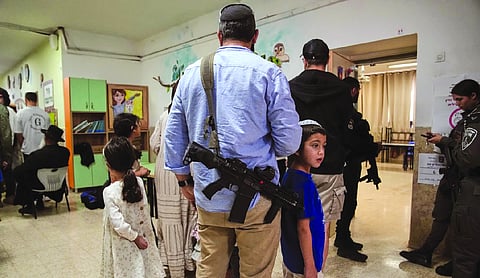
The Central Elections Committee reported long queues at several polling stations but said there was no evidence of systematic tampering with ballot slips, despite allegations by some political parties.
Polling stations opened at 7 am and were scheduled to close at 10 pm. The outcome will depend not only on which party wins the most seats but also on whether either political camp can secure the support of at least 61 lawmakers to form a government.
The election is widely seen as a referendum on Netanyahu’s leadership after the October 7 attack, with its outcome likely to shape Israel’s political direction and the debate over responsibility for the country’s security failures.