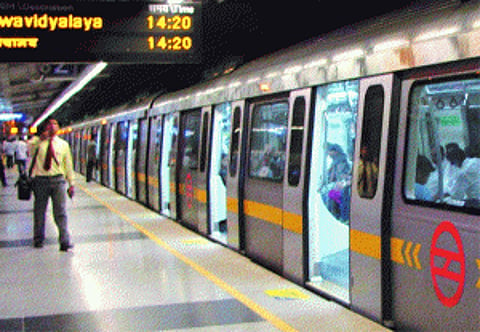

Those travelling in the Metro will have to shell out more from Wednesday as Board of Directors of Delhi Metro Rail Corporation (DMRC) on Monday approved the increase in fares. The minimum fare will go up from Rs8 to Rs10 while the maximum fare from Rs30 to Rs50. This arrangement will be in place until September as another hike in fares will come into effect from October when the maximum fare will go up to Rs60.
As per the recommendations of the fourth fare fixation committee headed Justice (Retired) Ml Mehta, there will be a total six fare slabs as against the existing 15 fare slabs. The new slabs are: up to 2 km — Rs10; 2 to 5 km — Rs15; 5 to 12 km — Rs20; 12 to 21 km — Rs30; 21 to 32 km — Rs40, and for journeys of over 32 km — Rs50. The fares of Airport Express line have not changed.
“The fare revision would be implemented in two phases. The first phase will be implemented with effect from May 10 and the second phase from October 1,” said Delhi Metro Chief Spokesperson Anuj Dayal and Director (Finance) KK Saberwal.
In the second phase, the fare structure would be Rs10 (0-2 km), Rs20 (2-5 km); Rs30 (5-12 km); Rs40 (12-21km); Rs50 (21-32km) and Rs60 for 32km and above.
On Sundays and national holidays, the maximum fare would be Rs40.
“The fare revision has been long overdue and we have been demanding it on account of increase in the cost of inputs such as the cost of energy and the cost of repair and maintenance. There are increasing operational costs like salaries and Dearness Allowances of employees. Since constitution of the third fare fixation committee, there has been increase in the rate of industrial Dearness Allowance by 95.5 per cent (from 16.90 per cent to 112.40 per cent), rate of Central DA by 103 per cent (from 22 per cent to 125 per cent) and average increase in the rate of minimum wages by 156.2 per cent” said the spokesperson.
The Delhi Metro’s fares were last revised in November 2009 when the minimum fare was revised to Rs 8 from Rs 6 while the maximum fare to Rs 30 from Rs 22. The DMRC has reportedly suffered a net loss of Rs 708.5 crore in 2015-16.
The existing policy of allowing a discount of 10 per cent on smart cards use would be continued. To avoid overcrowding during peak hours, passengers using the smart card will get additional 10 per cent discount during off-peak hours from Monday to Saturday. This means passengers may avail 20 per cent discount on the smart card while travelling during the off-peak time. The value of tourist card for one day and three-day validity shall be Rs 200 and Rs 500 respectively including the security deposit of Rs 50.
According to officials, the power bill accounts for almost 40 per cent of the Metro operating cost. Besides, Metro has to pay installments of the Rs 30,000-crore loan taken from Japan International Cooperation Agency (JICA), the Japanese company which financed the project, officials said.
Around 35 lakh Delhiites take the Metro ride every day to reach their destinations and this figure is expected to touch 50 lakh per day after completion of the third phase of the Metro line. The third phase of Metro projects has already missed the deadline.
The Ministry of Urban Development had constituted the fourth fare fixation committee headed by Justice (Retired) Ml Mehta on May 27, 2016. The committee submitted its report in September last year. The committee members had also visited Hong Kong to study the formula of Hong Kong metro’s automatic fare adjustment mechanism. Officials in Urban Development Ministry say that Delhi Metro had sought to double the fares.