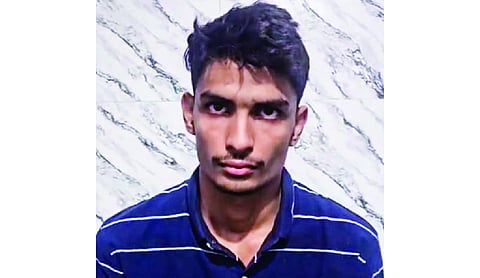

Meerut Police arrested 20-year-old Uzaid Qureshi, a resident of Baniyapada (under Kotwali police station), late on Monday, from his grandmother’s house, thus bringing the nearly year-long search to a close.
J&K Police wanted him in a terror case registered at Bahu Fort police station on November 24, 2025, under various sections of the Bharatiya Nyaya Sanhita (BNS) relating to terrorist activities.
Qureshi had been on the run since the joint raid by the J&K Police and the Uttar Pradesh Special Task Force on his residence on 18th January 2026 (with a further search in February). The family had already left when the police arrived and pasted a notice. Qureshi returned on a scooter, saw the notice, and then absconded. He moved around a bit before being picked up.
The investigators described him as a key operator in an online radicalisation module which was specifically designed to radicalise and recruit 14-18-year-old boys.
The module’s objective was to radicalise the boys and recruit them for suicide or fidayeen attacks on police personnel, Army installations and the military airbase in J&K. The module has been linked by SP (City) Vinayak Gopal Bhosale and SSP B.B.G.T.S. Murthy to the Shahzad Bhatti criminal syndicate based in Pakistan. Police have also identified three Pakistani nationals in Pok as part of the module. A planned attack the previous year was averted following the arrest of other members.
Qureshi joined the module through social media. He was exposed to extremist content on Instagram and YouTube and reportedly responded to an anti-India video by posting “We are also ready”. This, in turn, put him in contact with Mohammad Sajid (19), from Jammu, who was arrested on 27th November 2025 while preparing for NEET and then messaged him.
They also set up and ran several groups on Instagram (Tuition-40, Brigade, and Al Mujahid), the encrypted Session app, and Signal. Four of the accounts in question were flagged as suspicious: one belonging to Qureshi (ibn-e-dam99, Meerut), one from Kishtwar and two from Pakistan (Drugs Jihadi and Abu Mujaba Haf). Investigators said communications also took place on WhatsApp. Qureshi created multiple groups, disseminated inflammatory audio and material (on occasion deleting it afterwards), and encouraged the youth to carry out anti-India activities and suicide attacks.
He had only completed Class 6, used a SIM card belonging to his cousin Sadik (who also wanted it), and, with his father, ran a clothing/fruit business that involved frequent travel to Jammu and Kashmir. Digital evidence obtained includes conversations about the procurement of suicide vests and possible routes into Pakistan via the Gurez Valley. Officers from the central security agencies and the Uttar Pradesh Anti-Terrorism Squad (ATS) questioned him after his arrest. Meerut police have informed the J&K authorities, who are expected to take over the custody of Uzaid Qureshi.
This case highlights how low-education youth in the Hindi heartland can be lured into cross-border networks via fairly innocuous social media engagement. Recruiters carry out recruitment via encrypted apps and groups with entirely innocent-sounding names. Wider investigations are still ongoing to establish the full extent of the module and identify any other local or overseas handlers, sources said.
