
In a major boost to the country’s food security programme, India and the United States on Thursday successfully resolved differences over the food subsidy row, paving way for the implementation of a global trade facilitation deal by the World Trade Organisation (WTO).
As a compromise formula, it has now been agreed between the two countries that the “peace clause”, crucial for uninterrupted implementation of India’s food security programme, will continue indefinitely till a permanent solution is found by the WTO. This “peace clause” gives legal protection to member countries from being challenged under WTO agreements. As per Bali agreement, the “peace clause” was to continue till 2017.
The WTO Trade Agreement got stalled in July after India toughened its stand seeking a permanent solution on the public stockholding for food security purposes. India stood firms despite heavy lobbying by US Secretary of State John Kerry and Commerce Secretary Penny Pritzker. However, a meeting between Prime Minister Narendra Modi and US President Barack Obama in September helped in untying the knots of the impasse. Despite mounting diplomatic pressure from developed countries, Modi stood his ground and explained India’s concerns for feeding its poor to the US President.
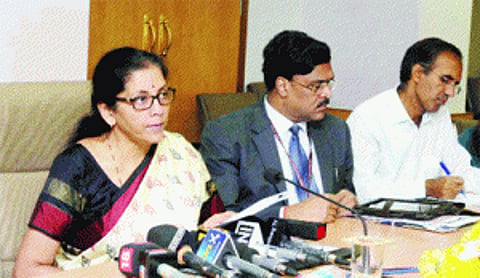
“India and the US have successfully resolved their differences relating to the issue of public stockholding for food security purposes in the WTO in a manner that addresses our concerns. This will end the impasse at the WTO and also open the way for implementation of the Trade Facilitation Agreement (TFA),” said Commerce and Industry Minister Nirmala Sitharaman. She said in December the WTO’s General Council would examine a proposal by India, which would have the backing of the US. She didn’t give details of the proposal.
Attributing the successful bilateral talks to Prime Minister Narendra Modi’s visit to the US in September, she said, “After the Prime Minister’s visit to the US, there was a greater understanding of India’s position.”
The US too welcomed the progress. “The President had extensive discussions with Prime Minister Modi on this issue and appreciates his personal leadership in finding a path forward,” White House press secretary Josh Earnest said.
In Washington, US Trade Representative Michael Froman said that the Bali package, which was held up in July after India raised concerns over the food security issue, will now move forward. “We have overcome that delay and now have agreement with India to move forward with full implementation (of the Bali package),” he said.
“With the WTO confronting a mounting crisis of confidence, President Obama and Prime Minister Modi held productive discussions on this issue, including during the Prime Minister’s visit to Washington in September. In recent days, officials of both Governments worked intensively and reached an agreement that should give new momentum to multilateral efforts at the WTO. In doing so, the United States and India reaffirm their joint commitment to the success and credibility of the WTO,” Froman said.
He added that the important breakthrough reached between the two nations will unlock progress toward the full and immediate implementation of the WTO Trade Facilitation Agreement. “This breakthrough will also strengthen the multilateral trading system and give a boost to its ongoing work, including in the area of food security,” Froman said.
Following the agreement between India and the US, which are two important players of the WTO, its highest decision making body --- General Council --- will review the proposal of the two countries in the second week of December.
Sitharaman expressed hope that the Council would clear the way for India to sign a protocol for implementation of the trade accord. India has been demanding extension of the peace clause so that it could continue providing subsidised foodgrains to its poor without being challenged in the WTO.
India had asked WTO to amend the norms for calculating agri-subsidies so that the country could continue to procure foodgrains from farmers at minimum support price and sell them to poor at cheaper rates without violating the WTO norms.
The current WTO norms limit the value of food subsidies at 10 per cent of the total value of foodgrain production. However, the quantum of subsidy is computed after taking into consideration prices that prevailed two decades ago.
There are apprehensions that once India fully implement its food security programme, it may breach the cap. Under the peace clause, a WTO member gets immunity against penalty for breaching the food subsidy cap. As per the WTO norms, a developing nation can provide food subsidy of up to 10 per cent of the total farm output.
Interestingly, Modi and Obama met each other for the second time in six weeks at a dinner hosted by Myanmar President Thein Sein for world leaders attending the ASEAN and the East Asian summits. “Prez Obama greets PM @narendramodi at Gala dinner - ‘You are a man of action!,” External Affairs Ministry spokesperson Syed Akbaruddin tweeted after the dinner.