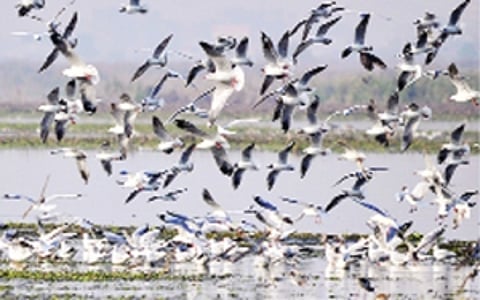

Rampant human interference over the last few months in Okhla Bird Sanctuary has endangered the habitat for winged visitors. The arrival of migratory birds in the sanctuary has alarmingly reduced by nearly 50 per cent this winter in comparison to the previous year’s figures. Nearly two dozen species of birds, including some endangered species like River lapwing and Painted Stork, gave Okhla Sanctuary a miss this year.
During December and January, the sanctuary receives scores of migratory birds from Central Asia, North Asia, South Asia and Siberia. While the peak season last year witnessed 38 major species of winter migratory birds including threatened species, the figure for January this year has reduced to an alarming low of only 22 species — a fall of around 43 per cent.
“The sanctuary is bereft of around 16 species of birds compared to last year’s count. Even the number of most frequented birds like Northern Shoveler, Graylag Geese, and Gadwall has reduced. last year the sanctuary recorded 5,545 birds in total which is bound to reduce this time,” said TK Roy, ecologist and environmentalist. Birds like Common Shelduck, Tufted Duck, Common Snipe, Woolly-necked Stork and Green Sandpiper which used to attract bird watchers to the sanctuary have all vanished from the place, he added.
Experts have not ruled out global climate change as a major cause, they have also not undermined the role of the Uttar Pradesh irrigation department in the matter. “Climate change is an important factor, but repeated human intervention by the UP irrigation department is also responsible for degrading the wetland habitat. The release of water from the Okhla barrage is not controlled. Such is the fluctuating water level that sometimes it renders the sanctuary completely dry and on many occasions it is too high. This happened mostly between the last week of November and first week of December,” said Roy.
Spread across an area of four square kilometres, the Okhla Bird Sanctuary constitutes a large lagoon-like stretch with vegetation at its fringes —a perfect environment for birds. The place had witnessed an early arrival of around 20 species of migratory birds, but due to water issues and festivals like Diwali and Chhath pooja the birds had left the habitat leaving behind only two to three other species. The repeated disturbances in their habitat forced the birds to find an alternate abode in Surajpur bird sanctuary in Greater Noida and Sultanpur bird sanctuary in Gurgaon.
Just when the nearly-parched sanctuary was revived in mid-November, with the UP Irrigation Department finishing its repair work at the Okhla Barrage and releasing water, the wetland received the next jolt in the form of encroachment by devotees to perform Chhath pooja in the sanctuary. The sanctuary, which usually attracts over 30 species of migratory birds in November alone, was then rendered void of any bird. The sanctuary, where noise and human population is regulated so as not to disturb the birds and other creatures residing there, was literally turned into a ghat on the days of Chhath Puja with thousands of devotees flocking to the park to worship the Sun god. Even the noise pollution caused during Diwali had contributed to the same.