
- HOME
- INDIA
- WORLD
- BUSINESS
- STATES
- LAW & JUSTICE
- ENTERTAINMENT
- SPORTS
- VIEWPOINT
- LIFESTYLE
- TECH
A Democratic victory in November could curb Trump’s domestic agenda and signal that Americans are losing patience with his politics
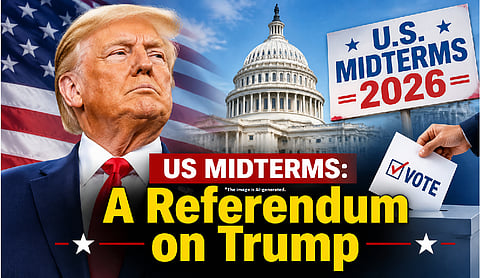
On November 3, Americans will do what they almost always do in a president’s second year: sit in judgement. Donald Trump is not on the ballot, yet this is a vote about him.
The dominant issue is the cost of living. Tariffs, fuel prices lifted by the war with Iran, and health-insurance costs have handed Democrats a simple message: affordability. Trump has dismissed the word as a Democratic hoax, which has not helped his candidates. Republicans are leaning on culture-war themes. That bet shaped their September convention in Dallas. Recent polls give Democrats a generic-ballot lead of roughly eight points.
The House is the likelier prize. Democrats need a net gain of only three seats, while the president’s party has lost an average of 31 across the last five midterms. A Supreme Court ruling weakening the Voting Rights Act has let some states redraw, so the maps, not just the mood will matter in close districts.
The Senate is the genuine contest. Republicans hold 53 seats; Democrats need four. Forecasts diverge: some models and prediction markets give Democrats about 65 per cent, while others still favour a Republican hold.
Democrats stand to gain most, and Hakeem Jeffries, the House leader whose disciplined affordability pitch has defined the campaign, would be the immediate beneficiary.
But victory would be a verdict on Trump, not a love letter to Democrats, whose own ratings remain poor and whose centrists and progressives still quarrel over ambition. Trump would begin his lame-duck years weakened.
At home, a Democratic House means subpoenas, investigations and a say over spending; a Democratic Senate would also choke off judicial and cabinet confirmations. Expect gridlock, funding standoffs and a president tempted to govern by executive action.
Abroad, the House has far less sway over foreign policy than the Senate, so allies should not expect a reversal.
Still, a Democratic majority would scrutinise the Iran war, revive war-powers fights and press on tariffs.
Trump has said the conflict will end after the midterms; whatever happens, capitals from Brussels to New Delhi will read the result as a measure of how long Washington’s current course can last.
However, if Trump suffers defeat, it will be more than just a political defeat. It would mean that Americans are done with his policies and theatrics. It would amount to a referendum on his policies in Iran, his tariff crusade and, moreover, his efforts to brush everything inconvenient to him under the carpet.
Polls can err, and Republicans still enjoy a trust advantage on some issues, while loyalty to Trump may yet bring enough wavering Republican voters back home. But the mood is plain: America is anxious about prices and ready to ask for guardrails.