
- HOME
- INDIA
- WORLD
- BUSINESS
- STATES
- LAW & JUSTICE
- ENTERTAINMENT
- SPORTS
- VIEWPOINT
- LIFESTYLE
- TECH
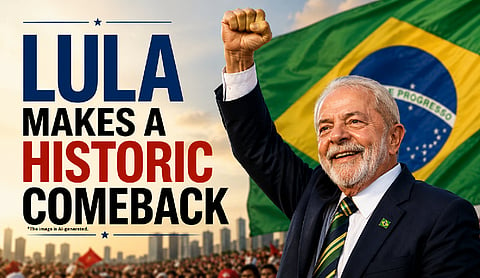
Luiz Inácio Lula da Silva’s unprecedented fourth-term victory offers a reprieve for Brazilian democracy and checks the region’s rightward drift
With the victory of Luiz Inácio Lula da Silva, 80, Brazil has once again shown that it does not believe in hollow nationalism. Lula beat Flávio Bolsonaro with 51.8 per cent of the vote, a margin of about 4.4 million ballots. Lula’s win has surprised many, as he was not doing well before the election.
It will be debated for a long time why Lula won. The economy helped for sure: inflation is tamed and unemployment sits near record lows. Sovereignty helped more. Washington’s tariffs and sanctions, which Donald Trump tied to Jair Bolsonaro’s coup trial, let Lula cast himself as the defender of national dignity rather than a tired incumbent. Memory did the rest. Jair Bolsonaro is serving 27 years for plotting to overturn the 2022 vote, and Flávio’s promise to secure his father’s amnesty reminded voters what a restoration might mean. Flávio, himself under corruption investigation, never escaped that shadow. The protest vote behind his first-round lead proved softer than expected: every runoff poll had him ahead, and all underestimated Lula.
For Brazil, this is a reprieve, not a blank cheque. Lula returns on 5 January, facing a hostile Congress, a narrow mandate and a rival who says he cannot accept the result and will ask the courts to annul it. Governing will demand compromise and fiscal prudence.
Many who backed him did so partly out of fear of the alternative; they will now expect results on prices, safety and jobs, not merely a defence of institutions. At 80, Lula must think about succession; the Workers’ Party cannot remain a one-man movement.
For Latin America, the result checks a rightward tide. Javier Milei openly backed Flávio, and Colombia elected the right-wing Abelardo de la Espriella in June. Lula and Mexico’s Claudia Sheinbaum now stand as the region’s leading counterweights to Washington’s pressure, and Brazil’s size gives that resistance heft. Mercosur trade, climate diplomacy and regional integration regain their most influential champion. For Trump, who hailed Flávio’s first-round lead as a “big victory”, this is a strategic and personal setback: tariffs and pressure failed to dislodge a leader they may even have strengthened. Expect hard bargaining, though Lula has kept the door open, phoning Trump in August to reopen trade talks. The message to the world is plain. Populist nationalism is not invincible.
Democracies that prosecute coup plotters, run credible elections and withstand foreign pressure can still command public trust, and independent courts and electoral bodies, so often cast as obstacles, proved a safeguard. For the Global South, including India, Lula’s return preserves a forceful voice for multipolar diplomacy and for BRICS, as great-power pressure on middle powers rises.
Yet a margin this narrow leaves no room for triumphalism. Lula won by defending democracy and sovereignty; he must now deliver prosperity. Brazil survived the assault of 8 January 2023. It must now show, once more, that its democracy holds.