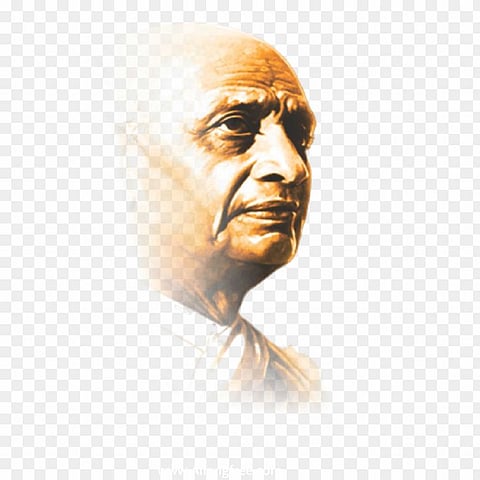

Often compared to Bismarck of Germany, Sardar Patel’s contribution to uniting the erstwhile fragmented India was no less. He stood tall and unmoved as his ‘police action’ — or the threat of it — made princely states fall in line, and thus a nation was born — India. As India celebrated the 150th birth anniversary of Sardar Vallabhbhai Patel, the nation paused to honour the man who stitched together the fragments of princely India into a single, sovereign nation. Prime Minister Narendra Modi paid floral tributes at the Statue of Unity in Kevadia, Gujarat on this momentous occasion. President Droupadi Murmu too, in her message, described Patel as a “visionary nation-builder.”
Born on October 31, 1875, in Nadiad, Gujarat, Patel rose from humble beginnings to become India’s first Deputy Prime Minister and Home Minister. His greatest achievement came in the tumultuous aftermath of Independence, when the British left the country, leaving behind the legacy of divide and rule. With firm hand and strategic foresight, Patel integrated over 560 princely states into the Indian Union—ensuring that the newly freed nation did not descend into chaos. Without his iron will, India’s map might well have been a patchwork of competing fiefdoms.
Patel and Nehru are often compared and inferred that the two had differences. Indeed, Patel’s realism contrasted sharply with the idealism of his contemporary, Jawaharlal Nehru. While Nehru envisioned a socialist, internationalist India, Patel’s focus was pragmatic — anchored in administrative efficiency, strong governance, and national security. Whatever way history looks at the two leaders, they were more complementary to each other rather than competing. While Nehru’s vision gave a moral compass to the nation, Patel provided the groundwork to actualise that vision. For decades after Independence, however, Patel’s legacy was overshadowed by Nehruvian dominance in political and historical narratives. His image remained confined to textbooks, rarely discussed in the same breath as Nehru or Gandhi. It is only in recent years that Patel has been reimagined — particularly under the Bharatiya Janata Party — as the emblem of a strong, unified, and decisive India. Ironically, Patel’s secular credentials as well as his friendships with Nehru remained strong throughout, a fact which is conveniently brushed aside.
The construction of the world’s tallest statue — the Statue of Unity — was a political and symbolic reclamation of Patel’s image by the BJP. Modi, who often calls Patel his inspiration, has positioned him as a precursor to the party’s ideology of Ek Bharat, Shreshtha Bharat (One India, Great India). Critics, however, accuse the ruling party of selectively appropriating Patel’s nationalist credentials while sidelining his Congress roots and Gandhian values. Patel, after all, was a loyal Congressman who believed in collective leadership and democratic consensus — principles that do not easily fit into today’s personality-driven, right-leaning politics.