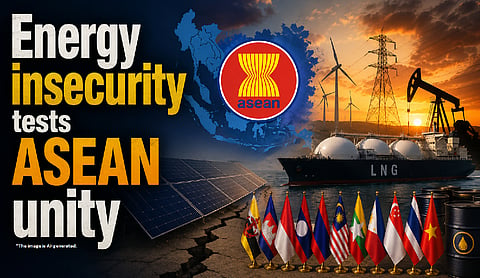

Energy insecurity, trade uncertainties and intensifying US-China rivalry have placed ASEAN at a critical crossroads but gives India an opportunity
ASEAN countries regularly meet to discuss their trade-related issues. However, November 15 to 17 is special. First, it happens as the ASEAN members face unprecedented oil shortages, thanks to the US-Iran war, which severely disrupted the oil flow to Southeast Asia, which largely gets its oil through Hormuz. Besides, the US-China rivalry is intensifying in the region, which directly affects the ASEAN members.
The presence of Donald Trump is, of course, significant who would not like China to get any closer to ASEAN. Indian Prime Minister Narendra Modi is also invited, which shows the importance ASEAN attaches to India and South Asia. India, of course, is not a member but has been involved for over a decade. For India, the meeting offers an opportunity to deepen economic and security ties with a region as it is now seriously pursuing the Act East policy after Trump’s tariffs seriously impacted its trade. The 11-member Association of Southeast Asian Nations (ASEAN) has emerged as one of the world’s most solid economic blocs.
Yet its growing economic power is now being tested by an uncomfortable combination of energy insecurity, trade tensions and geopolitical competition. Indeed, Energy security is likely to dominate the discussions. ASEAN members remain heavily dependent on imported oil and gas. Any prolonged disruption in the Gulf or restrictions on shipping through the Strait of Hormuz could translate into higher fuel prices, inflation and production costs across Southeast Asia. It undermines industrial competitiveness, household purchasing power and economic growth of the region as a whole. The Strait of Malacca, one of the world’s busiest maritime passages, adds another dimension to the region’s energy concerns. Just like Trump’s tariffs offset India’s exports, they have forced several ASEAN economies to reconsider their dependence on the American market.
ASEAN has been aligned with the US for a long time, but as China’s economic influence increases, it has to balance the US and China, a superpower in its backyard. The South China Sea dispute, Myanmar’s continuing turmoil and unresolved Thailand-Cambodia tensions further expose the limitations of ASEAN’s consensus-driven approach. However, what this summit might be able to achieve would not be spectacular but may be incremental change and a direction signalling its future course. The likely outcome is a reaffirmation of dialogue, peaceful dispute resolution and regional cooperation rather than dramatic breakthroughs. India’s participation deserves particular attention. India has been a dialogue partner and regards the grouping as a central pillar of its Act East Policy.
Maritime security, defence cooperation, digital connectivity, critical technologies, resilient supply chains and renewable energy would figure prominently in India’s engagement.
There is also an economic imperative. ASEAN is a major trading partner, investment destination and manufacturing hub for India. However, India’s trade deficit is substantial. New Delhi must press for market access, stronger connectivity and greater integration of Indian businesses into regional supply chains.