
- HOME
- INDIA
- WORLD
- BUSINESS
- STATES
- LAW & JUSTICE
- ENTERTAINMENT
- SPORTS
- VIEWPOINT
- LIFESTYLE
- TECH
Better forecasting and timely evacuations have reduced casualties, but climate change is raising the stakes. India must be prepared for future cyclones
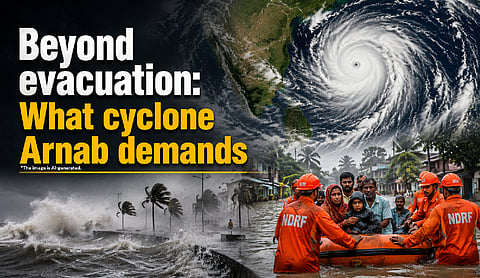
Cyclone Arnab hit the Indian coast, causing death and destruction that go with the fury of cyclones. Of late, the frequency of cyclones has increased, thanks to climate change. The repetition is a warning: India’s eastern seaboard no longer faces the occasional storm; it lives inside a season of them.
The early evidence suggests the machinery of preparedness worked. The India Meteorological Department tracked the system for days and forecast landfall between Bapatla and Visakhapatnam well in advance. Tens of thousands of people were moved into shelters.
Compare this with the 1999 super cyclone, which claimed close to 10,000 lives in Odisha. That tragedy forced a rethink: hundreds of cyclone shelters, institutionalised early warnings and large-scale evacuations. The shift from relief to prevention is India’s quiet disaster-management success story. Even this time, fishing was suspended, schools were shut and trains were cancelled in advance, while Odisha readied shelters despite landfall occurring in a neighbouring state. Yet success must not breed complacency.
Four things must change. First, protect the lifelines. Fallen poles and exposed cables kill after the storm has passed. Dense coastal towns need underground cabling, pre-emptive shutdowns accompanied by clear public warnings, and crews trained to make lines safe before restoration begins.
Second, defend livelihoods as seriously as lives. Arnab has damaged crops, houses and roads, and the Chief Minister has asked for a central assessment team. Losses fall hardest on tenant farmers, fishers and families in kutcha homes.
India needs cyclone-resilient housing standards that are actually enforced, faster crop-insurance payouts, and compensation that reaches people in days, not months.
Third, plan for the storms we are actually getting. Warming seas help cyclones intensify faster, and slow-moving systems like Arnab, which crawled at barely 3 km/h near landfall, dump enormous amounts of rain: over 300 mm in Visakhapatnam.
Mitigation funds must be spent before disasters, not after, and states with proven models, Odisha’s above all, should share them with their neighbours. The measure of a cyclone response is no longer merely how many were evacuated. It is how few died, how quickly lives were rebuilt, and how much safer the coast is before the next storm forms. Arnab was survived. The next one must be mastered.
Indeed, investments in technology and better disaster management have paid off, but there is a long way to go before we can say that we have nullified natural disasters. The key is to remain vigilant and prepare for such eventualities before they occur.