
The city of today needs a renaissance to make it more inviting and appealing. The Smart Cities project should bear this in mind, writes DAlJEET KAUR
Cities are socio-technical systems, precariously integral, capable of growing as well as becoming smaller and fragmented, but still functioning. Even though, they have a resilient inherent quality, many cities around the world are witnessing slow death. The reasons could be many — environmental and social degradation, diminishing opportunities for the young population, shifting economic centers, poor governance, loss of character etc. The dying city is reflected in everything thereafter, in its form, function, and most important the functionaries — the city dwellers.
The smart city concept brought out by the current Government in India, urges planners to design innovative future cities to address the urban transition that the country is experiencing. In 1900, around 15 per cent of world's population lived in cities where as in 2015, more than 55 per cent lived in cities. By 2050, it is estimated that 70 per cent of world's population will be living in cities.
According to the United Nations, cities are using only two per cent of the entire planet's land mass and 75 per cent of the world's natural resources, accounting for approximately 80 per cent of the planet's greenhouse gas emissions.
Improved access to global markets, rapid advances in technology, as well as rising expectations of citizens is fueling the growth engines of urbanisation. Cities around the world are embracing a smart agenda. There are several definitions of what it means to be a ‘smart city’, thus, giving an opportunity to Governments to define their own programmes, policies and procedures, responding to their own unique priorities and needs. Famously, the word ‘SMART’ as an acronym stands for specific, measurable, achievable, relevant and time-based goals.
Every city has a peculiar character, represented by elements such as smell, form, colour, texture, sound and culture, commonly described as the urban fabric. Thus, just like a fabric, a city also has a print, a pattern and a colour and when it evolves with time, more often than not, it changes these inherent characteristics. In other words, by accommodating migrant population, welcoming new cultures and traditions, the city voluntarily or involuntarily absorbs elements and loses its basic essence for better or worse.
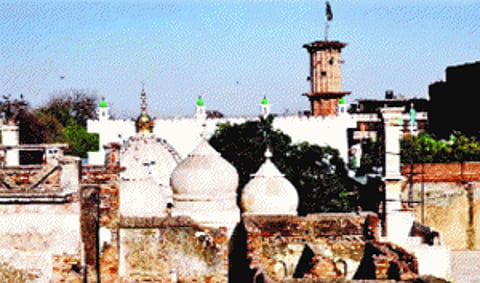
Delhi is a historic city, between 3000 BC and the 17th century AD, seven different cities came into existence in its location. The remnants of each of these seven cities can be seen today in structures such as gates, tombs, water bodies, economic activities and streetscape, though most features have lost their fervor with time. An organic city by nature, Delhi has seen drastic changes in its urban form.
However, in modern times, the urban design is not dependent on rulers and thus, before a city involuntarily transform, we need to plan the inevitable transformation. The launch of four flagship Missions (Smart City, AMRUT, HRIDAY and Swachch Bharat Mission) by the Ministry of Urban Development represents a realisation of a paradigm shift which is taking place in addressing the challenges this evolving unplanned urban transition.
The question, however, still remains — will smart cities revive the decaying urban fabricIJ The city of today needs a renaissance to make it more inviting, sustainable and vibrant. Art can be instrumental in renewing the look of the city and thus, the new trend of using graffiti's in portraying emotions, conveying messages and giving dimension to the otherwise plain façade is an idea which is fast catching up in cities around the world.
Continuing with this tradition, Delhi has recently endorsed graffiti's on its vertical frame changing the streetscape altogether. One of the first public intervention adopted by the residents of lodhi Colony in Delhi has helped convert their residential area into an art district. Several art volunteers from across the globe have been tasked to reform the plain walls of the residential blocks into master pieces. Pride is which every citizen needs to feel for their city.
(The writer is an architect planner and painter)