Yoga sutra, Neuroplasticity and Cognitive Behavioral Therapy - A Continuum
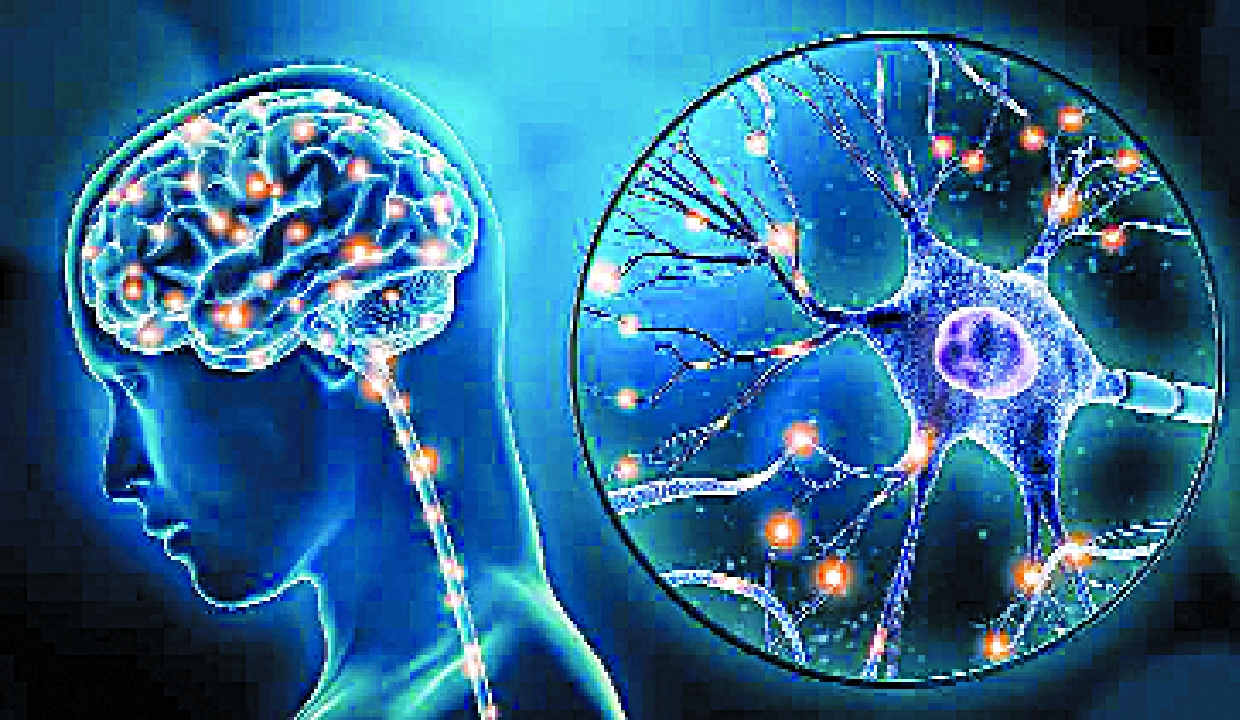
Human brain is probably the most complex creation in the universe. Modern science has achieved elementary understanding of the human brain despite neurology being one of the most researched fields of science. While, we know something about the structure of the brain, its functions and treatment of malfunctioning, there is very little understanding about the relationship between brain and consciousness.
Cut back to the 2nd CE when Patanjali wrote the Yoga Sutra, one of the six schools of philosophical thought of Hindu religion. This article explains how Yoga Sutra forms the basis of two fundamental concepts of modern clinical psychology - Neuroplasticity and Cognitive Behavioral Therapy (CBT). Neuroplasticity, attributed jointly to William James (Psychologist, 1890s) and Jerzy Konorski (Neuroscientist, 1950s), is our brain's ability to reorganize and rewire its neural connections so as to learn new skills, adapt to new environment, heal from injuries and even develop new ethos. CBT, attributed Aaron T Beck (Psychiatrist 1960s), is now an umbrella term for a number of psychotherapy tools that utilize neuroplasticity to affect corrective changes in cognition and behavior.
First, the foundational relationship between Yoga sutra, Neuroplasticity and CBT. Patanjali opens with one of the most cited aphorisms, "Yogah chitta vritti nirodhah" (Sutra 1.2) or "Yoga is the cessation (nirodha) of the fluctuations (vritti) of the mind (chitta)". This also forms the basis of neuroplasticity and CBT. That mind is not fixed, it is dynamic and these modifications can be regulated or even stilled. Yoga sutra and CBT seem to be identical in their diagnostic approach: that mind's tendency to generate inaccurate, habitual patterns of interpretation is the source of suffering.
The second part of foundational relationship lies in Sutra 2.33, Vitarkabadhane pratipaksha bhavanam, and Sutra 2.34, vitarkaa hinsadayah kritakaritanumodita lobhakrodhamohapoorvaka mridumadhyadhimatra duhkhajnananantafala iti pratipakshabhavanam. Together they say when one is disturbed by negative thoughts, the opposite should be cultivated and that violent, avaricious, or deluded thoughts, whether acted upon, caused, or merely permitted, lead to suffering and ignorance. CBT's cognitive restructuring is Pratipaksha bhavana only. It is how a therapist helps a patient identify an automatic negative thought, examine the evidence for and against it, and replace it with a more balanced positive thinking. Repeated activation of a thought pathway increases synaptic efficiency along that route and deliberate activation of alternative patterns begins to build competing neural pathways.
The third part of foundational relationship is what Patanjali introduces a powerful distinction. Drashta drishimatrah shuddhopi pratyayanupashyah (Sutra 2.20), or the seer (drashta) is pure awareness but appears to take on the forms of the mind. This suggests that there is a "witness consciousness" separate from thoughts and suffering arises when that witness begins to identify itself with the thoughts. Modern psychology also echoes this when it prescribes, you are not your thoughts and you should be observing thoughts without attachment (cognitive diffusion) or asks you to observe thoughts as passing events (Mindfulness based CBT).
Finally, the fourth foundational relationship which is perhaps the most profound overlaps. Patanjali says samskara sakshat karanat purva jati jnanam (Sutra 3.18), or through direct perception of samskaras, knowledge of acquired tendencies arises. And te pratiprasava heyah sukshmah (Sutra 2.10), or subtle impressions are resolved by reversing their process. Samskara are neural pathways and encoded neural patterns and therapy comprises of reprocessing and weakening maladaptive neural pathways, patterns and circuits.
Next, the method or the path. Patanjali emphasizes two pillars. "Abhyasa vairagyabhyam tan nirodhah" (Sutra 1.12) or the fluctuations are stilled through practice (abhyasa) and detachment (vairagya). Further, "Sa tu dirgha kala nairantarya satkara asevitah dridha bhumih" (Sutra 1.14) or practice becomes firmly grounded when done for a long time, without interruption, and with devotion. This almost describes neuroplasticity and CBT in entirety. That the brain can physically restructure itself by thickening the prefrontal cortex or shrinking the amygdala, provided there is consistency, repetition and salience in the process. Further, while abhyasa builds new pathways, vairagya (dispassion/detachment) serves to weaken old ones. In CBT, this is the process
of de-centering where a patient learns to distinguish between having a thought and the thought is the reality. This detachment leads to synaptic pruning, where the brain eliminates underutilized or "inhibited" connections.
The Ashtanga (eight-limbed) system of Sutra 2.29, comprising yama (restraints), niyama (observances), asana (posture), pranayama (breath regulation), pratyahara (withdrawal of senses), dharana (concentration), dhyana (meditation), and samadhi (absorption), gives a graduated protocol of moving from behavioral regulation to cognitive regulation to metacognitive transformation. This mirrors the layered architecture of modern psychological intervention: behavioral activation (analogous to yama, niyama, asana), physiological regulation (pranayama, attentional training (dharana), sensory withdrawal (pratyahara) and finally metacognitive reprocessing (dhyana, samadhi).
This is a basic glimpse of how modern corrective psychotherapy has parallels in Yoga Sutra. Yoga Sutra, Neuroplasticity, and CBT converge on a core insight: the mind's habitual patterns are the source of suffering, those patterns are not fixed, and deliberate, sustained practice can restructure them - whether described as abhyasa, synaptic strengthening, or cognitive restructuring. Neuroplasticity offers a scientific account of how these changes occur biologically, CBT offers a structured therapeutic protocol to affect those changes. But Patanjali's framework went further where chitta is not reducible to the brain; it encompasses dimensions of consciousness that the neuroscientific framework does not yet address. It added the final goal as kaivalya (isolation of pure consciousness from matter), which has no equivalent in neuroscience or clinical psychology. Yoga Sutra offers a comprehensive phenomenological map of the stages of mental transformation, and a philosophical framework for understanding why liberation, in any meaningful sense, requires not just thinking differently, but ultimately transcending the compulsion to be defined by thinking at all. Tada drastuh svarupe avasthanam (Sutra 1.3), or the seer abides in his own nature.
Manoj K Arora is an Honorary Visiting Fellow at Bharat Ki Soch and a former IRS Officer. Views are Personal; Views presented are personal.
Leave a Comment
Comments (1)
Fascinating.