World’s oldest octopus fossil is not an octopus after all: Scientists
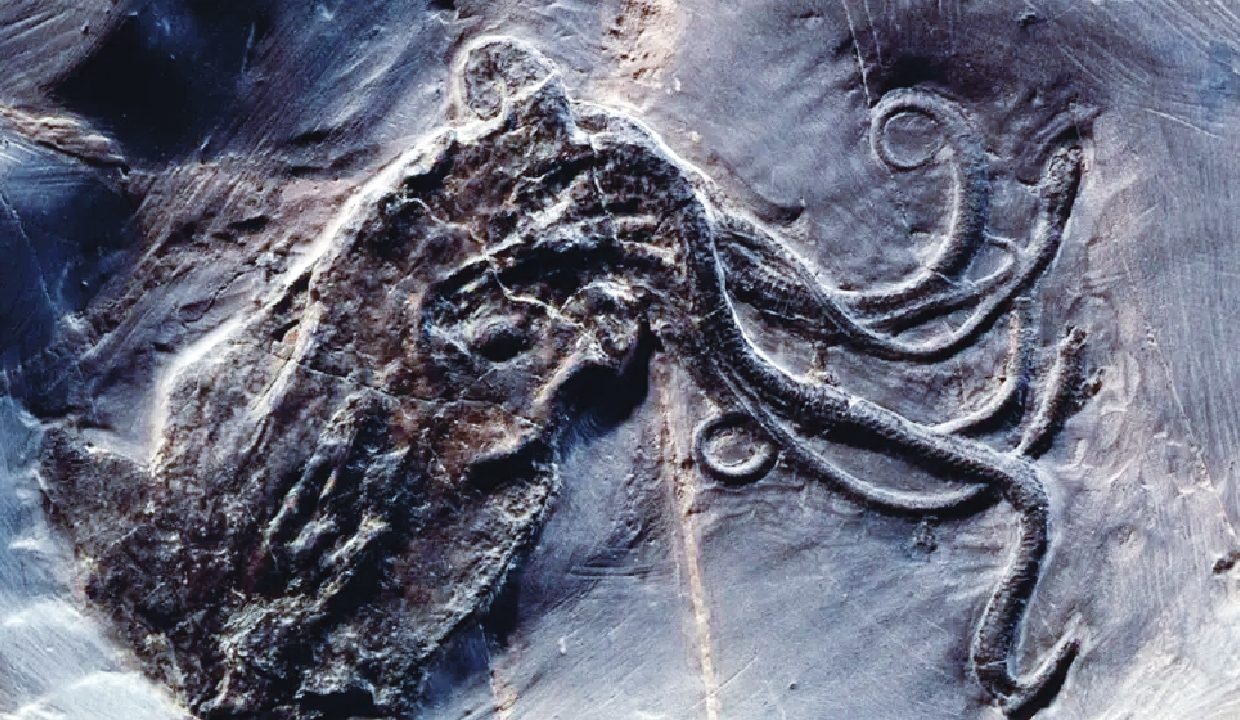
A 300-million-year-old tentacled sea creature has lost its crown as the world’s oldest octopus, after scientists found evidence that it’s not an octopus at all.
Newly published research concludes that fossilized remains listed by Guinness World Records as the earliest known octopus belong instead to a relative of a nautilus, a cephalopod with both tentacles and a shell.
University of Reading zoologist Thomas Clements, the lead researcher behind the new findings, said the fossil, Pohlsepia mazonensis, has long been the subject of scientific debate.
“It’s a very difficult fossil to interpret,” he said. “To look at it, it kind of just looks like a white mush.
“If you look at it and you are a cephalopod researcher and you’re interested in everything octopus, it does superficially look a lot like a deep-water octopus.”
The creature, a blob about the size of a human hand, was found in the Mazon Creek area of Illinois, about 50 miles southwest of Chicago, that is rich in fossils from a period before dinosaurs walked the Earth. Its identification by paleontologists as an octopus in 2000 upended ideas about the evolution of the eight-tentacled cephalopods, suggesting they emerged much earlier than previously thought. The next oldest-known octopus fossil is only about 90 million years.