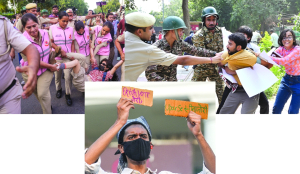
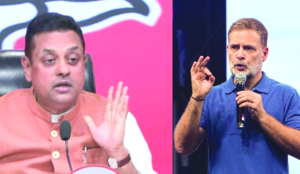
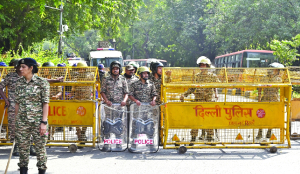
Women cops detain CJP trio aboard AI flight
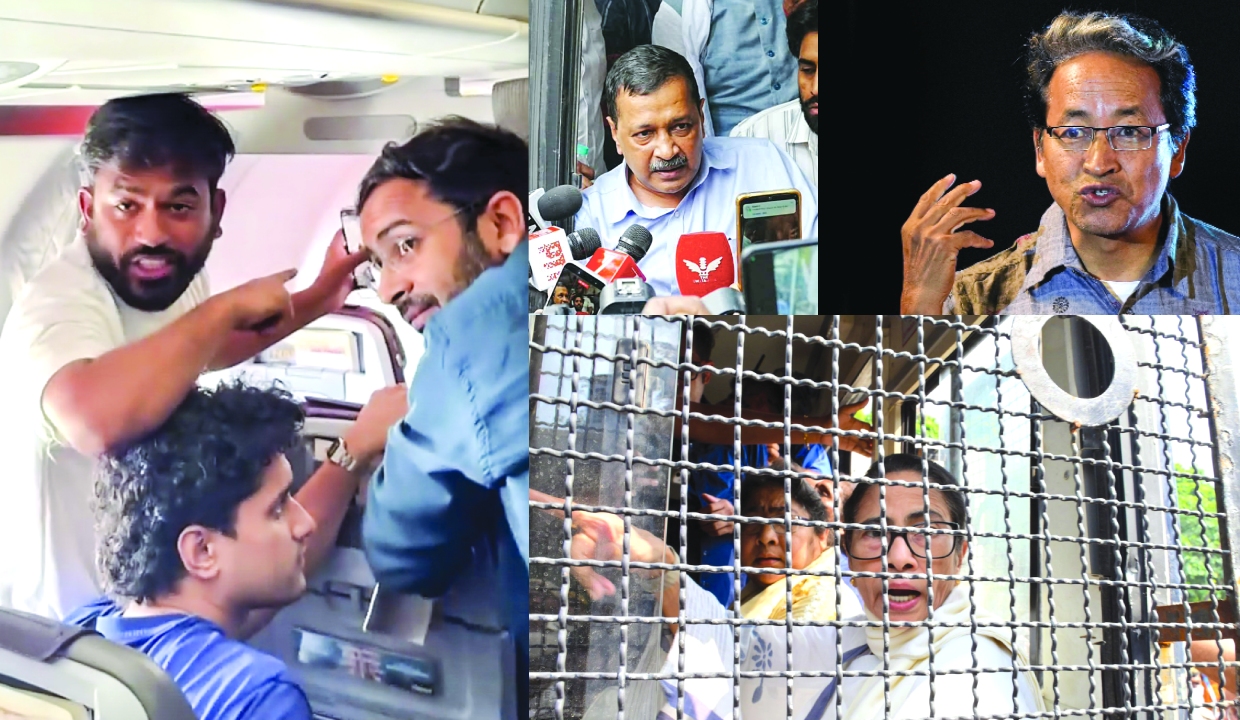
Arvind Kejriwal was detained outside his Lodhi Estate residence while marching towards Jantar Mantar with AAP leaders
We are here to be arrested, come and arrest us — Abhijeet Dipke
It’s very unfortunate. We are not criminals; they picked us like criminals —Mamata Banerjee
If arrests are not lifted in the next 24 hours, then even I will be compelled to think about a peaceful demonstration, whether it is a protest, a hunger strike, a march... in Leh, or in Delhi — Climate activist Sonam Wangchuk
Dramatic scenes unfolded at Indira Gandhi International (IGI) Airport on Saturday when women officers of Delhi Police boarded an arriving Air India flight and detained three leaders of the Cockroach Janta Party (CJP) moments after the aircraft touched down.
Police took Abhijeet Dipke, Saurav Das and Ashutosh Ranka into custody as they prepared to participate in the outfit’s scheduled protest at Jantar Mantar.
Meanwhile, CJP on Saturday vowed to continue protests, announcing another demonstration at Jantar Mantar at 10 am on Sunday. Police boarded the plane just after it landed and went straight to the three people’s seats.
The three men were escorted off the aircraft by the police and arrested, with no injuries reported and no major disruption caused to the other passengers. Airport authorities said the flight arrived on time and that normal disembarkation resumed after the arrests. However, they gave no additional information about the charges or the legal grounds for them. The detentions coincided with the group’s announcement that it intended to hold a demonstration in the Capital.
According to people involved in the operation, the Delhi Police top brass may have expected resistance and wanted to minimise the risk of a physical altercation in the tight aisles, where even a small fight could quickly involve other passengers and crew.
The CJP, a minor political group, had announced plans to gather at Jantar Mantar, a site long used for public demonstrations. The fact that the police decided to intercept the leaders while they were on the plane indicates they had prior knowledge of their journey and chose to act before they could reach the terminal or the protest site.
Carrying out such an operation inside an aircraft cabin is uncommon, suggesting the aim was to prevent immediate public mobilisation upon arrival.
The operational method seems to have been influenced by the physical conditions of the situation. With little room to move, it would have been hard to control any struggle.
Female officers may have been included to reduce the chance of immediate resistance or to delay escalation. The decision to deploy them was a deliberate tactical move.
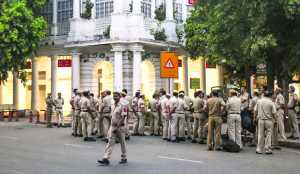
A broader trend of preventive policing is underway against groups attempting to gather at Jantar Mantar, with permits and security measures strictly enforced.
Because of the arrests, the main organisers of the CJP event were removed from the picture so they could not join their supporters or speak at the gathering.
By Saturday evening, it was still unclear whether the protest would go ahead without them or whether authorities would produce the three before a magistrate.
The situation shows that city authorities have to continually find a balance between allowing lawful assemblies and keeping order in the capital; in the limited space of a commercial aircraft, this balance was achieved within a short time by a group of officers who got on the plane, identified the people in question, and took them away before the majority of the passengers had left their seats.