Why India must start the Agniveer conversation
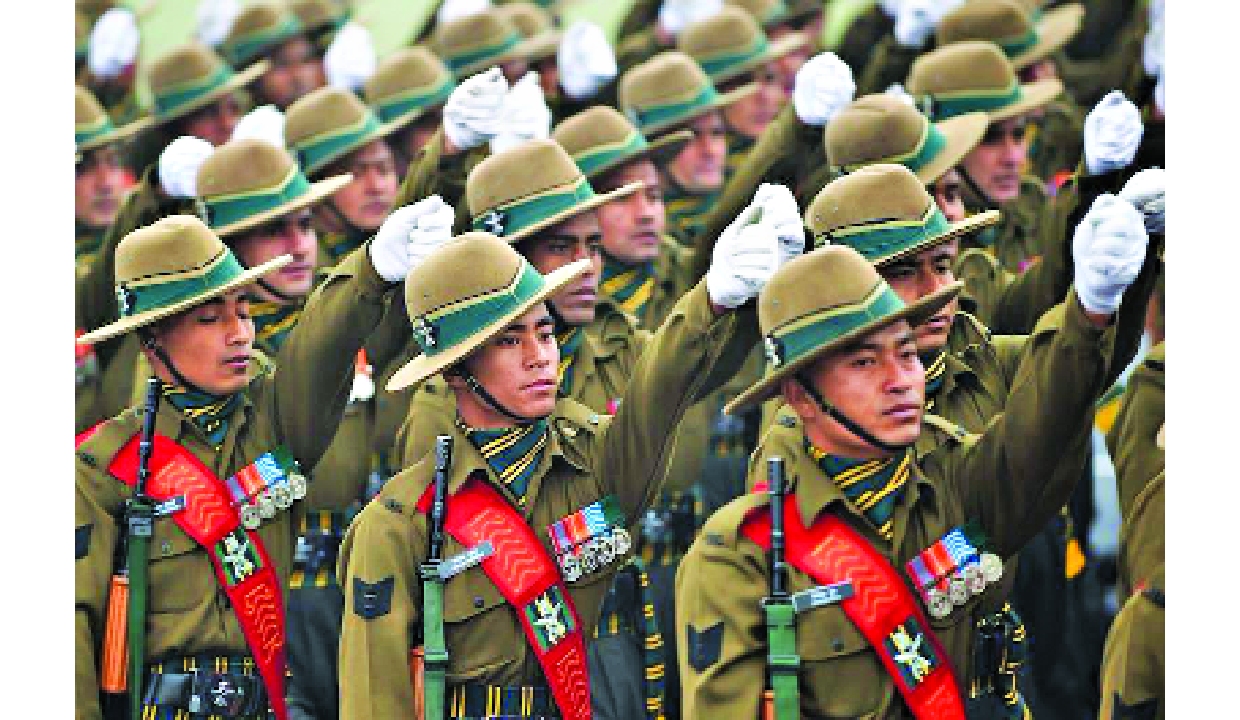
Nepal’s ex-servicemen have made a remarkable turnaround, moving from opposition to Agniveer to demanding its acceptance on Indian terms. At a moment when Kathmandu faces unemployment, disaster and growing strategic uncertainty, India has a rare opening to revive the Gorkha recruitment relationship. Yet diplomacy appears to have missed the moment
Nepal was recently afflicted by tragic and catastrophic climate events: the 2015 earthquake, the 2023 Jajarkot earthquake, and now the glacial outbursts triggering the Rasuwa flash floods. A man-made disaster obliterated Kathmandu’s iconic buildings and institutions during the 72-hour Gen Z movement in September 2025. The Rasuwa/Trishuli tragedy of 26 August did not prevent NDTV from holding its conclave the next day, along with prominent Nepali business sponsors such as MAW Enterprises, Fone Pay, Panchkanya, Padma Jyoti and Goldstar - the Maoist-branded footwear of the ten-year civil war - owned by Vidushi Rana, a nominated MP of the ruling Rashtriya Swatantra Party government. She portrayed the business face of Nepal through Goldstar, sharing star billing with three of the RSP’s top politicians: President Rabi Lamichhane, Finance Minister Swarnim Wagle and Foreign Minister Shishir Khanal.
How could they be persuaded to attend is a separate story. Never short of words, Shashi Tharoor led the Indian side in an exchange of ideas on India-Nepal relations, sans any real specialists on India and Nepal. As one Nepali filmmaker put it: “The conclave was to facilitate entry into the Nepali market of the owners of NDTV, the Adanis.” The human tragedy was ignored.
This social-calendar event robbed the devastating floods of focus, as did the fallout from Indian COAS General Dhiraj Seth’s first visit abroad to Nepal the previous week, at a time when Nepal’s ex-servicemen (ESM) had launched their first-ever campaign to finally accept Agniveer on Indian terms - limited years of engagement and retention. This landmark about-turn by the ESM was precipitated by the employment drought in the country but went unnoticed in Delhi. It is necessary to recall the events preceding Seth’s visit and the actions planned by the ESM to force their campaign to a successful outcome.
On August 15, for the first time ever, ESM and their families gathered outside Pokhara’s Rangshala Stadium, sang the Indian national anthem, unfurled the Tricolour and then marched to the Chief District Officer’s office, where they submitted a petition urging the Government of Nepal to accept the Agniveer recruitment package as it is. This was preceded by similar campaigns by ESM in Lamjung and Kathmandu. Previous campaigns had been critical of the new recruitment scheme and had sought the restoration of the old terms of recruitment, including pensionary benefits. So, when Seth arrived in Kathmandu to be anointed Honorary General of the Nepal Army - an honour not even exchanged with Britain (and the British Army), the founding fathers of the 300-year-old Gorkha legacy - the ground was set for him to break the long impasse over recruitment through military diplomacy. But, ironically, this was beyond his remit, his pay grade. Why? Because the Foreign Office will not let generals tread on its territory. Or is it because Agniveer is PM Modi’s personal idea and a political matter? Either way, an opportunity was apparently missed by the Army Chief to open the door for a conversation leading to recruitment.
Seth not only met his counterpart, General Ashok Sigdel, but also President Ram Chandra Paudel and Prime Minister Balen Shah, who doubles as Defence Minister. This was when the iron was hot. But Seth was again constrained by his brief and probably by the presence of Indian Ambassador Naveen Shrivastava, who was accompanying him. But unlikely.
Later, during the ESM’s massive rally at the Pokhara Indian Pension Camp, which is towered over by the Machapuchare massif, hundreds upon thousands of ESM and their families had gathered to welcome Indian Army Chief General Seth. Being from the Armoured Corps, Seth had probably only read about Gorkha fervour, even in its ESM avatar. Today, he was face-to-face with its awe and aura.
In a ten-minute speech, he said the usual glorious things about India-Nepal relations while remotely inaugurating the Kolhapur polyclinic. India has set up an elaborate network of welfare schemes inside Nepal. A former Indian Gorkha officer present noted that Seth was overwhelmed by the sentiment and affection expressed for India and the Indian Army by ESM. Seth realised that the Gorkha ESM was a strategic asset in a country where anti-India sentiment can spark and spread like wildfire. One classic video of an ex-serviceman telling Seth, “We’re ready to join the Indian Army”, meaning Agniveer, went viral. It is now known that Seth did not raise the Agniveer issue with anyone, sticking to his military brief. NDTV’s erudite team of anchors did not either, though India-Nepal relations was the theme of the dialogue. They quizzed three top Nepali politicians but did not consider the five-year breach in Gorkha recruitment an issue of concern. Meanwhile, Tharoor was busy excavating the German word ‘schadenfreude’ with Wagle. Later, he called the flash floods “Nepal drama is continuing”, for which he subsequently apologised. A huge backlash followed on social media and will be remembered as anti-Nepal sentiment, thanks to Kathmandu’s selective memory. NDTV’s failure to raise the strategic fracture in bilateral relations was a missed opportunity. Or was it warped priority?
The ex-servicemen are likely to revive their campaign soon, though the tragic aftermath of the flash floods will continue to haunt Nepal. Dussehra and Tihar, soon to follow, will occupy their minds and time. India’s brilliant package of rescue and relief has impressed the Nepalese, as it did during the 2015 earthquake. Praise for India was resonant everywhere.
The momentum of the ‘Accept Agniveer Campaign’ launched by ESM recently should not be lost, even though the present Agniveer terms of engagement are iron-clad and unlikely to change despite the chatter. As the ex-servicemen are now prepared to accept it, a conversation needs to start at the diplomatic or political level. A two-thirds-majority government in Nepal has its ego and is unlikely to break the ice; India has a national interest. A key strategic issue has been reduced to ‘who will bell the cat’.
In 1959, when I first trekked in Nepal, recruitment to become a soldier was the single biggest craze among the youth. The song that ran across Nepal was: “Chiso pani chara le piye na; Bharti hunu Lalumaya nidhara le diye na” (paraphrased: I went to get recruited, but fate did not allow it). “Daju” (big brother) should help.
The ex-servicemen are likely to revive their campaign soon, though the tragic aftermath of the flash floods will continue to haunt Nepal. Dussehra and Tihar, soon to follow, will occupy their minds and time. India’s brilliant package of rescue and relief has impressed the Nepalese, as it did during the 2015 earthquake
The writer, a retired Major General, served as Commander, IPKF (South), Sri Lanka, and was a founder member of the Defence Planning Staff, now the Integrated Defence Staff; Views presented are personal.