
- HOME
- INDIA
- WORLD
- BUSINESS
- STATES
- LAW & JUSTICE
- ENTERTAINMENT
- SPORTS
- VIEWPOINT
- LIFESTYLE
- TECH
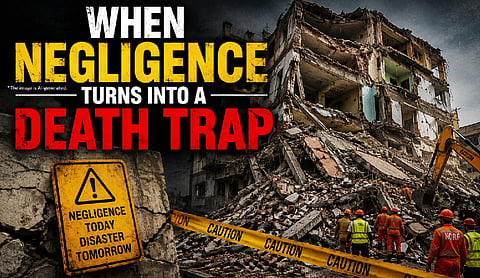
A five-storey hostel in Delhi collapsed after years of regulatory neglect and dangerous construction. Once again, it took a collapse for authorities to wake up
On Sunday afternoon, a five-storey building in Delhi’s Satya Niketan collapsed. It housed a private student hostel, incongruously named Hostel Daze, packed with young men who had left home to study. At least seven are confirmed dead as rescue teams dig through the debris; the toll is still climbing, and dozens more spent the night trapped or in intensive care.
This was not an act of God. It was the foreseeable consequence of a system that has normalised looking away. The proximate causes are already visible. The structure was roughly fifty years old, built as a residential property and then quietly converted into paying-guest accommodation without the clearances that conversion demands. It reopened to tenants in August even as renovation work continued around them — labourers were reportedly excavating the basement, removing load-bearing walls, while students slept two floors above.
Two days of monsoon rain had pooled in that same basement. Delhi’s chief minister said waterlogging and ongoing repairs likely triggered the collapse. Each of these facts, alone, is a violation.
Together, they describe a building that should never have held a single tenant, let alone dozens. But blaming the collapse on one absentee landlord, now arrested and charged, lets everyone else off too lightly. Somebody had to license this hostel, or fail to notice it operated without one. Somebody had to inspect this building, or sign off without inspecting it. The Municipal Corporation of Delhi has suspended five officials from its safety wing — a tacit admission its oversight regime existed on paper and nowhere else.
This is not the first ageing structure Delhi has lost to a monsoon season that arrives, with its casualties, like clockwork. The complacency here is not incidental; it is the system’s steady state, interrupted only by the occasional funeral.
What follows a collapse like this is depressingly scripted: condolences, an arrest, a magisterial inquiry, promises of audits. Delhi’s government has already announced mandatory structural audits and safety certificates for hostels, nursing homes and schools. That is necessary and overdue, and worthless if enforcement fails the same way again.
Audits mean little without independent inspectors insulated from the bribery that residents in Satya Niketan already allege. Certification means little without a public registry that a student or parent can check before signing a lease. And suspension cannot be the ceiling of accountability — officials who cleared or ignored illegal conversions must face the same liability as the men who built them. Delhi does not lack rules for who may run a hostel. It lacks the will to enforce them before, rather than after, the bodies are counted. Nor is this a Delhi problem alone - millions of students across India’s university towns live in hostels converted the same way, licensed loosely if at all, and inspected on the same schedule: never, until something falls down. Seven families now know the cost of that gap. The only honest tribute is to close it before the next monsoon, not after the next collapse.