When Kabir’s poetry came alive through dance
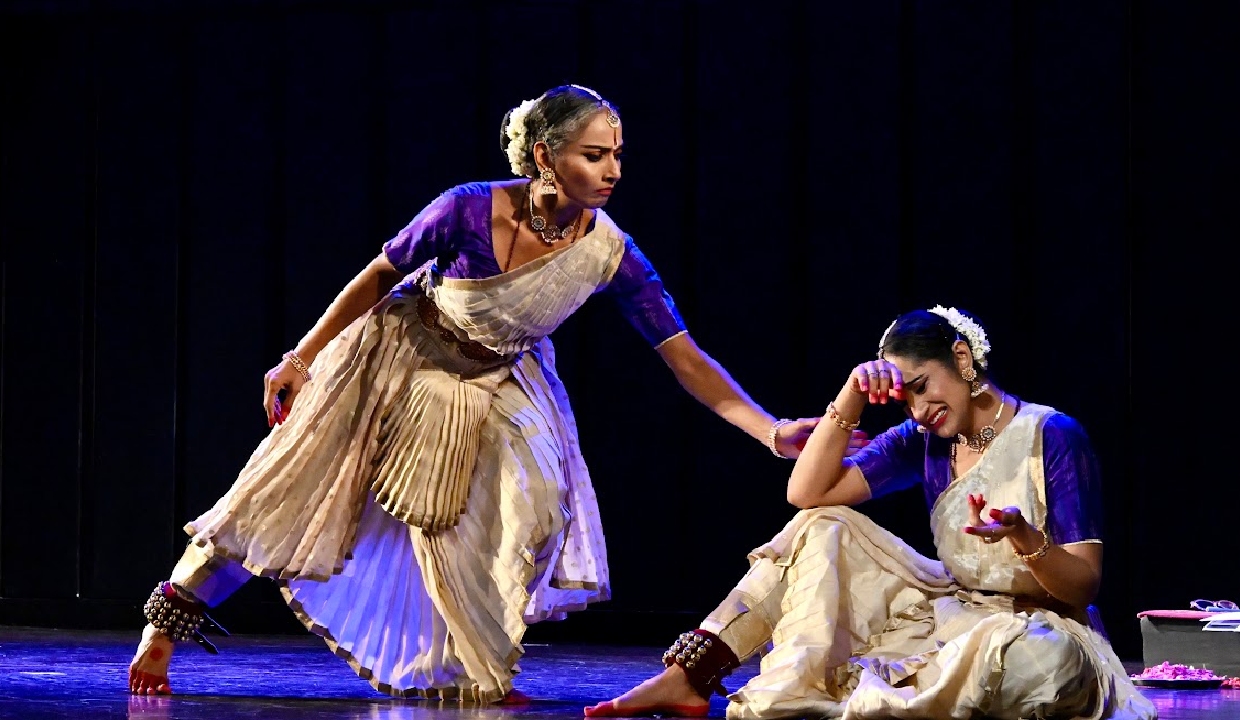
What happens when Kabir’s timeless words find expression through the graceful language of Bharatanatyam? Kabira: Sargun Se Nirgun offered an answer that was as much about looking inward as it was about performance.
Premiered by Gayathri Sharma and Bhadra Sinha in collaboration with Meghnaa Mital, the production took the audience on a journey through Kabir’s philosophy at a packed India Habitat Centre in Delhi. Presented by Kalakriti Arts Trust and Satyanjali Trust, the evening explored the movement from sargun, the visible and manifest world, to nirgun, the formless and eternal.
Instead of presenting Kabir’s poetry as separate pieces, the production brought together four compositions that flowed into one another like chapters of a single journey. There was a seeker at the heart of it all—one who awakens, questions the world around him, seeks guidance and finally turns inward to discover the truth.
The journey began with ‘Ud Jayega Hans Akela’, a gentle reminder of the temporary nature of life and the many illusions that surround us. It moved into ‘Guru Kripa Anjan’, where the Guru becomes a guiding force, helping the seeker see beyond what is visible. With ‘Yugan Yugan Hum Yogi’, the journey became more inward, reflecting on the eternal nature of the soul and the truths that often remain forgotten beneath the noise of everyday life.
The final piece, ‘Bhajo Re Bhaiyya’, brought a shift in mood. Introspection gave way to joy and celebration as the audience joined the performers in the bhajan, clapping along and becoming part of the experience.
One of the most striking aspects of the production was the way the four pieces came together. Each one carried the thought and emotion of the previous composition forward, allowing Kabir’s philosophy to unfold naturally rather than explaining it outright.
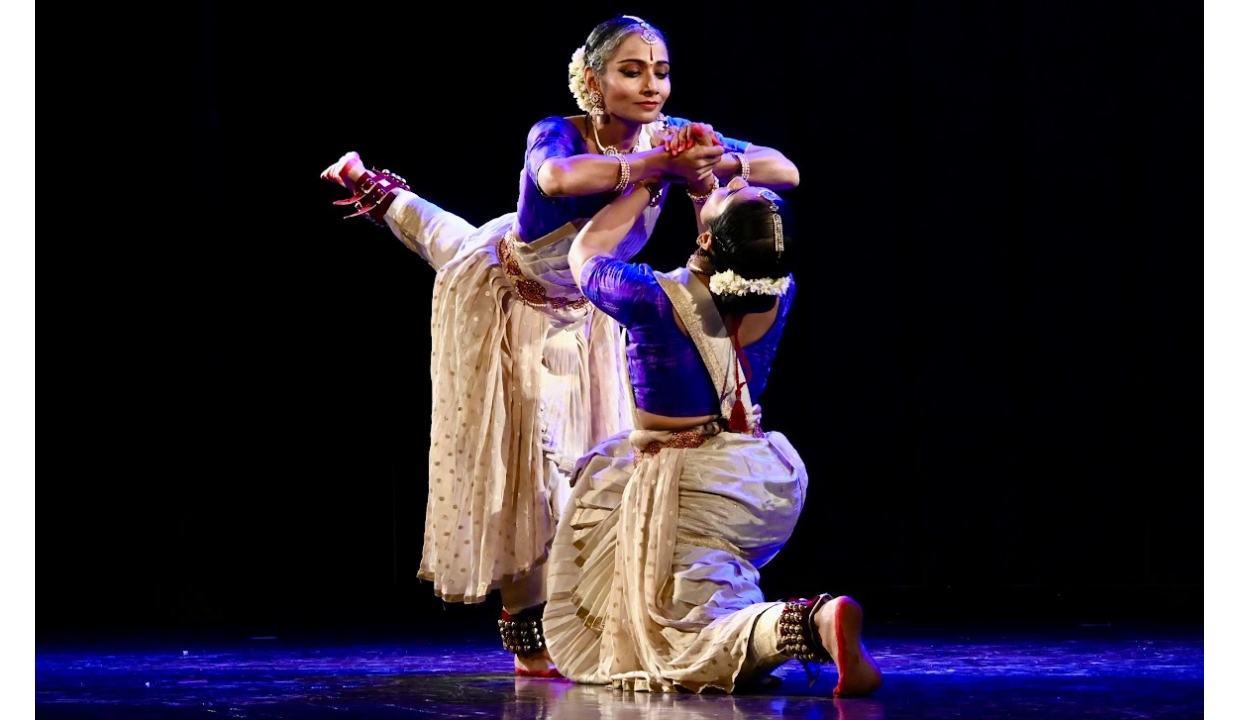
Gayathri Sharma and Bhadra Sinha brought depth and sensitivity to the stage, blending the discipline of Bharatanatyam with expressive abhinaya. Through movement, gesture and expression, they made ideas such as illusion, seeking, self-discovery and liberation feel personal and easy to connect with.
Music played an equally important role in shaping the experience. Meghnaa Mital, along with M. Sridhar, brought together Hindustani and Carnatic vocal traditions, while young composer and Carnatic violinist Uma Arun led the ensemble. Ratul S. Kumar on mridangam and Aparna Rajaraman Balaji on nattuvangam added further texture to the performance.
The evening ended with a standing ovation. But what stayed with the audience was perhaps more than the memory of a beautifully staged performance. It was the feeling of having travelled somewhere—from the distractions and illusions of the outside world towards a quieter space of introspection, connection and joy.
The production was also appreciated by the Chief Justice of India, Justice Shri Surya Kant, and the Union Minister for Environment, Forest & Climate Change, Shri Bhupender Yadav, who praised the artists for bringing Kabir’s philosophy to life through this journey of awakening, seeking, and self-realisation.
In a world that often feels rushed and noisy, Kabir’s words continue to carry a simple yet powerful message. Kabira: Sargun Se Nirgun brought that message to life on stage, reminding us that the search for truth does not always lead us somewhere far away. Sometimes, it simply leads us back to ourselves.