What we inherit: A father, a book and the memory of Mathura
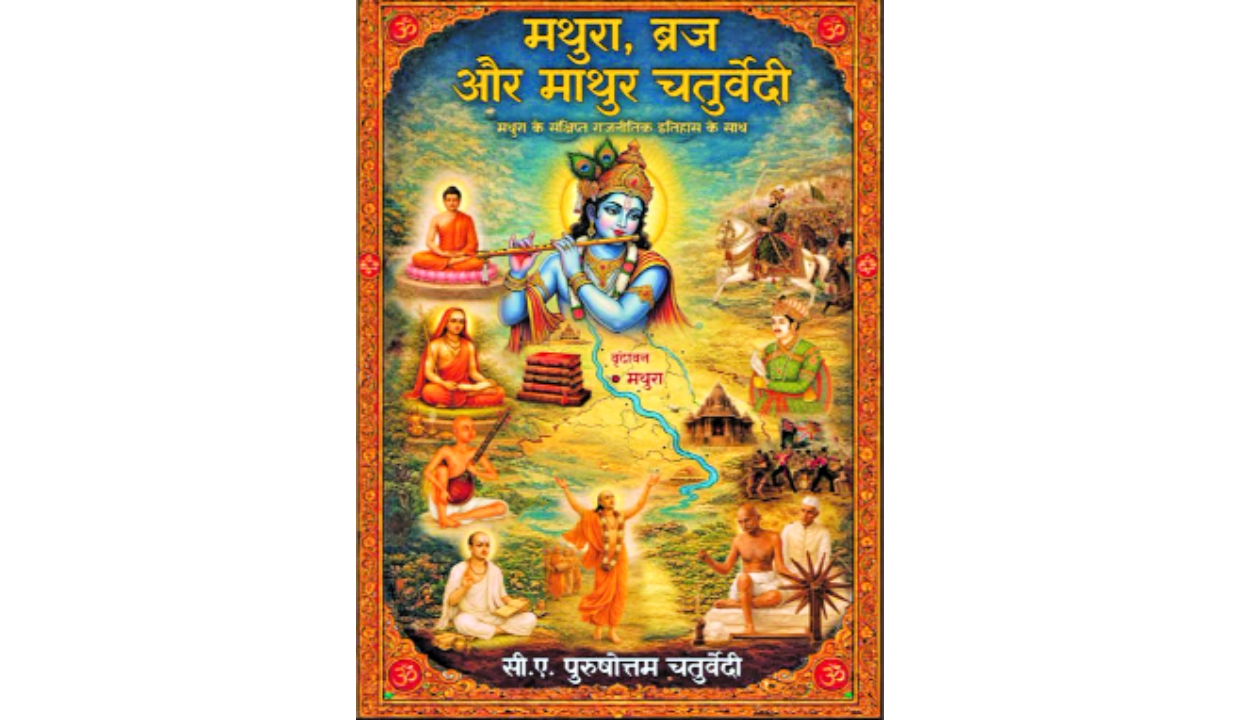
There are some books you read as a reader. And then there are books you hold as an inheritance. For me, Mathura, Braj aur Mathur Chaturvedi is the latter not just because it is the fruit of labour of my father, C. A. Purushottam Chaturvedi, who has spent much of his life besides being a Chartered Accountant, as an avid reader, chronicler, researcher collecting as well as documenting the history of the region. What began as a lifelong intellectual curiosity has now become a substantial volume bringing together history, religion, culture, genealogy, local traditions and the political history of Mathura.
Mathura has always occupied aN important place in Indias imagination. It is one of Indias seven sacred cities. The town carries the memory of Krishnas birth, the history of the Shurasena kingdom, the traditions of Braj, and layers of Buddhist, Jain, Vaishnav, Shaiv and Shakta traditions. It is not just a geographical location, a historical city, a pilgrimage centre, Mathura is an amalgamation of all these lived and ideas. Despite its rich cultural and civilisational history there is one uncomfortable question that the book asks, why has Mathura not received the attention and development that it deserves?
Cities survive because ordinary people continue living in them. Traditions survive because families continue practising them. Memories survive because somebody tells the next generation what happened. This is why the book is an important contribution towards Indias civilisational ethos and the power of continuity as it brings the historical narrative through the people who lived these centuries of change - it is the communities of Mathura and, particularly, the Mathur Chaturvedis who continued to remain connected to the city and its religious traditions. The book documents the Mathur Chaturvedi community through its gotras, pravars, all, kuldevis, customs, social institutions, and geographical spread. These may sound like details of genealogy, but they are actually records of continuity.
The book describes how these identities became important not merely as markers of ancestry but as structures that helped preserve social and cultural memory. A community is not preserved merely because its members continue to carry the same surname. It survives because it carries forward a memory. It remembers where it came from, what traditions shaped it, who its teachers were, which institutions sustained it, and what it believes is worth passing on.
There is also the story of the Chaturvedis beyond Mathura. Over different periods, Chaturvedi families came to be settled in areas beyond Mathura, including parts of the Bhadaur region and present-day Uttar Pradesh and Madhya Pradesh. The book engages with the popular explanation that the communitys dispersal was simply the result of people fleeing Mathura because of invasions and persecution. The Chaturvedi story, as presented in the book, is therefore not simply a story of migration. It is a story of how identity travels. What emerges is a simple but powerful idea: Education was one of the ways a small community like the Chaturvedis decided to empower themselves and break the poverty cycle - through intellect and knowledge. Perhaps that is one of the most valuable lessons my fathers generation can leave ours.
Another part of the book is its discussion of the traditional akhara and community institutions. The akhara was not merely a place for wrestling. It could become a space of social cohesion, where people with completely different political beliefs could nevertheless come together as members of the same community. The book gives the striking example of Congressmen, Jana Sangh supporters, and communists sharing the same social space.
That feels remarkably relevant today. We speak endlessly about polarisation and the loss of social cohesion. Perhaps we should also ask ourselves what happened to the institutions that once allowed people to disagree politically without ceasing to belong to the same social world.
The other lesson from the book is that the communitys history through music. How music continues to build communities and keep it alive. Music became a vehicle for devotion and cultural expression in Mathura. The book records traditions of Ramleela, Kansa Mela, Holi that continue even today. Most importantly the book eventually brings us back to something far more eternal.
Love.
One of the reflections in the book beautifully connects Braj, Krishna, and the Bhagavata tradition through the idea of prem- the affection of Yashoda, the friendship of the cowherds, the devotion of the gopis, and Radhas mahabhava.
Personally for me & selfishly so, this book is an act of preservation. Every generation assumes the next one will remember. It doesnt unless someone makes the effort to write it down. In the foreword I wrote for the book, I described it as preserving the unbroken connection of the Chaturvedis with Krishna and his janmabhoomi. But perhaps I was also describing something much more personal; the connection between one generation and the next - that is of me with that of my parents and the one I take forward with my children Finally, when I think about what a parent can best do for their children, it is not merely to leave an inheritance that is of monetary value - property, money, or possessions. But sometimes it is to leave behind something as invaluable as curiosity. Sometimes something as precious as a library. Sometimes something as beautiful as a story of our roots and where we belong. And then, sometimes it is a book that says: this mattered to me, and I wanted you to know why.
The reviewer is a former member of Rajya Sabha