We need to stop treating reinvention as a crisis
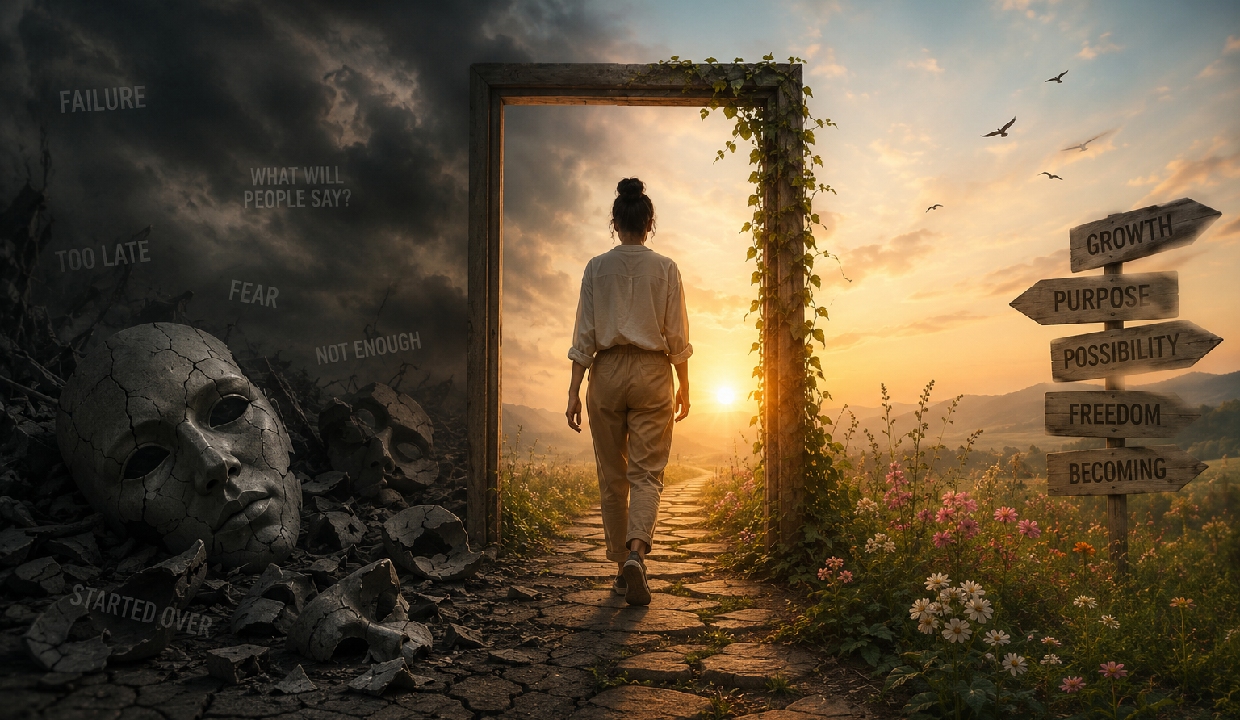
There is a strange impatience with women as they grow older. At some point, the questions subtly change. When we are young, people ask what you want to become. Later, they ask what you have achieved. And somewhere in the middle of life, the questions become quieter, but more loaded: What now? What are you going to do with yourself? Why are you starting again? Shouldn’t you be slowing down?
I have often wondered why we think of reinvention as something that belongs exclusively to the young.
Perhaps because we have been taught to see life as a ladder. You climb it in your twenties and thirties, establish yourself in your forties, and by your fifties and sixties, you are expected to sit comfortably on whatever rung you have reached. But life isn’t a ladder. It is much closer to a manuscript. And manuscripts can be rewritten. I have met women who, after decades of being mothers, wives, professionals and caregivers, suddenly discover a version of themselves that had been waiting patiently underneath all those identities. Sometimes it emerges through writing. Sometimes through travel. Sometimes through a business, a friendship, a classroom, or simply the decision to wake up one morning and say: I want something different.
And almost invariably, there is guilt attached to it. Why? Because women have been conditioned to believe that their value lies in how useful they are to everyone else. We are taught to care before we are taught to create. To accommodate before we are taught to ask. To remember everyone’s birthdays, appointments, preferences and anxieties, while quietly forgetting the things that still make us feel alive. Then one day, the children leave home. A career changes. A parent becomes dependent. A marriage enters a different phase. The body changes. Menopause arrives. The face in the mirror becomes unfamiliar. And suddenly, the old map doesn’t work anymore.
This is often described as a midlife crisis. I think that phrase is unfair. Perhaps what we call a crisis is simply an awakening. There is grief in growing older. We lose people, versions of ourselves, and the illusion of unlimited time. Some losses permanently rearrange the furniture in our inner lives. But grief strips away pretence and asks what actually matters. Writing teaches us that healing is not always about forgetting what happened, but finding language for what the experience changed inside us. We live in a culture obsessed with productivity, but some things cannot be solved; they must be understood. Understanding requires us to pause long enough to hear ourselves. We realize not every relationship has to be saved, not every rejection is a verdict, and some things simply end because they have completed their purpose. The greatest freedom of the second half of life is becoming less interested in being universally understood. Ageing should not be about becoming smaller. It should be about becoming more exact: fewer performances, fewer apologies, fewer obligations.
More truth. More curiosity. More courage to begin something without practical reasons. A woman in her twenties can reinvent herself; why can’t a woman in her fifties or sixties write a book, learn to paint, start a company, fall in love, travel alone, return to university, or become someone she never had time to be?
We must stop asking women what they are doing next and ask what they have become brave enough to do. This stage is about what we leave behind-stories told, wisdom passed on, honest mistakes, books written, and the permissions we give others by refusing to disappear quietly.
I prefer continuing differently. Taking everything we lived through and allowing it to become material rather than memory. Turning grief into language, experience into wisdom, and loneliness into connection. This is the chapter where, finally, we get to write without asking anyone else what the story should be.