1937 to 2026: Why Vande Mataram remains a Congress-BJP fault line
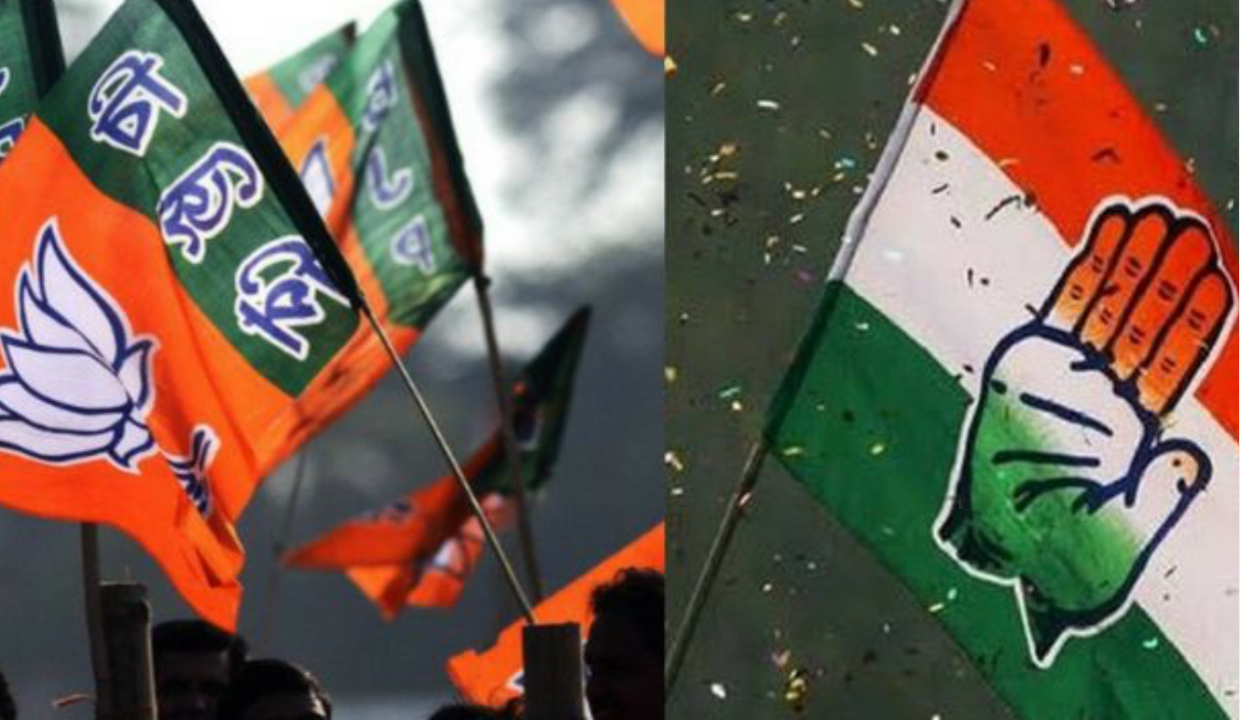
A decision to sing just two stanzas of Vande Mataram has, in the space of a day, pulled 1937 history, Partition and the freedom movement back into the middle of Indian politics. Union Home Minister Amit Shah on Thursday called the Congress' move "anti-national", while Congress leader Jairam Ramesh hit back, calling the BJP's nationalism fake and telling Prime Minister Narendra Modi he had been "tried", was now "tired" and should "retire".
At the centre of the row is a decision taken by the Congress Working Committee on Wednesday to render only two stanzas of the national song rather than the full version. Shah called the move "anti-national" and an open defiance of a law passed by Parliament. In a post on X, he linked it back to 1937, when he said the Congress had itself split Vande Mataram into two parts for the sake of appeasement, a move he argued fed the two nation theory and eventually led to Partition. He said the Modi government had "corrected" this on the song's 150th anniversary by giving the full version legal status, and accused the Congress under Rahul Gandhi of returning to the same politics of appeasement.
Congress hit back through Ramesh, who dismissed Shah's attack as an attempt to politicise an issue the party considers deeply emotional. He said the home minister was using the row to shift attention away from real concerns, including those of students, and took a swipe at the prime minister, saying he had been "tried" and was now "tired" and should "retire." Ramesh went further, calling BJP leaders "fraudulent and fake nationalists."
Ramesh's defence rested on history. He pointed to a CWC resolution from October 28, 1937, drafted on the advice of Rabindranath Tagore and endorsed by leaders including Jawaharlal Nehru, Sardar Vallabhbhai Patel, Subhas Chandra Bose, Maulana Abul Kalam Azad, Govind Vallabh Pant and Acharya Narendra Dev. He also recalled that when Rajendra Prasad announced Vande Mataram as the national song in the Constituent Assembly on January 25, 1950, Jana Gana Mana was adopted as the national anthem using only one of its five stanzas. Ramesh cited this to argue that using only a portion of a national song or anthem is not unprecedented or inherently disrespectful.
The BJP did not let the moment pass either. Party president Nitin Nabin accused the Congress of turning into the "new Muslim League" chasing votes, while leaders including J P Nadda, Kiren Rijiju and Anurag Thakur said the party was putting vote bank politics ahead of national sentiment.
What began as an internal Congress decision on how to render a song has, within a day, turned into a fresh battleground over nationalism, history and appeasement, with neither side showing signs of backing down.